

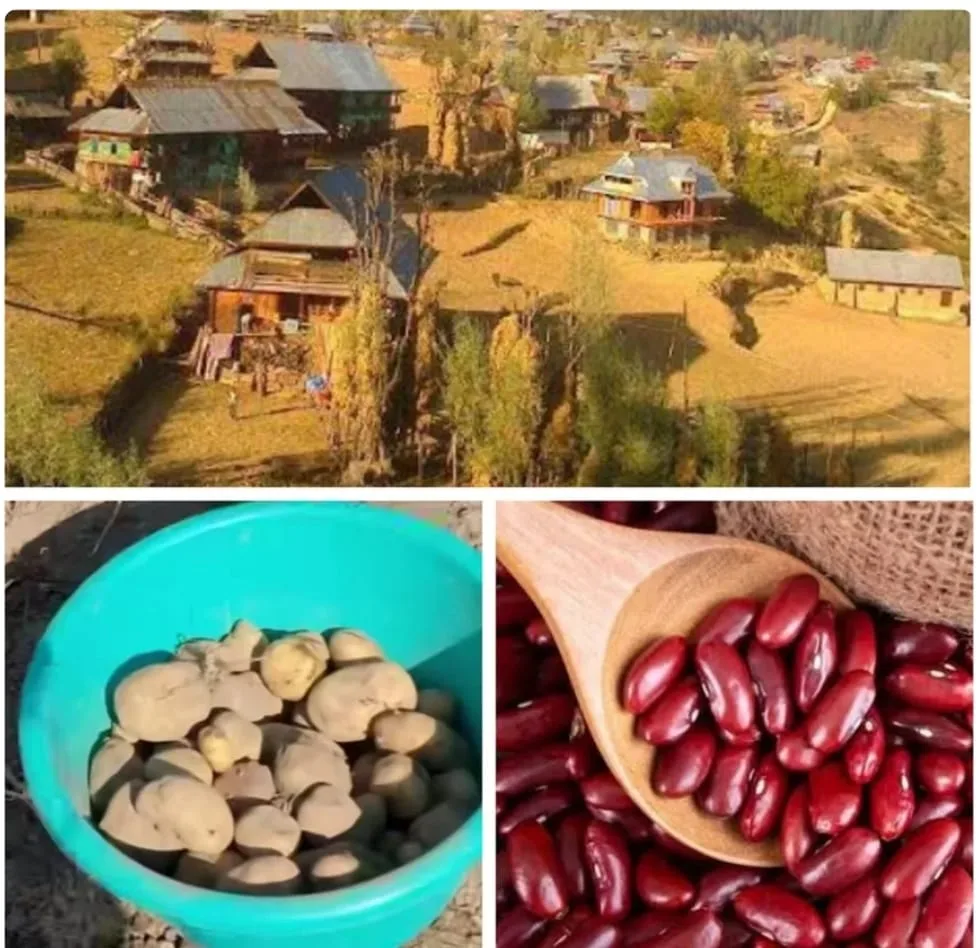
Karnah, Dec 08 (JKNS): Budnamal is a peaceful and lush border village located near the Line of Control, about 70 kilometres from Kupwara district. Along with its natural beauty, the village is also known for its agricultural importance.
Situated amid high mountains and dense forests, Budnamal has been famous for the cultivation of potatoes and red rajma (kidney beans) for several decades, which serve as the primary source of livelihood for its residents.
With a population of around five thousand, the village economy largely depends on these two crops. The fertile soil and traditional farming practices give the produce a distinctive taste and quality. The red rajma, in particular, is popular across Kashmir for its aroma, softness, and high nutritional value, and it can be preserved for a long period despite the region’s harsh winters.
Potato cultivation in Budnamal begins in the month of June, and despite severe weather conditions, the crop is ready by September and October. The potatoes grown here are naturally long-lasting and do not spoil easily in cold weather, making them suitable for storage. During winter, when fresh vegetables become scarce in most parts of the Kashmir Valley, Budnamal’s produce becomes an important source of food for the people.
According to local farmers, this farming expertise has been inherited from their ancestors. They say that even today, the use of chemical fertilisers and substandard seeds is largely avoided, which keeps the crops pure and healthy. More than 400 kanals of land in Budnamal are under potato and rajma cultivation, as the local climate is not suitable for crops like rice.
During the harvesting season, traders from Kupwara, Baramulla, Sopore, and other areas reach the village directly to purchase the produce from farmers. A 50-kilogram sack of potatoes sells for between ₹1,200 and ₹1,500, while rajma is available throughout the year at around ₹300 per kilogram.
Although the farmers of Budnamal are hardworking and largely self-reliant, they say that the lack of government support remains a major challenge. While the Agriculture Department has made promises of modern facilities, better seeds, and marketing assistance, these have not been implemented in practice. Local farmers demand that the government recognise Budnamal’s agricultural potential and provide necessary support so that the agricultural identity of this border village can be further strengthened. (JKNS)

