

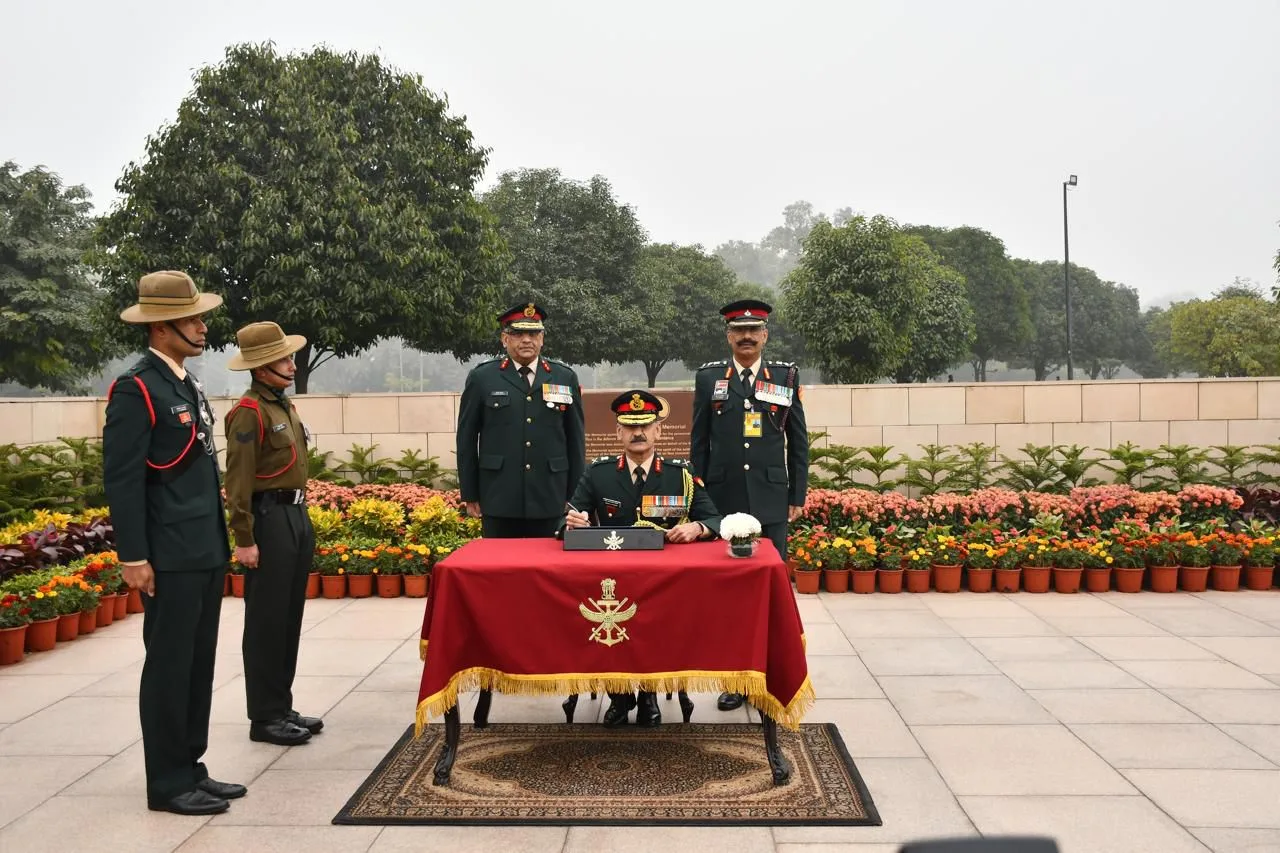
New Delhi, Dec 21 (JKNS): The Judge Advocate General (JAG) Department, the judicial and legal wing of the Army responsible for dispensation of justice to all ranks celebrated its 42nd Corps Day on Sunday.
It was on this day in 1949 wherein the Bill for the Army Act was introduced in the Parliament.
To commemorate the occasion, a wreath was laid at the National War Memorial by the Adjutant General of the Indian Army, Lieutenant General VPS Kaushik and the Judge Advocate General, Major General Sandeep Kumar.
Over the decades, the Department has steadily expanded in strength and scope, providing vital legal support during major military operations. It has played a pioneering role in the induction of women officers in Short Service, undertaken comprehensive revisions of the Manual of Military Law, modernised the Defence Service Regulations and embraced emerging technologies. With each passing day, the Department continues to scale new heights of professional excellence.
Through sustained dedication and rigor, the Department has painstakingly carved out a distinctive and authoritative niche within the organisation, earning enduring institutional credibility. Today, it bears the onerous responsibility of handling large-scale litigation pending before a wide array of judicial and quasi-judicial fora across the country.
Concurrently, it functions as the principal legal think-tank of the Army, rendering considered, nuanced and timely advice on highly complex, sensitive and multifaceted legal issues. These matters frequently arise at the intersection of operational exigencies, administrative imperatives, disciplinary processes and evolving constitutional jurisprudence. This expansive remit underscores the Department’s pivotal role in upholding the rule of law while enabling effective command and informed decision-making in a dynamic security environment.
The Department has also been instrumental in the enactment and operationalisation of the Inter-Services Organisations Act, providing legal stewardship throughout the legislative process. In parallel, it has ensured the seamless harmonisation of newly enacted laws with the military justice framework, thereby preserving discipline, operational effectiveness and constitutional propriety within the Armed Forces. (JKNS)

