

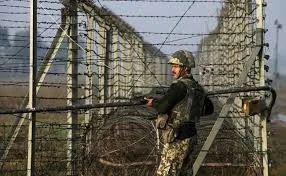
Jammu and Kashmir have remained one of the most sensitive and strategically important regions of India since Independence. The region has been at the centre of prolonged cross-border tensions, primarily between India and Pakistan, owing to historical disputes, territorial claims and geopolitical interests. Despite several bilateral agreements and confidence-building measures, cross-border tensions continue to manifest in the form of ceasefire violations, infiltration attempts, terrorism and proxy warfare. These tensions not only threaten regional security but also severely impact the lives of civilians living along the Line of Control and the International Border. Cross-border tension in Jammu and Kashmir is not merely a military issue, it is a multidimensional challenge involving political, social, economic and humanitarian dimensions. Understanding its causes, patterns and consequences is essential for developing sustainable solutions and ensuring long-term peace in the region.
The roots of cross-border tension in Jammu and Kashmir can be traced back to the partition of India in 1947. The princely state of Jammu and Kashmir became a disputed territory following Pakistan’s invasion by tribal militias, leading to the first Indo-Pak war (1947-48). The conflict ended with UN-mediated ceasefire, dividing the region along what later became known as the Line of Control. Subsequent wars in 1965 and 1971 along with the Kargil conflict in 1999, further entrenched hostility and mistrust between the two nations. While the Shimla Agreement (1972) and later agreements attempted to resolve disputes through bilateral dialogue, Pakistan’s continued support for cross-border terrorism kept the region volatile. Since the late 1980s, cross-border tension escalated significantly with the onset of militancy in Kashmir, aided by infiltration of armed militants trained and supported across the border. This phase marked a shift from conventional conflict to asymmetric warfare, making the situation more complex and persistent.
Frequent ceasefire violations along the Line of Control and Intelligence Bureau involve small arms fire, mortar shelling and artillery exchanges. These violations often target forward posts as well as civilian areas, leading to casualties, displacement and destruction of property. Terrorist groups attempt to infiltrate across the Line of Control using rugged terrain, dense forests and adverse weather conditions. Such infiltrations are often timed with snowfall melting or during periods of heightened political activity. Pakistan’s strategy of waging a proxy war through terror outfits aims to destabilize the region without engaging in full-scale conventional conflict. Attacks on security forces, civilians and critical infrastructure are intended to spread fear and disrupt normalcy.
Apart from physical violence, misinformation campaigns, propaganda and social media manipulation are used to incite unrest, radicalize youth and create mistrust between locals and security forces. Jammu and Kashmir hold immense strategic significance for India due to its geography, borders with Pakistan and China and control over vital communication routes. The region is crucial for national security, territorial integrity and regional stability. Control over high-altitude areas like Siachen Glacier and forward positions along the Line of Control is vital to prevent strategic disadvantages. Any instability in Jammu and Kashmir has implications not only for India-Pakistan relations but also for broader South Asian security dynamics.
The civilian population bears the brunt of cross-border tensions. Residents of border villages face constant threats to life and livelihood due to shelling and firing. Humanitarian Impact: Loss of civilian lives and injuries, Loss of civilian lives and injuries, Damage to homes, schools, hospitals and crops, Damage to homes, schools, hospitals and crops, Forced displacement and migration to safer areas, Psychological trauma, especially among children and older people.
Education and healthcare services are frequently disrupted during periods of heightened tension, economic activities such as agriculture, trade and tourism suffer significant setbacks, further aggravating poverty and unemployment. Indian security forces deployed in Psychological trauma, especially among children and older people. operate under highly challenging conditions. They face threats from both cross-border terrorism and hostile terrain.
Despite these challenges, the armed forces along with central armed police forces and Jammu and Kashmir Police, have played a crucial role in maintaining security, preventing infiltration and protecting civilians. Cross-border tension in Jammu and Kashmir significantly affects India-Pakistan relations. Dialogue initiatives are often disrupted following terror attacks or ceasefire violations. Diplomatic efforts at international forums highlight the issue of cross-border terrorism and seek global support against state-sponsored violence. India has adopted a multi-pronged approach to address cross-border tension: Strengthening border fencing and surveillance systems, Deployment of advanced technology like unmanned aerial vehicles, sensors and thermal imagers, Robust counter-infiltration and counter-terror operations. Effective retaliation against ceasefire violations, Developmental Initiatives, Infrastructure development in border areas, Improved road connectivity, healthcare and education facilities, Employment generation and skill development programs, Political and Social Outreach, Engagement with local communities, encouraging democratic participation, Rehabilitation and surrender policies for misguided youth.
The ceasefire agreement along the Line of Control, reaffirmed periodically, plays a crucial role in reducing violence. When effectively implemented, ceasefire adherence has led to reduced civilian casualties and improved living conditions in border areas. However, ceasefire stability remains fragile due to recurring violations. Sustained commitment from all stakeholders is required to ensure lasting peace. Despite improvements in security and governance, several challenges persist: Continued attempts at infiltration and terror attacks, Radicalization through online platforms, Difficult terrain and weather conditions, External geopolitical influences, addressing these challenges requires sustained vigilance, coordination among security agencies and long-term policy planning.
A lasting solution to cross-border tensions in Jammu and Kashmir lies in a balanced approach that combines security, development and diplomacy. Strengthening Border Management through technology and intelligence sharing. Zero Tolerance for Terrorism while maintaining restraint to avoid escalation. Inclusive Development to win hearts and minds of the local population. Diplomatic Engagement to expose cross-border terrorism globally. Confidence-Building Measures for civilians along border areas, including bunkers, compensation and rehabilitation. Cross-border tension in Jammu and Kashmir remains a complex and enduring challenge shaped by historical disputes, strategic rivalry and ongoing security threats. While India has made significant progress in improving security and governance in the region, external interference continues to undermine peace efforts. The resilience of the people of Jammu and Kashmir, combined with the dedication of security forces and sustained development initiatives, offers hope for a stable future. Resolving cross-border tensions requires patience, determination and collective effort at the national and international levels.

