

Lush green meadows, snow-clad mountains and flowers smiling under the magnificent sun. The sun spreads its rays gently, touching the feet on Maa Sharika resting upon the hill. Divine blessings of the Mauje reach every corner of the valley, showing a path of wisdom, brotherhood and peace. This is Kashmir land of Saints and Peers where culture is rooted in acceptance and resilience.
Kashmiriyat can be felt in every toothless smile and in the innocent wave of an infant whose cheeks are red as apples. in the warm greeting of the passing Shikara owner wishing peace and in the hopeful shine in the eyes of youth. Kashmir has a rich culture, an intricate social fabric and exclusive cuisine that is both rich and aromatic. From world famous Rogan Ghosh to Gustaba to Yakhi and Haak Saag, the Kashmiri food platter is nothing less than a royal feast. Its geographic location, history and trade links between Central and south Asia have added fascinating colours to the cultural fabric of Kashmir. The beauty of the place is enhanced by snow-clad mountains and glaciers. During winters, the climate turns into bone chilling cold waves. In our country, one of the best ways to counter a cold climate is by drinking chai. Chai can be in many forms’ simple chai or green tea, Adrakwali chai or fennel tea. In Kashmir, tea is savored in different forms such as Lipton Tea, Kehwa and the most intriguing Pink Chai known as Noon Chai/Sheer Chai Kashmiris are very fond of their tea and one can see them sipping their teas in ornate cups sitting leisurely in their gardener in their drawing rooms.
Kehwa, an amalgamation of sweet liquid which is garnished richly with dry fruits, has secured a global audience. In Airport or local hotels one can see non-Kashmiris enjoying a sip of Kehwa. For a tourist accustomed to regular tea it is fascinating at once when he sees tea in baby pink color. The excitement in the veins signals the brain questioning if the cup full of liquid is tea. The fascination and excitement sends a signal from the brain to go ahead and try this pinkish warm experience called Noon Chai. For someone not habituated to drinking Noon Chai, the first sip offers an unexpected taste and the Palate takes time to adjust. The use of salt instead of sugar is something which non-Kashmiris are not used to. Noon means salt in Kashmiri language. It is often called by other names like Gulabi chai or Sheer chai by few people. It is said that Noon Chai is a by-product of central Asian cuisine as during olden days the trade route was frequent. Noon chai is like the chai made in Ladakh with salt and butter. Ladakh also had frequent trade route with other central and Asian countries which was also known as Silk route. This must be the route through which Noon chai must have entered the valley.
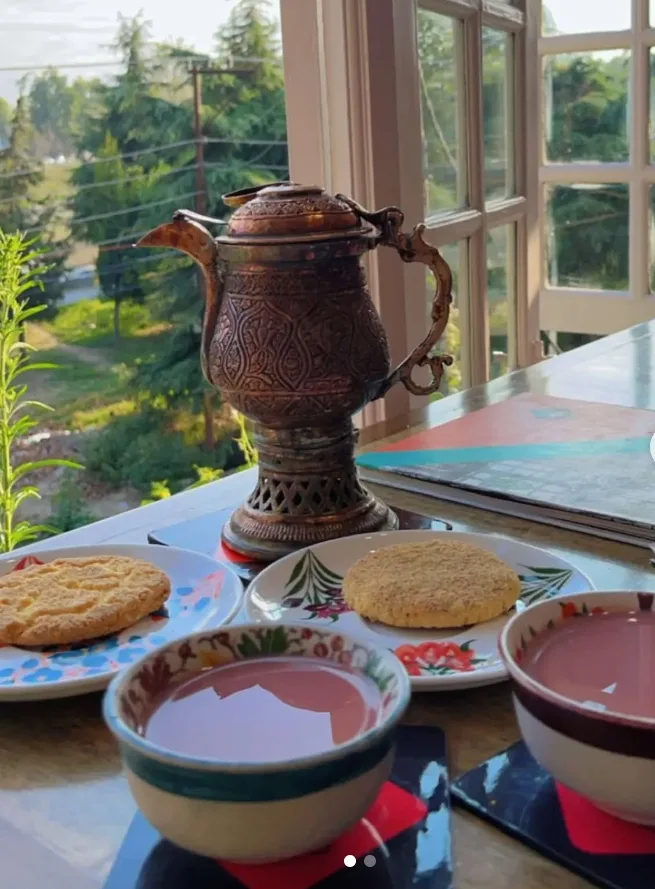
The making of Noon chai is an art and requires patience, as it is time-consuming process. Baking soda or sodium bicarbonate is added to tea leaves which gives its pinkish color to the tea. The process of boiling the tea is done 2-3 times till the required hue or tint is required often called as ‘tueth’ or ‘tyoth. Salt and milk are added as it gives the tea its signature pink color. Once ready the tea is garnished with available dry fruits and at times with rose petals. Drinking and serving of the Noon chai is also a memorable experience. One can compare tasting of Noon chai to the traditional ceremony (Chanoyu) tea drinking of Japan. The tea is made in ornate samovar which is carved beautifully. Each piece of samovar has a story within itself. From beautiful Chinar leaves to calligraphy, it is a labor our process to create a piece of art. One can see this beautiful Samovar standing tall in every Kashmiri wedding. It is an important piece of Kashmiri culture. Today, as modern equipment is making their way in the lives of younger generations, the use of Samovars is slowly becoming less.
Noon chai taste can be different to people who have never tasted it. Its demands a certain kind of taste development that one needs to get used to relish it. Like in western countries here too Noon chai is accompanied with local bread called lavassa or Chochwor or Nan khatai. Noon chai is best enjoyed with Tomla Tsot. Different people have different views on taste of Noon Chai. Some like it in its original form, some like to add sweetener to it.
Afghanistan’s Qaymaq tea, Turkestan’s Atkan Chai and Mongolia’s Suutei Tsai, are some of the preparation made with salt. In the bone chilling winters of Kashmir, Noon chai helps in digestion. However excessive drinking of Noon chai may be harmful to health because of salt content in it. This little pink cup tea brimmed with riches of the valley has found its connoisseur globally. People who have visited the valley and could enjoy the taste have spread the word about this unique tea in neighborhood. One can get recipes for preparing Noon chai across the internet, but it does not taste the same as in the valley. Many factors contribute to its unique taste, including the utensils, time and the method of preparation. Making of Noon chai is an art where one needs to patiently add layers in their masterpiece, which cannot be replicated in a commercial outlet. This is one of the reasons that this drink is known and has intrigued the masses but could not be as famous as Kehwa. There are youngsters other than natives who enjoy this drink but the non-availability of this drink outside Kashmir is something that one needs to look at. If one needs to make this tea commercially available, authentic taste must be maintained.
Due to its length process, there are chances that in this fast-paced world it may not be favored much outside the valley. For Noon Chai to evolve outside the valley one needs to put effort into keeping the authentic method, ingredients and taste in mind. Even if preparation is a time-consuming process no shortcuts should be taken. This tea can be presented to the consumers as an exclusive experience which not only quenches one’s taste buds, but it nourishes the soul. The tea along with savory like tyoth gives the person an experience which teaches to enjoy salt and sugar in life equally. Noon chai is an incredibly good example of the resilience nature of people of Kashmir. Just as they enjoy the warmth of this tea with a pinch of salt, one must be ready to face adverse situations in life. Salt may taste a little different at first but one must remember without salt even the most exquisite dish is tasteless. Without Noon chai there is no story of Kashmir which is complete. Noon chai is the sip of peace which a person experiences after a long struggling day. Noon chai is THE CHAI of Kashmir.

