

SHIFA KHATOON
shifakhatoonspeaks@gmail.com
History has never been neutral. It has been written by victors, by those who held authority, by those whose identities were recognised as worthy of pride and preservation. Simply put, history has been written by men. From the very beginning, men controlled power, dictated rules, defined morality, and decided who deserved a voice in the world, and how much space that voice could occupy. Women, on the other hand, were consistently pushed to the margins. They were denied agency, stripped of authority, and deprived of the rights men exercised without question. Their lives were narrated for them, their experiences filtered through male perspectives, and their bodies turned into sites of regulation and control.
Authorship itself, whether of history, literature, folklore, or myth, remained largely in male hands. Even the stories passed down orally, which are often romanticised as collective and communal, carry deeply gendered messages. Across cultures and regions, folklore has functioned as a subtle but powerful tool to discipline women’s bodies, desires, and behaviour. Women who dared to break norms or challenge prescribed roles were demonised, branded as deviant, immoral, or dangerous. Even women who remained silent and compliant were marked as ‘the other’, defined not by who they were, but by what they lacked.
Sandra Gilbert and Susan Gubar, in The Madwoman in the Attic, famously argue that women in literature have historically been reduced to rigid binaries: the angel or the monster. There is no space for complexity, contradiction, or humanity. Women must be labelled, categorised, and contained, while men move through narratives with relative freedom, unburdened by such reductive frameworks.
If we turn to the present, it becomes painfully clear that the structures have not shifted as much as we would like to believe. While many women today have gained the language and consciousness to speak against injustice, countless others remain trapped within patriarchal systems that extinguish their dreams before they can even take shape. Early marriages, domestic violence, sexual harassment, rape, honour killings, these are not isolated crimes but symptoms of a global structure that treats women’s bodies as property. Women become instruments of punishment and revenge, the easiest targets when families fracture or honour is questioned. As Abhijit Naskar powerfully states, ‘Behind every man alive and kicking, there is a woman. Behind every woman abused and killed, there is a man.’
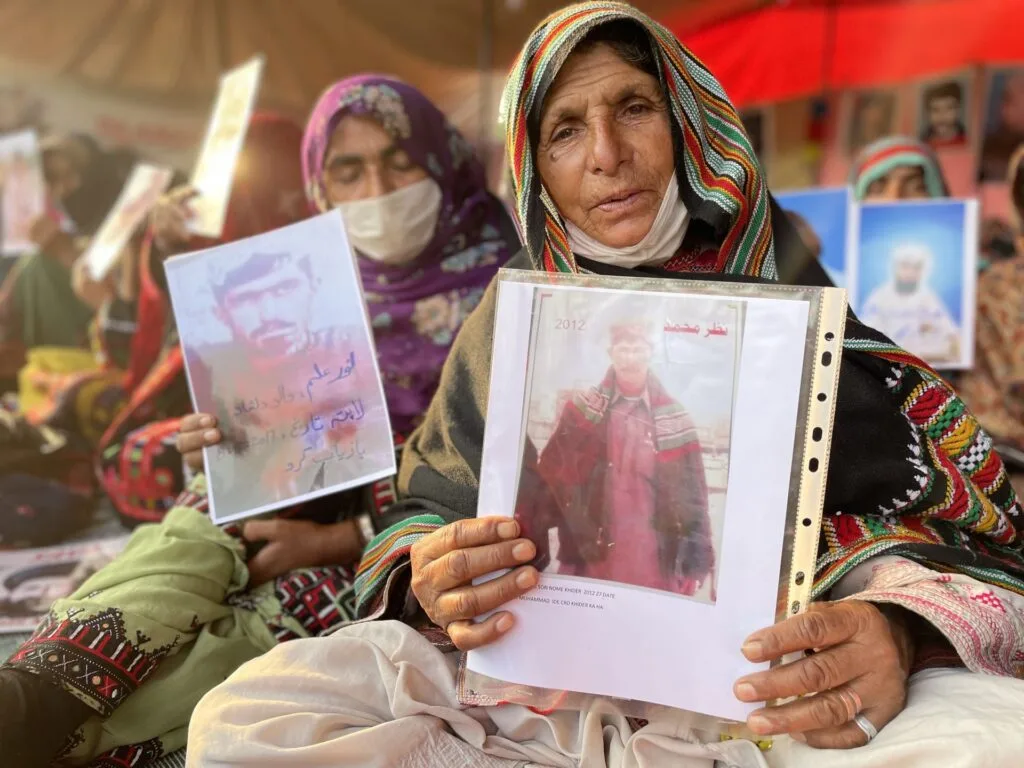
While this reality exists worldwide, its consequences are particularly devastating in regions like Balochistan, where women’s lives are marked by extreme vulnerability and systemic erasure. Reports emerging from the region reveal a disturbing pattern of violence and enforced disappearances targeting Baloch women, acts that remain largely unacknowledged and unpunished.
In January, a female schoolteacher was shot dead outside a girls’ high school in the Sibi district of Balochistan. Eyewitness accounts suggest that unidentified assailants on a motorcycle fired at close range before fleeing the scene. The teacher sustained a fatal gunshot wound to the head and later succumbed to her injuries at a local hospital. What makes this incident even more chilling is that the victim belonged to a prominent tribal family, underscoring the fact that neither social standing nor respectability offers protection to women in such contexts.
This killing occurred against the backdrop of an alarming rise in enforced disappearances of Baloch women. In recent months, reports have surfaced of women being detained from their homes by security forces and taken to undisclosed locations, with no official acknowledgement of their arrest or information about their whereabouts. One such case involves a woman from Panjgur who was allegedly detained from her residence and has since remained untraceable. Her disappearance has plunged her family into fear and uncertainty, an anguish compounded by the fact that her husband himself has reportedly been subjected to enforced disappearance multiple times in the past.
Human rights organisations have drawn attention to this growing pattern, noting that enforced disappearances in Balochistan, once primarily directed at men, are now increasingly being used against women, including minors and pregnant women. In one particularly harrowing case, an eight-month pregnant woman was reportedly taken along with members of her family in a series of coordinated actions. Such acts constitute grave human rights violations, placing both women and unborn children at immediate risk and violating fundamental rights to life, dignity, liberty, and legal protection.
These disappearances are not random; they reflect a strategy of collective punishment, where entire families and communities are targeted to instil fear and ensure silence. The psychological trauma inflicted on those left behind, especially women, is immense. Families are torn apart, children are left without caregivers, and households collapse under the weight of loss and uncertainty. Yet, despite repeated appeals, authorities continue to deny responsibility or remain silent, reinforcing a culture of impunity. As much as we like to think that women are separated from politics, it’s quite evident that being a woman in itself is deeply political. Their sexuality, their identity and even their voices are pushed to the margins, while men dominate the centre and lay out the rules.
It is devastating to realise that even today, women are not seen as individuals in their own right but as the weakest link within a family, an exploitable vulnerability. They are treated as possessions that can be taken, traded, or destroyed without consequence. This deep-rooted hatred towards women does not emerge in isolation; it is cultivated through generations of storytelling, social conditioning, and cultural instruction. From a young age, girls are taught to shrink themselves, to be obedient, accommodating, and invisible. Boys, meanwhile, are encouraged to occupy space, assert dominance, and equate control with masculinity.
If we are to imagine a more just world, equality cannot remain a distant ideal. As Joss Whedon aptly observes, ‘Equality is not a concept. It is not something we should be striving for. It is a necessity. Equality is like gravity. We need it to stand on this earth as men and women, and the misogyny that is in every culture is not a true part of the human condition.’
The women of Balochistan are not an exception; they are a stark example of what women across the globe continue to endure in varying forms. If we truly want a better future, we must raise our daughters to resist injustice and our sons to unlearn entitlement, to respect, not dominate. Only then can we begin to dismantle the structures that have silenced women for far too long.

