

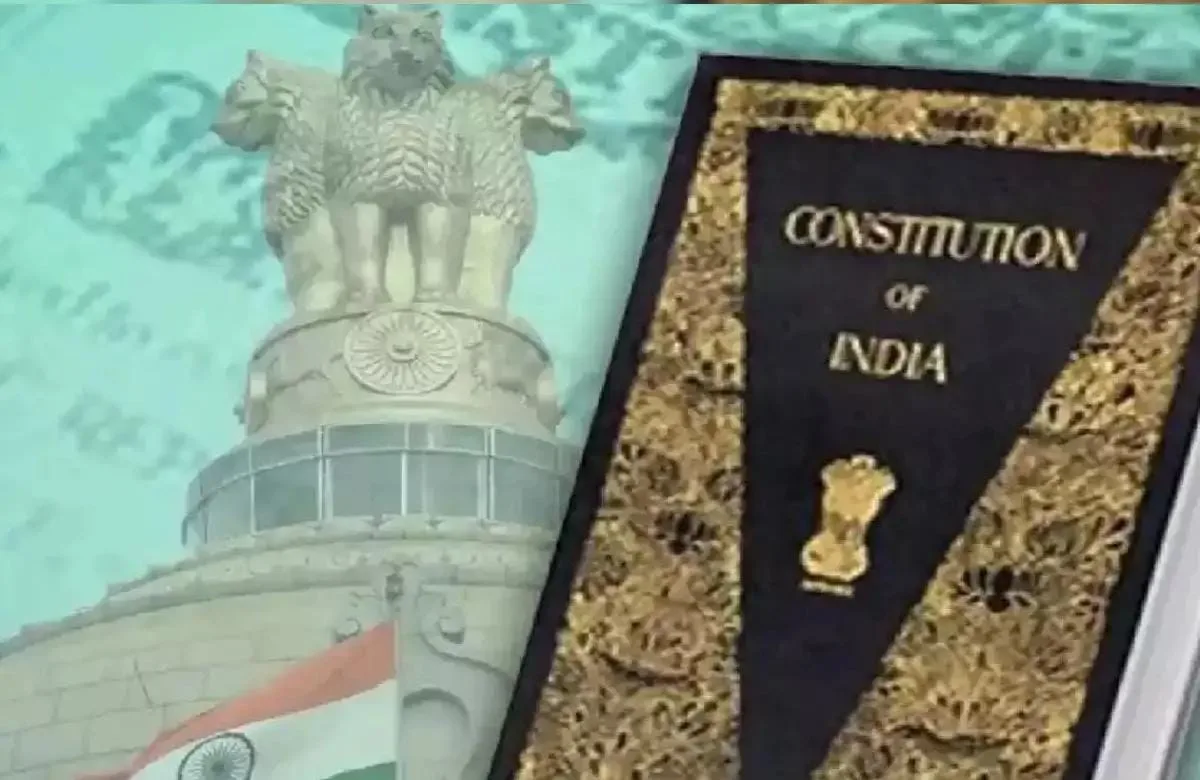
Every year on 26 January, India marks Republic Day. Each year, Pakistan responds by calling it a “Black Day”, framing the occasion as illegitimate and tying it almost exclusively to Jammu and Kashmir. The slogan travels easily, but it avoids a more important question: what does Republic Day actually mean in constitutional terms, and what does it mean for people in Jammu and Kashmir?
Stripped of rhetoric, Republic Day is not a performance of power. It marks the day the Constitution of India came into force in 1950, transforming independence into enforceable citizenship. For Jammu and Kashmir, as for the rest of the country, this date represents the legal foundation of rights, representation, and remedies.
Republic Day as a Constitutional Fact
Republic Day is often mistaken for a ceremonial celebration. In reality, it is a legal milestone. On this day, authority in India was formally placed under a written Constitution. Governments were made answerable to law. Citizens were granted fundamental rights. Courts were empowered to enforce those rights.
These are not abstract ideas. They shape everyday life. They determine how elections are conducted, how grievances are addressed, and how state power is limited. For Jammu and Kashmir, these constitutional mechanisms have been central to governance, even during periods of political stress and security challenge.
The “Black Day” Narrative and Its Limits
Pakistan’s description of Republic Day as a “Black Day” relies on reducing the Constitution to a political provocation. It ignores the fact that Republic Day is not about territory or symbolism, but about how a state governs its people.
The claim also sits uneasily with Pakistan’s own constitutional record. Pakistan has experienced repeated interruptions of civilian rule, suspensions of constitutions, and prolonged periods where unelected institutions exercised decisive power. In such a context, attacking India’s constitutional milestone does little to strengthen Pakistan’s argument. It instead highlights the absence of a comparable tradition of constitutional continuity.
This contrast is institutional, not emotional.
Jammu and Kashmir Within the Constitutional Framework
Jammu and Kashmir is frequently presented as an exception to India’s republican narrative. Yet the region’s political life has been shaped by constitutional processes: elections, courts, legislative bodies, and legal remedies. These institutions have not erased conflict or grievance, but they have provided structured ways to engage with them.
Citizens in Jammu and Kashmir vote, challenge state action in courts, access welfare entitlements, and participate in local governance under the same constitutional framework that applies elsewhere in India. These are practical expressions of citizenship, not theoretical claims.
Republic Day marks the origin of these rights.
Why Precision Matters
Reducing Republic Day to a “Black Day” slogan flattens a complex constitutional reality. It replaces legal fact with political messaging. For people in Jammu and Kashmir, this does not clarify the past or improve the present. It obscures how governance actually functions and where accountability lies.
Understanding Republic Day as a constitutional event allows for a more honest discussion—one that recognises both rights and responsibilities, and that distinguishes between institutional processes and external rhetoric.
A Date That Continues to Matter
Republic Day does not erase disagreement, nor does it demand uniformity of opinion. What it does is set the terms of political life. It affirms that disputes are to be addressed through law, not through perpetual grievance or denial of legitimacy.
For Jammu and Kashmir, that distinction matters. It anchors political debate in citizenship rather than slogans, and in constitutional process rather than confrontation.
That is why Republic Day remains relevant—not as a counter-narrative, but as a constitutional fact.
(Hailing from Kashmir and based in New Delhi, Mehak Farooq is a journalist specialising in defence and strategic affairs. Her work spans security, geopolitics, veterans’ welfare, foreign policy, and the evolving challenges of national and regional stability.)

