

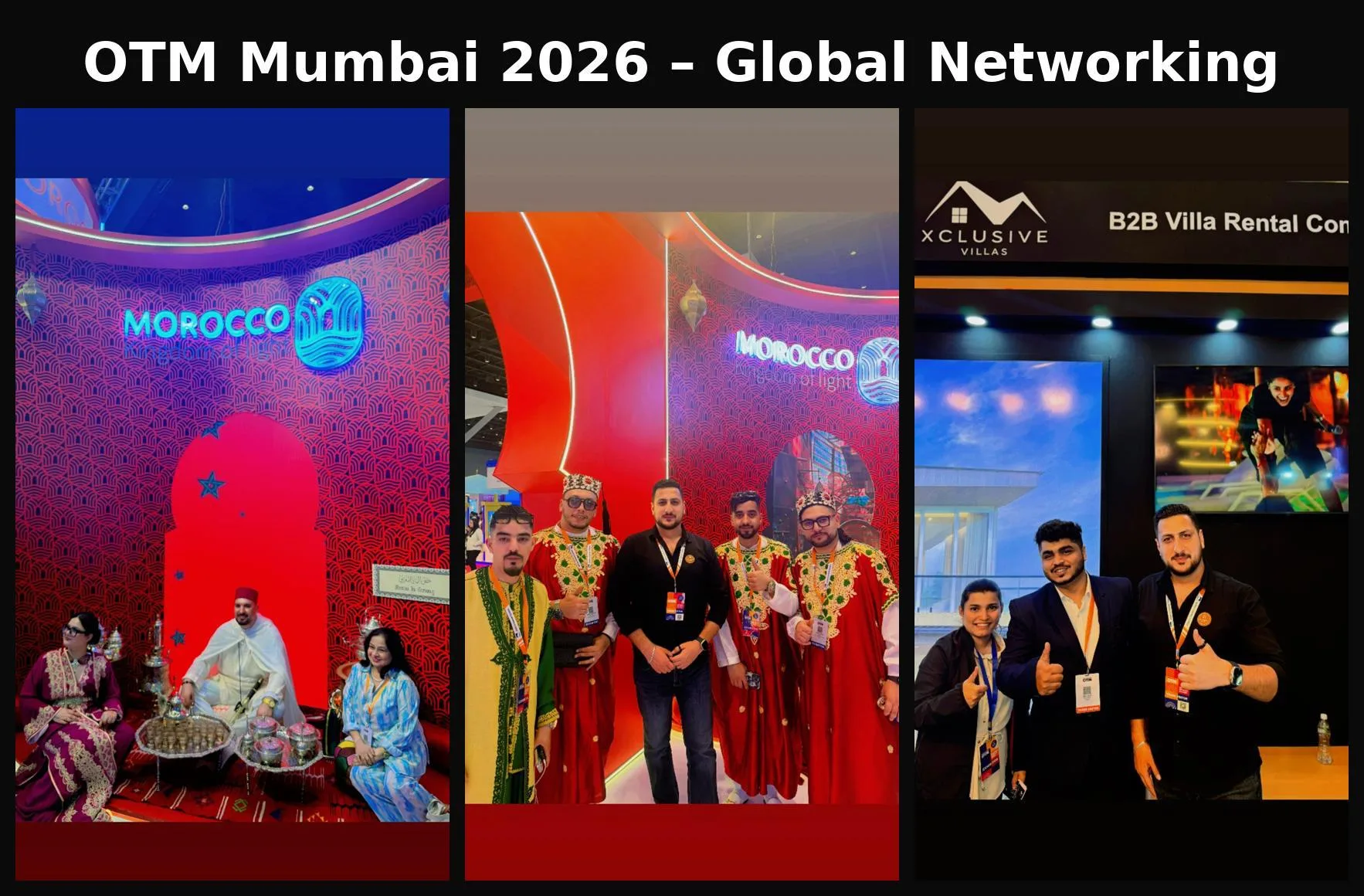
Mumbai, Feb 5 (JKNS): Faizan Mohammad – entrepreneur, hotelier, international traveller, and infrastructure & public sector business leader shared his perspective on the evolving tourism landscape of Kashmir, highlighting both its immense global appeal and the practical challenges faced by hospitality entrepreneurs in the region.
Drawing from his exposure to international travel and hospitality ecosystems, Faizan Mohammad emphasized that Kashmir naturally meets the expectations of global travellers with its breathtaking scenery, rich culture, and year-round tourism potential. However, to consistently compete with leading global destinations, natural beauty must be supported by efficient systems, professional service standards, and a business-friendly regulatory environment.
The continued efforts of the Jammu & Kashmir government in promoting tourism across national and international platforms have helped rebuild confidence and position Kashmir as a premium and experiential destination. Improvements in connectivity, infrastructure development, and promotion of new tourist circuits beyond traditional hubs are positive steps toward sustainable tourism growth.As the founder of Lieu D’Amour, Srinagar, Faizan Mohammad represents a new generation of tourism entrepreneurs investing in premium boutique hospitality. With a limited number of thoughtfully designed premium rooms, the property focuses on privacy, personalized service, and curated guest experiences for honeymooners, families, and high-end independent travellers.
In addition to hospitality, Faizan Mohammad is also associated with Samzan Group, a company engaged in infrastructure and public sector supply projects. This diverse professional background gives him a broader understanding of regulatory frameworks, public-private collaboration, and the importance of streamlined systems for economic growth.
Despite strong tourism potential, entrepreneurs in Kashmir continue to face significant regulatory and procedural hurdles. Starting and operating a hospitality venture often involves navigating multiple licenses, approvals from different departments, and lengthy administrative processes. These complexities delay projects and discourage new investors from entering the tourism and hospitality sector.
Based on his experience as an international traveller, Faizan Mohammad pointed out that in many developed tourism economies, hospitality businesses benefit from digitized systems, single-window clearances, minimal compliance layers, and clearly defined timelines for approvals. Such global best practices enable entrepreneurs to focus on innovation, service quality, and guest experience rather than administrative bottlenecks. Comparable ease-of-doing-business mechanisms are still evolving in Jammu & Kashmir’s tourism sector.
Faizan Mohammad is urging the Government of Jammu & Kashmir, the Hon’ble Lieutenant Governor, and the Hon’ble Chief Minister to seek focused intervention and adopt globally benchmarked Ease of Doing Business policies tailored specifically for tourism and hospitality. He emphasized the need for a modern regulatory framework that simplifies procedures, reduces overlapping approvals, and ensures transparency and predictability for investors.
He further highlighted that the absence of a fully active and clearly structured industrial policy for the tourism and hospitality sector creates uncertainty for entrepreneurs. He suggested that a new, forward-looking policy aligned with global standards should be introduced, where ease of doing business is maximized and boutique, small, and premium hospitality ventures receive structured support and clear compliance pathways.
In light of the recent unfortunate incident which has temporarily affected tourism sentiment, Faizan Mohammad also shared constructive suggestions to help restore traveler confidence swiftly.
He recommended a strong national reassurance campaign highlighting safety measures and positive ground realities, along with visible yet tourist-friendly security at major destinations. Inviting travel media, influencers, and tour operators for familiarization trips can help rebuild trust through real-time positive storytelling.
Short-term revival packages in collaboration with airlines and hotels, focused promotion of established destinations such as Srinagar and Gulmarg, and consistent communication showcasing normalcy can help stimulate immediate demand. He further suggested temporary relief measures for small and medium hospitality businesses to help them sustain operations during the recovery phase.
From both an entrepreneur’s and an international traveller’s perspective, Faizan Mohammad also underscored the importance of professional skill development, sustainable tourism management, improved waste systems in tourist areas, and better last-mile connectivity. These elements are crucial in shaping visitor experience and maintaining Kashmir’s global tourism reputation.
Boutique properties like Lieu D’Amour contribute to diversifying Kashmir’s hospitality landscape by offering intimate, experience-driven stays that complement larger hotels and traditional accommodations. Supporting such ventures through progressive policy reforms, financial incentives, and simplified compliance structures can help position Kashmir as a global leader in boutique and experiential tourism.
“Kashmir has all the ingredients of a world-class destination unmatched natural beauty, culture, and authenticity. With sustained promotion, globally aligned ease-of-doing-business policies, and coordinated efforts to rebuild traveler confidence, the region can quickly regain its position as one of the most sought-after premium boutique travel destinations in the world,” said Faizan Mohammad.
Through stronger collaboration between government authorities and private stakeholders, Kashmir tourism can move toward a more sustainable, investor-friendly, and internationally competitive future. (JKNS)

