


-
From 2,337 to 42,677: LHB Coach Manufacturing Jumps Over 18 Times Between 2004–14 and 2014–25
-
11650 Stalls/Units at Railway Stations; Allocated to Eligible Applicants Including SC/ST Communities
-
Dedicated Budgetary Provisions for Maintaining Cleanliness & Hygiene at Stations and Trains; No Component of Passenger Fare Charged on Account of Providing Cleanliness
-
POS Machines, E-Pantry Service, and SMS with Link of Menu and Tariff to Curb Overcharging in Trains Station Redevelopment;
New Delhi, Feb 5 (JKNS): For redevelopment of Stations with a long-term approach, Ministry of Railways has launched Amrit Bharat Station Scheme. The scheme involves preparation of master plans and their implementation in phases to improve the stations. The master planning includes:
• Improvement of access to station and circulating areas
• Integration of station with both sides of city
• Improvement of station building
• Improvement of waiting halls, toilets, sitting arrangement, water booths
• Provision of wider foot over bridge/air concourse commensurate with passenger traffic
• Provision of lift/escalators/ramp
• Improvement /Provision of platform surface and cover over platforms
• Provision of kiosks for local products through schemes like ‘One Station One Product’
• Parking areas, Multimodal integration
• Amenities for Divyangjans
• Better passenger information systems
• Provision of executive lounges, nominated spaces for business meetings, landscaping, etc. keeping in view the necessity at each station
The scheme also envisages sustainable and environment friendly solutions, provision of ballastless tracks etc. as per necessity, phasing and feasibility and creation of city centre at the station in the long term. So far, 1337 stations have been identified for development under this scheme. Till now, works of 172 stations have been completed.
Safety of Bridges
Safety of Bridges across the country is accorded high priority by Indian Railways (IR). To ensure greater degree of safety/safeguards for bridges, there is a well-established system of inspection of Railway bridges on IR. All the bridges are inspected twice a year by designated officials, once before the onset of monsoon and a detailed inspection after the monsoon. In addition, certain bridges are also inspected more frequently depending upon their condition as decided by the Chief Bridge Engineer (CBE). Comprehensive Technical inspection of important & major bridges is done in a way that 20% of such bridges are inspected annually.
Repair/Strengthening/Rehabilitation/Rebuilding of bridges is a continuous & ongoing process and is undertaken based on inspections of bridges. During 2022-2025 (upto Dec’2025), 8,626 nos of railway bridges have been repaired / rehabilitated/ strengthened / rebuild in Indian Railways.
In addition, certain railway bridges are also inspected more frequently depending upon their condition. Repair/strengthening/rehabilitation /rebuilding of railway bridges is a continuous process and is undertaken whenever so warranted by their physical condition as ascertained during these inspections. Special technical audit is also conducted and follow up action is taken. The inspection of Subways/RUBs is conducted before and after the onset of the monsoon. Steps has taken to reduce water-logging in Road Under Bridges (RUBs) and subways, such as improved drainage in new designs, diverting water to natural drains, providing humps and cross-drains, sealing joints, and installing high-capacity pumps at vulnerable sites.
The methodologies of bridge rehabilitation works are provided in Indian Railway Bridge Manual (IRBM). Adherence to the quality assurance plan (QAP), inspection & testing plan (ITP) is ensured through contract management and general and special conditions of contract.
The retention of security deposit till defect liability period, penal provisions like termination of contract have been incorporated for accountability of executing agency. Completion of Bridge works depends on various factors like location, type, approval of schemes, availability of approach road, duration of working season in a year due to climatic conditions, availability of blocks, imposition of speed restrictions etc.
Coach Manufacturing
Presently, there are three coach manufacturing units operational in the country under Ministry of Railways. The cost of development of coach manufacturing units varies depending upon factors such as location, the type of coaches proposed to be manufactured, planned production capacity, and the machinery and plant to be installed. Expenditure on the development of coach manufacturing units is incurred over extended periods and across multiple phases covering the initial setting up of the units as well as subsequent upgradation and augmentation of the facilities from time to time. For example, the expenditure incurred on the setting up of the latest operational coach manufacturing unit- Modern Coach Factory, Raebareli is Rs. 3,042.83 crore.
Further, Rs. 2443 Cr has been sanctioned for various projects related to the upgradation/ augmentation of the three operational coach manufacturing units viz. Integral Coach Factory, Chennai, Rail Coach Factory, Kapurthala, and Modern Coach Factory, Raebareli.
LHB Coaches
Regarding proliferation of LHB coaches, it is mentioned that the work of replacement of ICF coaches with safer and more modern LHB coaches has been taken up in a phased manner. Technologically superior LHB coaches have better riding, improved aesthetics and features like Lightweight design, Anti climbing features, Air suspension (Secondary) with failure indication system, stainless steel shell and disc brake system etc.
Production of LHB coaches during 2014-25 vis-à-vis 2004-14 is as under:
Period
LHB coaches manufactured
2004-14
2,337 nos.
2014-25
42,677 nos. (more than 18 times)
Stalls at Railway Stations
To ensure availability of adequate facilities for travelling passengers, allotment of stalls at railway stations is done through e-auction/e-tender in accordance with extant policy in vogue from time to time.
Presently, there are 11650 stalls/units at railway stations, allocated to eligible applicants including those from SC/ST communities. There is no provision in the extant policy for allocation of free stalls at railway stations.
Cleanliness
Cleanliness is a continuous process and Indian Railways (IR) makes every endeavour to keep coaches in properly maintained and clean condition. Railways have taken several measures as follows to monitor and ensure cleanliness and hygiene in coaches including washrooms:
· Mechanized Coach Cleaning is being ensured during primary maintenance for better cleaning of the coach including interior, exterior and toilets.
· On-Board Housekeeping Staff Service is being provided to ensure cleanliness on run and to attend to any passenger grievance.
· Clean Train Station service has been introduced for mechanized cleaning in identified trains including washrooms during their scheduled stoppage enroute. Dedicated team of staff equipped with high pressure jet machines and cleaning equipment carries out cleaning followed by drying of coach toilets.
· All passenger coaches have been installed with bio-toilets so that no human waste is discharged from coaches on the track resulting in improved cleanliness level. The details of provision of bio toilets are as under:
Period
Number of Bio-Toilet fitted
2004-2014
9,587
2014-till date
3,61,572
· Regular monitoring is done through inspections, and feedback received through Rail Madad/RailOne app and other passenger interfaces.
IR has dedicated budgetary provisions for maintaining cleanliness & hygiene at stations and trains. No component of passenger fare is charged on account of providing cleanliness.
Food and Catering
Indian Railways serve about 58 cr meals every year on average. About only 0.0008% complaints are received on average. Based on inquiry on these complaints during the last three years, a fine of Rs 2.6 cr has been imposed.
In order to take passenger feedback, the complaint management system over Indian Railways has been strengthened, simplified and made more accessible over the last few years through the introduction of RailMadad Portal. With the launch of RailMadad Portal, Indian Railways provided passengers a single window system to register complaints and suggestions.
IRCTC and Railway officials conduct surprise and periodic checks to ensure compliance with catering standards on trains. IRCTC has deployed supervisors and catering assistants for ongoing monitoring of onboard services and real-time resolution of passengers grievances. To enhance inspection coverage, IRCTC has engaged additional Hospitality Monitors for sectional oversight of catering services on mail express trains
Indian Railways continuously endeavour to make available food items to the travelling passengers as per the prescribed rates. Necessary steps are accordingly taken by Indian Railways from time to time to ensure the same. Following steps have been taken by Railways to curb overcharging in trains :
· SMS is sent to passengers with a link of menu and tariff to make them aware of rates.
· Installation of Point of Sale (POS) machines for billing and cashless payments.
· Conducting awareness campaigns to promote billing and curb overcharging.
· Rates stickers on Packaged Drinking Water (PDW) Buckets and Tea/Coffee urns.
· Introduction of e-pantry service in Mail/Express trains to facilitate passengers to book meals through an online module.
· Implementation of QR code enabled Identity Cards to onboard catering staff.
· Distribution of pamphlets to create awareness regarding the rate of catering items and Packaged Drinking Water bottles.
· Special Inspection Drives to check overcharging and billing issues.
· Imposition of suitable penalty in cases of overcharging, if any.
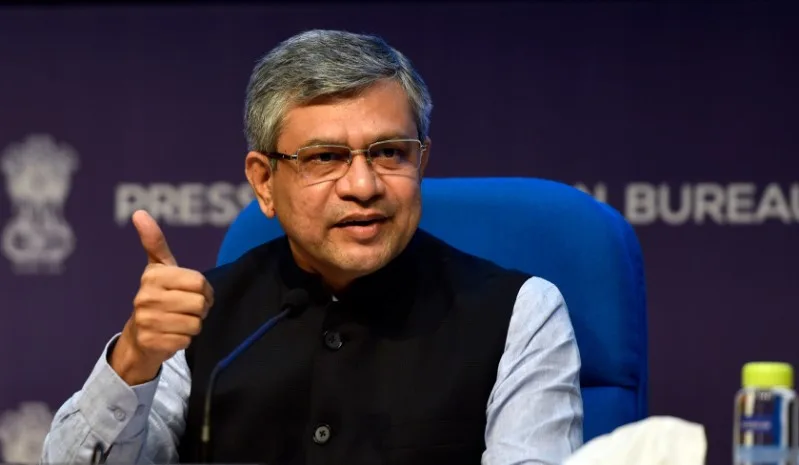
This information was provided by the Union Minister for Railways, Information & Broadcasting and Electronics & Information Technology, Shri Ashwini Vaishnaw, in written reply to questions in Lok Sabha on Wednesday. (JKNS)