

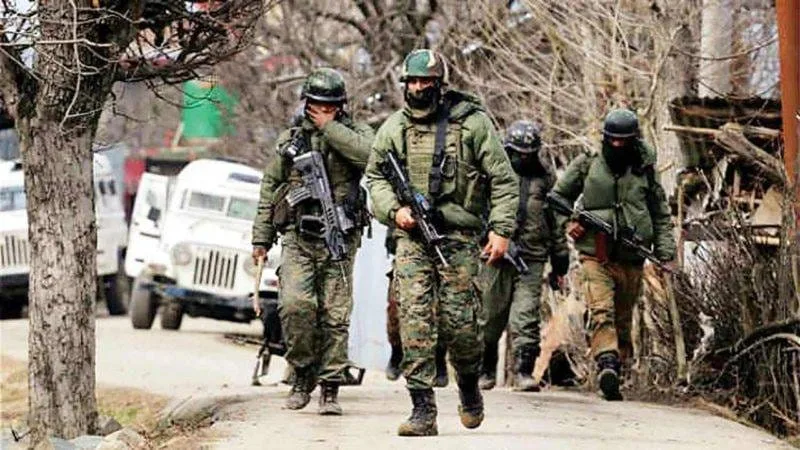
For over three decades, terrorist groups in Jammu and Kashmir have preyed on local youth, exploiting grievances, religious sentiments, and isolated incidents to fuel recruitment. Masjids were turned into echo chambers of propaganda, communal tensions amplified, and religion weaponized to portray a narrative of existential threat. However, this once-effective machinery is now grinding to a halt, evidenced by hard data and a profound societal transformation.
Multiple reputable reports reveal a staggering decline in local recruitment: from 143 youths joining terrorist ranks in 2019 to dropping 25 in 2023, just 7 in 2024, and a mere 1-2 in 2025.
This isn’t mere coincidence, it’s the result of heightened awareness, tangible benefits from integration with India, and a rejection of foreign agendas that sacrifice Kashmiri lives for external gains. As Army Chief General Upendra Dwivedi stated in January 2026, local terrorist recruitment is “almost non-existent,” with active local terrorists now in single digits for the first time since 2011-12.
This article highlights how Kashmiris are increasingly seeing through the manipulation, prioritizing development over distraction.
1. The Erosion of Religion-Based Propaganda
Terrorist recruiters have long hinged on claims of “anti-Islam” policies by the Indian state, citing masjid-related issues or communal flare-ups to incite youth. Yet, this narrative crumbles under scrutiny. Kashmiris now recognize that government actions are driven by development, not religious bias, a point underscored by projects affecting all faiths equally.
Consider the Kashi Vishwanath Corridor in Varanasi: To create better public infrastructure and pilgrim access, over 296 structures, including dozens of ancient Hindu temples built within residential complexes, were demolished or relocated between 2018 and 2021.
Critics, including local seers, lamented the loss of heritage, but the project proceeded for broader public good.
Similarly, in Kashmir, land acquisitions for roads, tunnels, and tourism hubs have impacted properties across communities, not selectively targeting Muslims. Banned outfits like Lashkar-e-Taiba (LeT) and Jaish-e-Mohammed (JeM) cherry-pick incidents—such as the 2020 Babri Masjid verdict aftermath or isolated communal clashes, to generalize “anti-Muslim” oppression, ignoring that the same government invests in religious infrastructure for all, including Haj subsidies and Sufi shrine restorations in the Valley.
This realization has spread: As per reports, youth seminars on drug addiction, terrorism, and authentic Islamic scholarship have demystified these tactics, reducing recruitment by exposing how terrorists misuse faith for political ends.
Kashmir’s emphasis on ilm (knowledge) has empowered locals to reject distorted interpretations.
2. Unmasking Selective Outrage Over Incidents
A core recruitment tool involves amplifying mishandled incidents as “identity-based persecution.” Terrorists generalize one-off events—like custodial deaths or administrative lapses, as systemic anti-Kashmiri or anti-Muslim bias, ignoring similar occurrences across India.
For instance, the 2019 Pulwama suicide bombing, which killed 40 CRPF personnel, was portrayed by groups like JeM as retaliation against “oppression.” Yet, investigations revealed it as a calculated act by foreign-funded terrorists, not a grassroots response.
Similarly, consider the 2016 encounter death of terrorist commander Burhan Wani in Anantnag. Terrorists and separatists hyped this as a cold-blooded extra-judicial killing symbolizing state tyranny against innocent Kashmiri youth. But locals increasingly question: Was it religiously or regionally motivated persecution, or a lawful security operation against an armed insurgent who had openly promoted violence via social media?
Similar counter-insurgency actions target terrorists of diverse backgrounds across India, such as Naxalites in Chhattisgarh (predominantly Hindu and tribal) or separatists in Nagaland, with mechanisms for oversight and review under existing laws.
This selective framing is now widely rejected as propaganda.
Kashmiris increasingly demand context: Data shows that while terrorists highlight “mishandled” cases, they ignore their own atrocities, such as the 2024 Reasi bus attack killing nine Hindu pilgrims or the 2025 Pahalgam massacre of 26 tourists.
These are now seen as attempts to disrupt tourism and economy, not defend faith. As one police official noted in a 2025 report, “People ask sharper questions now,” rejecting selective framing.
3. Post-Article 370: Tangible Gains Over Fear-Mongering
Before the 2019 abrogation of Article 370, terrorists painted it as the “end of Kashmiri identity.” Reality has proven otherwise, with direct access to national schemes transforming lives.
Previously denied, Kashmiris now benefit from reservations: 10% for economically weaker sections in jobs and education, plus quotas for Scheduled Tribes (STs) like Gujjars and Bakerwals, who gained electoral reservations for the first time.
National scholarships, such as the Prime Minister’s Scholarship Scheme, have expanded, benefiting over 5,000 students annually since 2020, up from negligible pre-abrogation figures.
Welfare programs like Pradhan Mantri Awas Yojana have allotted land to lakhs for housing, while transparent recruitment processes have opened central government jobs.
Employment avenues have surged: Tourism hit 2 crore visitors in 2024, creating jobs in hospitality; digital services and infrastructure projects employ thousands.
As PM Narendra Modi noted in 2019, abrogation removes barriers, allowing schemes like Right to Education and Minimum Wages Act to fully apply.
Lived experience trumps propaganda, problems persist, but benefits are undeniable, drying up recruitment pools.
4. Exposing Foreign Funding and Agendas
Banned outfits aren’t homegrown heroes; they’re tools of foreign powers, primarily Pakistan, funding chaos while their leaders live safely abroad.
Pakistan’s ISI spends $125-250 million annually on groups like LeT, JeM, and Hizbul Mujahideen (HM), providing arms, training, and salaries. Up to 90% of terrorists are foreign (mostly Pakistani), with locals as “expendable assets.” Funds flow via hawala, charities like Jamaat-ud-Dawa (LeT front), and even cryptocurrency.
New recruits often die within months as reports shows high elimination rates, with survival under a year.
Kashmiris see this: “We die, they issue statements,” as families grieve. Groups like The Resistance Front (TRF), a LeT proxy, coordinate smuggling and recruitment but prioritize Pakistani interests over Kashmiri welfare.
5. Rejecting Quranic Misinterpretations
Terrorists twist verses on jihad, ignoring contexts forbidding violence against innocents (Quran 5:32), suicide (4:29), or unjust war (2:190).
They decontextualize “fight those who fight you” to justify global domination, as ISIS does. Authentic scholars refute this: A 2014 open letter by 126 imams called ISIS’ actions “an offense to Islam.”
In Kashmir, rising education, access to authentic scholarship, and community programs have empowered youth and families to recognize these manipulations.
True Islamic teachings—emphasizing justice, protection of life, and knowledge; stand in direct opposition to the cycle of death promoted by banned outfits, leading locals to reject radical ideology.
6. Development vs. Perpetual Distraction
While terrorists cling to outdated grievances, symbolic outrage, and identity traps that offer no future, the government focuses on tangible progress.
Jammu and Kashmir is among India’s fastest-growing regions, with massive investments in roads, tunnels, and highways (₹61,528 crore committed, including recent approvals worth ₹10,637 crore). Tourism has surged—1.78 crore visitors in 2025—creating jobs in hospitality, handicrafts, and services. Over 2,227 new industrial units since 2020 have generated more than 73,800 jobs, alongside expanded education and hydropower projects.
Youth see the clear contrast: development builds futures, employment, and dignity; terrorism delivers only death, jail, or lifelong grief.
Kashmiris are choosing rationality and progress over perpetual conflict.
7. The Emotional Core: Unity as Indians
At its heart, this shift is deeply human. A Kashmiri mother’s grief over a lost son is no different from a mother’s pain in Delhi, Chennai, or anywhere in India. Violence destroys families, communities, and futures without healing any wounds.
Joining terrorist ranks today means betraying one’s own people, loved ones, and the shared brotherhood of a single nation. Kashmiris increasingly recognize that we are all connected—culturally, historically, and as fellow citizens. Rejecting foreign-fuelled manipulation, choosing life, peace, and unity over division and death.
Conclusion: The Triumph of Truth Over Manipulation
Recruitment’s near-total collapse, from hundreds annually to near-zero in 2025 isn’t driven by coercion alone; it’s the victory of independent thinking, lived benefits, and societal awakening.
Kashmiris question narratives, weigh outcomes, and embrace progress. Terrorism’s era is fading because truth has prevailed, manipulation can no longer thrive when people see clearly. As numbers hit zero, terrorism’s era fades, unlikely to return.

