

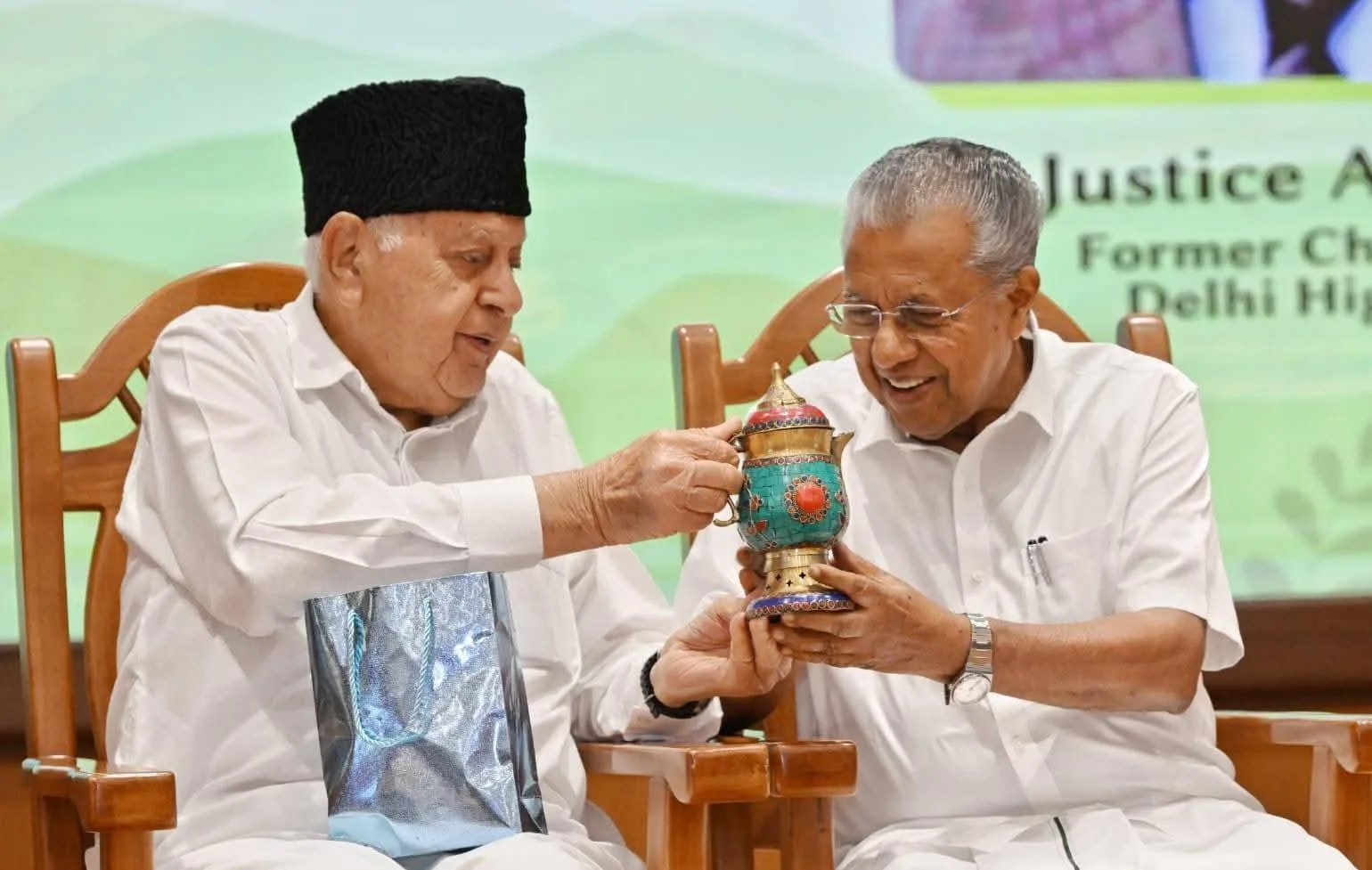
Thiruvananthapuram, Feb 17 (JKNS): National Conference president and former Jammu and Kashmir Chief Minister Farooq Abdullah on Tuesday urged the country to come together in the interest of restoring peace and safeguarding the dignity of the people of Jammu and Kashmir.
Abdullah while speaking at the valedictory session of the international seminar “Vision-2031” on development and democracy, organised by the Kerala State Planning Commission in Thiruvananthapuram as per news agency JKNS Delivered an emotional speech, Abdullah highlighted the difficulties being faced by the people of Jammu and Kashmir, stating that a sense of suffering and alienation continues to persist in the region.
He also expressed concern over increasing communal divisions in certain parts of the country, while commending southern states for preserving social cohesion and harmony.
At 90, Abdullah said he had travelled to Kerala to appeal to the nation to remember the people of Jammu and Kashmir and support them in overcoming current challenges. He said the unity displayed by other states offers hope to the Union Territory’s residents.
Touching upon the region’s economy, which is heavily reliant on horticulture and tourism, Abdullah raised concerns over the reported trade agreement between India and the United States. He said there is uncertainty about its potential impact on local apple, walnut and almond growers.
He also criticised the abrogation of Article 370 and the reorganisation of Jammu and Kashmir into a Union Territory, asserting that these steps have not brought an end to militancy. He questioned whether incidents of violence had stopped since August 2019.
Speaking on federalism, Abdullah alleged that there has been growing centralisation of authority, arguing that India’s constitutional framework provides for a balance of power between the Centre and the states. He maintained that reducing states’ powers weakens governance and autonomy.
Praising Kerala’s development trajectory, Abdullah said he was impressed by the state’s achievements in reducing poverty and maintaining communal harmony despite financial and administrative limitations.
Concluding his address, he stressed that India’s democracy must remain inclusive and ensure equal rights and opportunities for all citizens, regardless of religion, region or background. (JKNS)

