

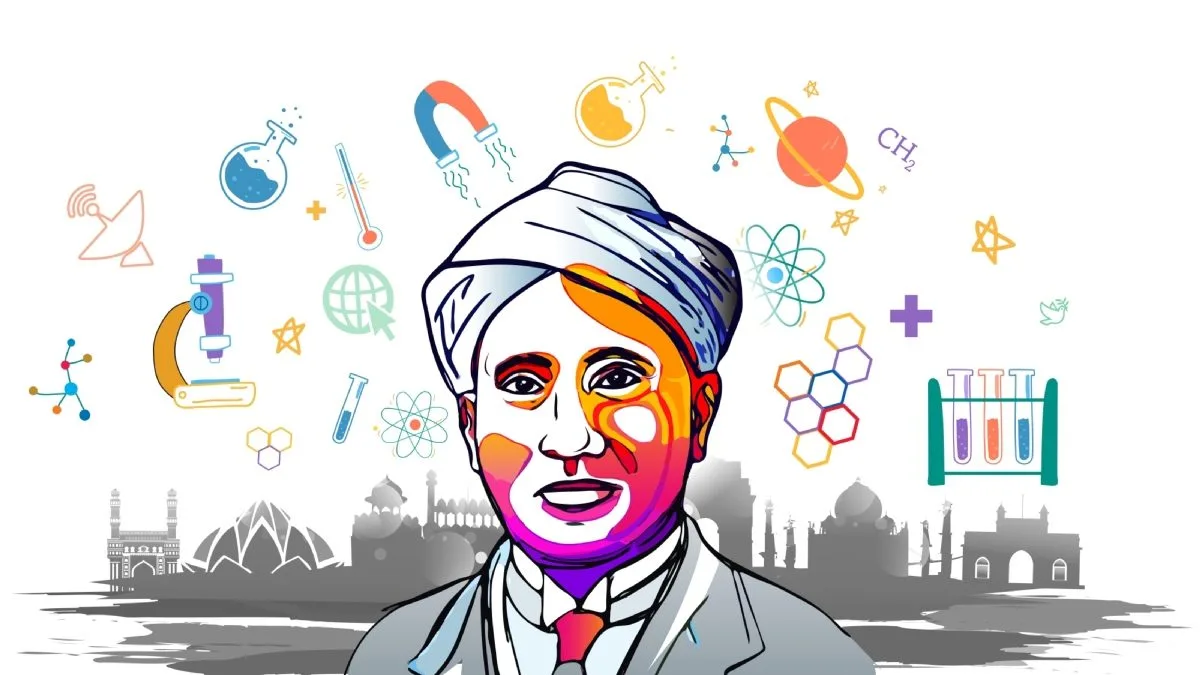
National Science Day is not merely a scheduled entry on the Indian calendar but is the very heartbeat of a nation that has historically balanced the profound depths of spiritual inquiry with the rigorous demands of empirical observation. As the sun sets on the final days of February each year, India pauses to reflect on a singular moment of intellectual triumph that occurred in a modest laboratory in Kolkata nearly a century ago. On February 28, 1928, Sir Chandrasekhara Venkata Raman observed a phenomenon that would fundamentally alter our understanding of light and matter, proving that even with limited resources, the Indian mind could illuminate the most complex mysteries of the universe. This discovery, which we now revere as the Raman Effect, involved the inelastic scattering of photons as they traverse a transparent medium, a revelation that earned Raman the Nobel Prize in Physics in 1930 and established him as the first Asian to achieve such a distinction in the sciences. The legacy of that discovery is the foundation upon which the modern Indian scientific establishment stands today, serving as a constant reminder that indigenous genius is not dependent on foreign validation or extravagant infrastructure but on the clarity of vision and the persistence of the spirit.
The formal institutionalisation of National Science Day in 1986, following a proposal by the National Council for Science and Technology Communication, was a deliberate act of statecraft intended to weave scientific temper into the very fabric of Indian society. It was a call to move beyond the ivory towers of academia and to bring the wonders of discovery to the streets, the fields and the classrooms of every village across the subcontinent. In the year 2026, this observance has taken on a renewed significance under the powerful theme of indigenous technologies for a Viksit Bharat. This theme is more than a mere slogan because it represents a strategic pivot from being a consumer of global innovation to being a primary architect of it. The vision of a Viksit Bharat by 2047, the centenary of our independence, demands that we cultivate a generation that does not merely look at technology as a finished product to be imported but as a tool to be forged in the crucibles of our own laboratories. This shift is reflected in India’s remarkable ascent in global rankings, where the nation now proudly holds the thirty ninth position in the Global Innovation Index and ranks sixth globally in intellectual property filings, showcasing a surge in domestic patenting that would have made the pioneers of our scientific movement immensely proud.
As we celebrate National Science Day in 2026, the integrated four fold approach championed by the Department of Science and Technology serves as a blueprint for this national transformation. By breaking down the silos between departmental research, engineering, medicine and industry, the Indian scientific ecosystem is finally moving toward a demand led model of innovation. We see this integration manifest in the way the Ministry of Railways or the Jal Shakti Ministry now collaborates with startups and academic institutions to solve specific governance and infrastructural challenges. This is the essence of a scientific temper that is uniquely Indian, as it seeks to solve the problems of the common citizen through the application of high-level research. Whether it is the development of indigenous quantum computing protocols or the deployment of artificial intelligence in agriculture, the goal remains the same, which is to ensure that science serves the welfare of humanity while bolstering national self reliance. This approach recognises that the challenges of the twenty first century, ranging from climate change to healthcare, require a holistic response that blends traditional wisdom with cutting edge technological prowess.
The regional context of these celebrations, particularly in the fragile and ecologically sensitive landscapes of Jammu and Kashmir, further illustrates the localised impact of Indian science. In the Kashmir Valley, National Science Day is not just an academic exercise but a critical forum for discussing the survival of the Himalayan ecosystem. Scientists at the University of Jammu and institutions like Sher-e-Kashmir University of Agricultural Sciences and Technology Kashmir are currently engaged in a heroic effort to understand the shifting patterns of our environment, where the retreat of the Kolahoi glacier and the increasing frequency of hydrological shocks have become immediate concerns for water security and agriculture. The 2026 celebrations are marked by a focus on climate smart breeding and resilient agro ecosystems, reflecting a deep understanding that our scientific endeavours must be rooted in the soil they seek to protect. The Gongul-2026 Agri-Tech Mela, which honours the onset of the sowing season, is a beautiful example of how traditional Kashmiri agricultural practices are being augmented by next generation technologies like smart sensor networks and data analytics. This synergy between the laboratory and the land is where the true success of National Science Day lies, as it empowers the farmer with the produce and the price they deserve through the intervention of indigenous research.
Furthermore, the emphasis on inclusivity during these celebrations highlights the democratic nature of Indian science. Initiatives such as the Women in Science and Engineering conclaves and the various fellowships designed for young scholars ensure that the scientific journey is one that every Indian, regardless of gender or geography, can embark upon. The recent recognition of women scientists at the Regional Centre for Biotechnology and the launch of the Women’s Science Conclave at National Institute of Technology, Srinagar are testaments to a changing landscape where the female intellect is finally being given its rightful place at the forefront of innovation. By nurturing this diverse pool of talent, India is ensuring that its march toward 2047 is powered by a plurality of perspectives. We also see this grassroots engagement in the schools and degree colleges across districts like Kulgam and Budgam, where students participate in quiz competitions and model making with a zeal that suggests the next C.V. Raman might already be sketching his first hypothesis in a classroom in a remote mountain valley. This democratisation of knowledge is the ultimate tribute to Raman’s legacy because he himself believed that the most effective development of education occurs when the teacher, the student and the environment interact in a series of feedback loops free from the regimentation of irrelevant theories.
As we look toward the future, National Science Day must remain a day of inspiration that encourages us to look at the world with a scientific mindset while remaining grounded in our cultural identity. It is a day to reject superstition and apathy in favour of logic and evidence, but it is also a day to take pride in the specific Indian way of doing science, which has always been characterised by resourcefulness and a deep respect for nature. The journey from the small laboratory in Kolkata to the moon’s south pole with Chandrayaan-3 and the advanced plasma research facilities of today is a story of a nation that refused to be defined by its limitations. In 2026, as we stand at the threshold of becoming a global scientific superpower, let us remember that the real power of science lies in its ability to improve lives and solve the pressing problems of our society. The Raman Effect was not just a change in the wavelength of light, but a change in the wavelength of our national consciousness, proving that India could and would lead the world in understanding the fundamental truths of existence. As long as we continue to embrace this spirit of curiosity and innovation, the vision of a Viksit Bharat will not just be a distant goal but a living reality that we build together, one discovery at a time, ensuring that the light of knowledge continues to shine brightly across our ancient and enduring land.

