

Pakistan-occupied Jammu and Kashmir refers to the parts of the former princely state of Jammu and Kashmir that came under Pakistan’s control after the 1947–48 conflict between India and Pakistan. This region is administered by Pakistan as so-called “Azad Jammu and Kashmir” and Gilgit-Baltistan. For decades, the people living in these areas have faced serious political, economic and human rights challenges. The issue is not only geopolitical at its heart, it concerns the dignity, identity and future of the people who call this region home.
One of the most frequently raised concerns about Pakistan-occupied Jammu and Kashmir is the limited political autonomy enjoyed by its people. Although “Azad Jammu and Kashmir” has its own president and prime minister, real authority is widely perceived to rest with institutions in Islamabad. In Gilgit-Baltistan, for many years, residents were denied full constitutional recognition and representation in Pakistan’s parliament. Even with recent administrative changes, critics argue that decision-making power remains centralized.
Political activists in the region have often complained about restrictions on freedom of expression. Voices demanding greater autonomy, genuine self-governance, or changes in constitutional status have reportedly faced pressure. Media coverage from the region is limited and journalists sometimes operate in a challenging environment. These conditions create a sense among many residents that their aspirations are secondary to larger strategic interests.
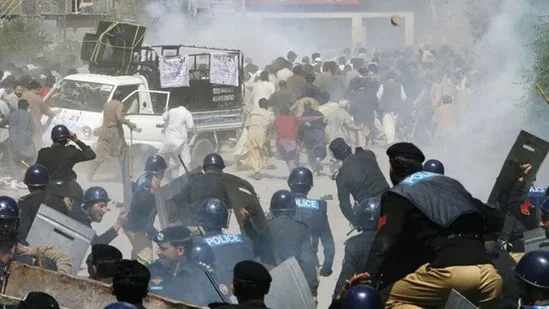
Human rights organizations and activists have, over time, raised concerns about arbitrary detentions, restrictions on peaceful protests and alleged heavy-handed responses to dissent. People protesting for better infrastructure, electricity supply, employment, or political rights have occasionally faced strong administrative action.
Minority communities in parts of Gilgit-Baltistan have also expressed concerns about sectarian tensions. There have been periods in the past when sectarian violence disrupted social harmony. While the situation has evolved over time, the memories of unrest and discrimination continue to shape public sentiment.
Additionally, families divided by the Line of Control often suffer emotional and economic hardships. Cross-border travel is limited and highly regulated. This human dimension of the conflict rarely receives as much attention as military or diplomatic narratives, yet it deeply affects ordinary lives. Despite its breathtaking natural beauty and strategic importance, Pakistan-occupied Jammu and Kashmir remains economically underdeveloped in many areas. Infrastructure gaps, limited industrial growth and unemployment are persistent issues. Many young people migrate in search of better opportunities.
The region is also central to the China-Pakistan Economic Corridor, a flagship project of the Belt and Road Initiative. While China-Pakistan Economic Corridor promises infrastructure development, power projects and connectivity, critics argue that local communities have not always been adequately consulted. There are concerns about environmental impact, land acquisition and whether the economic benefits truly reach local populations. People in Gilgit-Baltistan, in particular, have sometimes protested over issues such as taxation without full constitutional rights, electricity shortages despite local hydropower projects and perceived inequitable resource sharing. When development projects proceed without meaningful public participation, resentment tends to grow.
The regions of “Azad Jammu and Kashmir” and Gilgit-Baltistan are culturally diverse, with distinct languages, traditions and identities. Some residents fear that demographic changes, land policies, or centralized governance could dilute local identity. Safeguarding cultural heritage, language and traditional rights over land is a sensitive issue.
The broader Kashmir dispute between India and Pakistan also influences identity politics in Pakistan occupied Jammu and Kashmir. Competing narratives whether focused on accession, autonomy or independence shape public discourse. In this complex environment, the ordinary citizen often feels caught between larger national agendas. Addressing the situation in Pakistan-occupied Jammu and Kashmir requires a balanced, humane and forward-looking approach. Any sustainable solution must prioritize the welfare and rights of the people living there.
Greater political empowerment is essential. Transparent elections, genuine devolution of power and meaningful legislative authority for local governments can build trust. Ensuring freedom of expression and protecting peaceful dissent would allow grievances to be addressed through dialogue rather than confrontation. Independent mechanisms to monitor and safeguard human rights are vital. Access for credible observers, support for a free press and legal safeguards against arbitrary detention can strengthen accountability. A rights-based approach helps create long-term stability.
Large scale projects like China-Pakistan Economic Corridor should prioritize local employment, environmental sustainability and fair compensation for land. Public consultation must be more than a formality. When communities feel ownership over development, economic growth becomes more equitable and less contentious. Promoting interfaith and inter-sect harmony through education, community initiatives and responsible governance is critical. Stability cannot be achieved without social cohesion. Expanding people-to-people contact across the Line of Control can reduce alienation. Trade, travel permits, cultural exchanges and humanitarian initiatives can humanize a conflict that is often seen only through a strategic lens.
Ultimately, the broader Kashmir dispute cannot be separated from conditions in Pakistan-occupied Jammu and Kashmir. Dialogue between India and Pakistan focused on reducing tensions and prioritizing humanitarian concerns remains essential. While political realities are complex, incremental confidence-building steps can prevent escalation and create space for constructive engagement. The situation in Pakistan-occupied Jammu and Kashmir is not merely about territory or strategy it is about people families seeking dignity, youth seeking opportunity and communities seeking recognition. Allegations of political marginalization, human rights concern and uneven development have shaped the narrative of “atrocities” and grievances in the region. At the same time, the path forward lies not in rhetoric but in reforms, transparency and empathy.
A durable solution will require political courage, respect for human rights and sincere efforts to empower local communities. When governance becomes participatory and development becomes inclusive, the region’s immense human and natural potential can finally be realized. The mountains and valleys of this land have witnessed decades of uncertainty they deserve a future defined not by conflict, but by peace and prosperity.

