

Balochistan, the largest province of Pakistan by area but the least populated, has emerged as one of South Asia’s most unstable conflict regions. Rich in natural resources and strategically positioned along the Arabian Sea, it holds immense geopolitical and economic value. The province is home to Gwadar Port, the flagship maritime hub of the China-Pakistan Economic Corridor, which connects western China to the Arabian Sea. Despite this importance, Balochistan has witnessed a prolonged insurgency driven by grievances over political marginalization, economic neglect, inequitable resource distribution and allegations of human rights violations, including enforced disappearances. Since early 2024, violence has escalated sharply, with insurgent groups adopting more coordinated and sophisticated tactics, raising the province’s strategic significance, particularly for regional actors such as India.
Geographically, Balochistan shares borders with Iran and Afghanistan and provides Pakistan with direct access to the Arabian Sea. Gwadar lies close to the Strait of Hormuz, through which a significant portion of global oil trade passes, enhancing its geostrategic value. Economically, the province possesses substantial reserves of natural gas, copper, gold and other minerals and serves as a central hub for multibillion-dollar China-Pakistan Economic Corridor projects. For China, Gwadar represents a critical gateway to the Indian Ocean, reducing its dependence on longer maritime routes. However, many local Baloch groups argue that the exploitation of these resources disproportionately benefits external actors rather than the indigenous population, deepening resentment.
The roots of the insurgency trace back to the accession of the former princely state of Kalat to Pakistan in 1948. Since then, the conflict has unfolded in multiple phases, fueled by political exclusion, underdevelopment despite resource wealth, repeated military operations and the contentious issue of “missing persons.” These enduring grievances have sustained separatist movements over decades.
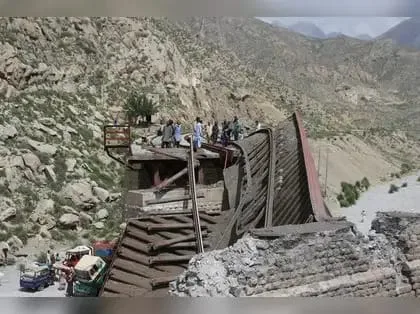
Between 2024 and 2026, the security situation has deteriorated significantly. Coordinated attacks in early 2026 struck multiple cities, while Pakistani security forces claimed to have killed over 150 militants in large-scale counter insurgency operations. Major urban centers such as Quetta and Gwadar have experienced repeated assaults targeting security personnel and infrastructure. Among the most notable incidents were a 2025 train hijacking in which militants held more than 200 passenger’s hostages to demand prisoner releases, and a May 2025 school bus bombing that killed numerous civilians, including children. Urban bombings and targeted killings have continued, signaling improved planning and expanded operational reach by insurgent groups.
The insurgency’s tactics have evolved markedly. Militant organizations have incorporated female suicide bombers, reportedly acquired advanced weaponry from post-Afghanistan conflict stockpiles and employed drones, night-vision technology and coordinated multi-target attacks. These developments reflect increasing sophistication. Foreign-backed projects, particularly China-Pakistan Economic Corridor infrastructure and Chinese nationals, have become frequent targets, with Gwadar remaining a focal point of attacks.
The most prominent insurgent organization is the Baloch Liberation Army, which conducts high-profile operations, including suicide missions through its Majeed Brigade. Other active groups include the Baloch Liberation Front and the Islamic State Khorasan Province, alongside various local militant factions.
Despite its resource wealth, Balochistan remains Pakistan’s poorest province, characterized by low literacy rates, inadequate healthcare, unemployment, weak infrastructure and displacement caused by ongoing conflict. These socioeconomic challenges intensify alienation from the central government. Pakistan’s response has largely relied on military measures, including extensive counterinsurgency operations, deployment of army and paramilitary forces, stringent security for China-Pakistan Economic Corridor facilities and intelligence-based raids. However, allegations of human rights abuses and enforced disappearances continue to fuel public resentment.
Externally, China holds substantial economic and strategic stakes in the province due to China-Pakistan Economic Corridor investments and the presence of thousands of Chinese workers. Attacks on Chinese nationals have prompted strong diplomatic reactions from Beijing. Additionally, instability in neighboring Afghanistan has reportedly facilitated the spillover of weapons and militant networks into Balochistan, further complicating the security landscape.
For India, the unrest in Balochistan presents complex implications. Persistent instability may compel Pakistan to divert military resources inward, potentially reducing pressure along India’s western borders. Simultaneously, disruptions to China-Pakistan Economic Corridor and uncertainty surrounding Gwadar’s development could constrain China’s long-term strategic footprint in the Arabian Sea. However, regional instability also poses risks for India, including potential arms trafficking, militant infiltration and radicalization networks. Diplomatically, India has raised concerns about human rights conditions in Balochistan while denying allegations of involvement in the insurgency. Maritime instability around
Gwadar could also affect critical sea lanes, energy routes, and the broader naval balance in the Arabian Sea an area central to India’s security calculus.
In conclusion, Balochistan represents a complex intersection of insurgency, geopolitics, and economic competition. Escalating violence, increasingly sophisticated militant capabilities, and persistent targeting of strategic infrastructure have created a fragile security environment. For India, the evolving situation is a double-edged sword, offering potential strategic leverage against adversaries while simultaneously generating significant regional security risks. Continuous monitoring and carefully calibrated policy responses remain essential.

