

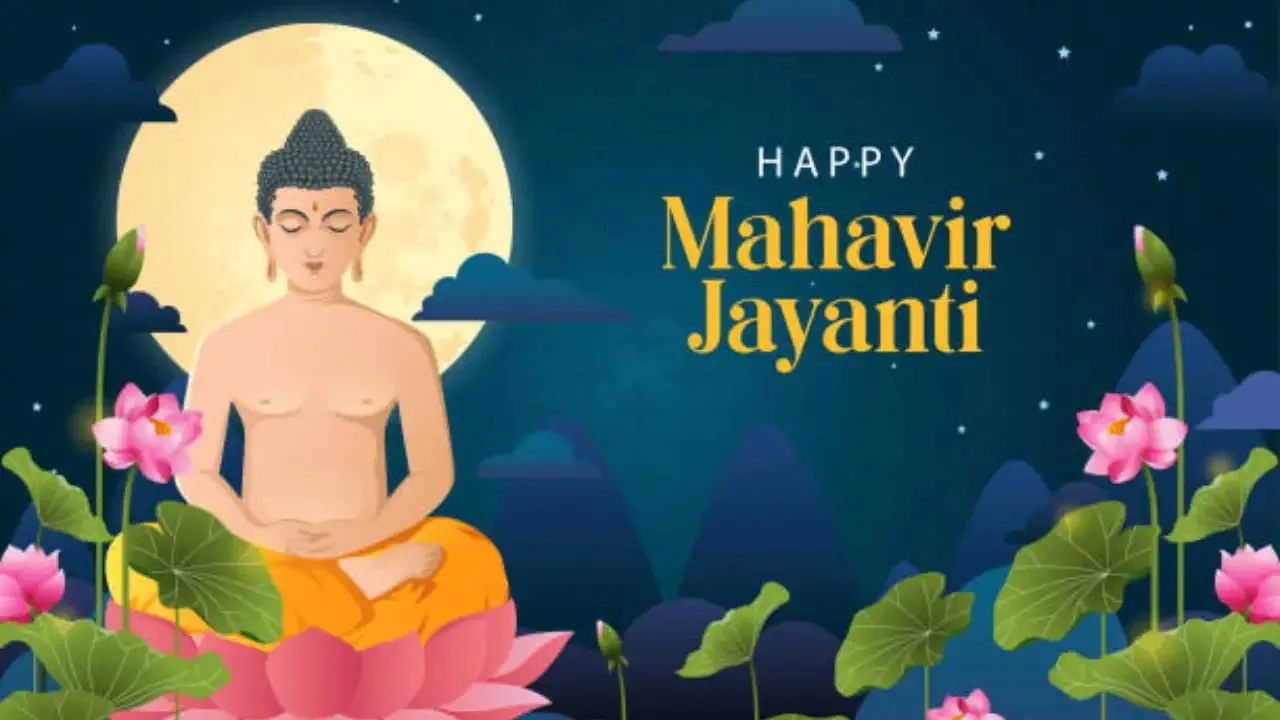

As the vibrant hues of spring gently coax the earth out of its winter slumber, a profound spiritual awakening sweeps across the landscape of our collective consciousness. In this beautiful season of glorious rebirth, where every blossoming flower seems to whisper secrets of ancient wisdom, the global community pauses to observe Mahavir Jayanti. This sacred festival commemorates the birth of the twenty fourth and final Tirthankara of Jainism. This auspicious occasion is far more than a mere historical retrospective or a conventional religious holiday. It is an urgent, timeless invitation to look inward and to realign our fragmented lives with the eternal rhythms of universal compassion. Lord Mahavira, born into royal opulence, chose to walk away from the gilded cages of power and material wealth to seek the ultimate truth that resides within the human soul. Today, as we navigate an era fraught with unprecedented anxieties, environmental degradation and deep social fractures, the radiant wisdom of this great ascetic offers a profound antidote. His teachings serve as a luminous lighthouse, guiding wandering ships through the turbulent waters of modern existence toward the tranquil shores of inner peace.
At the very heart of this festival lies the revolutionary doctrine of absolute non-violence, universally known as Ahimsa. Lord Mahavira expanded the definition of non-violence far beyond the mere absence of physical conflict. He taught that every living entity, from the towering elephant to the microscopic organism residing in a drop of water, possesses a soul of equal intrinsic value. When we celebrate his birth, we are called to practice this radical empathy in our daily interactions. This profound principle demands that we remain acutely aware of our thoughts, our speech and our physical actions. In a contemporary world where harsh rhetoric dominates digital platforms and where humanity ruthlessly extracts resources from a bleeding planet, Ahimsa challenges us to pause and reconsider our footprint. It asks us to cultivate a gentleness of spirit that refuses to inflict pain upon any sentient being. To truly honour Lord Mahavira is to embrace a lifestyle that actively protects the vulnerable, cherishes the natural environment and fosters a culture of unconditional love.
Equally transformative is the celebration of Anekantavada, the magnificent philosophy of many-sided reality. Lord Mahavira understood the inherent limitations of human perception and recognised that dogmatic certainty is often the root cause of profound suffering and conflict. He proposed that ultimate truth is incredibly complex and multifaceted, meaning that no single viewpoint can ever capture the absolute entirety of existence. In our modern landscape, where ideological polarisation tears communities apart and where individuals frequently retreat into echo chambers of absolute righteousness, this doctrine provides a desperately needed intellectual remedy. Anekantavada teaches us the beautiful, rare virtue of intellectual humility. It encourages us to listen with genuine curiosity and open hearts to those who hold opposing views, acknowledging that their unique perspectives might contain vital fragments of the truth that we are currently missing. By compassionately synthesising these diverse viewpoints, we move closer to a holistic, harmonious understanding of reality.
Furthermore, Mahavir Jayanti is a profound reminder of the liberating power of Aparigraha or complete non-attachment. We currently reside in an economic paradigm that relentlessly fuels human desire, equating personal success with the endless accumulation of wealth, status and material possessions. Yet, this insatiable hunger frequently leaves individuals feeling spiritually hollow and perpetually dissatisfied. Lord Mahavira bravely demonstrated that true sovereignty comes not from owning the world, but from mastering one’s own desires. He taught that our attachments are the invisible chains that bind us to the endless cycle of suffering and anxiety. The festival invites us to experience the extraordinary lightness that accompanies letting go. It does not necessarily demand absolute renunciation from every individual, but rather a mindful recalibration of our relationship with the material world. By consciously choosing simplicity and directing our surplus resources toward the betterment of others, we break the toxic cycle of greed. The widespread acts of charity, the feeding of the hungry and the generous donations to animal shelters during Mahavir Jayanti are beautiful expressions of this philosophy.
As we reflect on these universal truths, it is profoundly inspiring to observe how this ancient ascetic tradition has woven itself into the incredibly diverse cultural fabric of the Indian subcontinent, including its northernmost frontiers. The majestic Kashmir Valley, historically a vibrant crucible of philosophical thought, holds deep archaeological and textual memories of the Jain faith. Ancient chronicles like the Rajatarangini and the Nilamata Purana paint a vivid picture of a pluralistic antiquity where Jain scholars and monks contributed significantly to the region’s spiritual wealth. Today, the demographic realities have shifted dramatically, leaving the Jain community in places like Jammu and Kashmir as a microscopic minority of just a few thousand individuals. Yet, the true beauty of the Indian democratic and civilisational ethos shines brightest in its treatment of such tiny demographics. India gives absolute and equal importance to its micro minorities, ensuring that their heritage is celebrated and their rights are fiercely protected. The administrative apparatus ensures that festivals like Mahavir Jayanti are officially recognised, granting public holidays in districts with localised populations so that the community can celebrate with dignity and joy. High ranking administrative officials actively participate in these community celebrations, continually acknowledging that the profound teachings of Lord Mahavira are indispensable for building a peaceful society. This unwavering respect for the smallest of communities is the living embodiment of the very pluralism and tolerance that Lord Mahavira preached over two millennia ago.
Returning to the essence of the festival, the communal rituals of Mahavir Jayanti beautifully externalise these deep philosophical convictions. When devotees gather in intricately carved temples to perform the sacred Abhisheka, bathing the idol of the Tirthankara with pure water and fragrant sandalwood, they are engaging in a powerful metaphorical act. This ritual represents the washing away of inner impurities, the cleansing of ego, anger and deceit. The vibrant chariot processions that wind through city streets are not mere displays of religious triumph, but rather joyous collective affirmations of faith. As the melodious chants of the Navkar Mantra fill the air, the entire community is bound together in a shared vibration of reverence and spiritual dedication. These practices provide a necessary pause in our incredibly chaotic modern lives, offering a serene spiritual sanctuary where the wandering mind can recalibrate and the heavy heart can freely expand.
The glorious celebration of Mahavir Jayanti is a breathtaking testament to the indestructible resilience of the human spirit. Lord Mahavira walked this earth to prove that we possess the inherent capacity to transcend our basest instincts and awaken to our highest divine potential. His life was a flawless masterpiece of absolute nonviolence, intellectual grace and serene detachment. As the sacred temple bells chime and the festive lamps cast their warm, golden glow into the fading twilight, we are gently invited to carry this luminous wisdom into the quiet sanctuary of our own hearts. The true, lasting celebration begins only when the outward rituals cease and the profound inner transformation takes deep root within us. Let us honour the great sage not just with beautiful hymns, but by transforming our everyday lives into living prayers of empathy and understanding. In doing so, we become radiant vessels of his eternal light, softly illuminating the darkest corners of the world with the invincible power of supreme peace and universal love.