

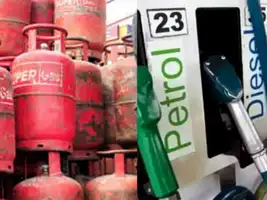
New Delhi, Apr 1 (JKNS): Amid the evolving situation in West Asia, the Government of India on Wednesday asserted that there is no shortage of fuel, LPG or agricultural inputs in the country, while assuring that all necessary measures are in place to maintain stability, protect consumers, and ensure uninterrupted supplies across sectors.
In view of the evolving situation in West Asia, the Government of India continues to provide regular updates to keep citizens informed. In this context, a media briefing was held today at the National Media Centre, where officers from the Ministries of Petroleum and Natural Gas, Ports, Shipping and Waterways, and External Affairs shared updates on fuel availability, maritime operations, support extended to Indian nationals in the region, and measures being taken to ensure overall stability.
Senior officers from the Ministry of Agriculture and Farmers Welfare and Ministry of Civil Aviation also participated and briefed the media in this context.
Agriculture Sector Update, The Ministry of Agriculture and Farmers Welfare shared an update on the likely impact of developments in West Asia on the agriculture sector, along with measures being undertaken to minimise disruptions.
The Ministry informed that, Seed Sector, There is comfortable seed availability for Kharif 2026, with requirement of 166.46 lakh quintals against availability of 185.74 lakh quintals, resulting in a surplus of around 19.29 lakh quintals.
There is surplus position across major crops including paddy 80.9 lakh quintals, soybean 35.7 lakh quintals, groundnut 21.1 lakh quintals, maize 11.9 lakh quintals and pulses (tur, moong, urd). Priority allocation of LPG/PNG has been ensured for seed drying for maize, along with uninterrupted fuel supply through Oil Marketing Companies.
Seed inputs for both Kharif and Rabi 2026 are also in place. Fertilizer requirement for Kharif 2026 has been assessed at 390.54 LMT in consultation with States, against which 180 LMT (46%) is available as opening stock—significantly higher than the usual pre-season level of around 33%; efforts are underway to further augment availability and it will be ensured that there is no shortage of agriculture inputs and chemicals at any stage.
A meeting of DA&FW, Department of Fertilizers and State Secretaries was held on 30.03.2026 on judicious use of fertilizers and ensuring timely and orderly last-mile delivery.
States have also been requested to take up special drives so that there is no hoarding or Black marketing, or cross- border smuggling or diversion of fertilizer for non-agricultural use.
Last year there was a campaign started for Dharti Mata Bachao Andolan Samitis set up at the Gram Panchayat, Sub- Divisional and the District level. The States have again been requested to mobilise these local committees for monitoring as well as equitable distribution.
Innovative practices undertaken by States like Madhya Pradesh, Haryana and Telangana were shared with the States which made the distribution of fertilizers simpler.
Agrochemicals, There are three types of Agro- Chemicals- Insecticides, herbicides and fungicides. India is one of the larger producers of Agrochemicals. **Sufficient quantity of Agrochemicals is available.
Total production of Agrochemicals during 2025-26 (up to February 2026) is 2,61,099 MT. Total estimated demand is 74,266 MT, of which around 42,000 MT is required during Kharif 2026.
Continuous dialogue is being maintained with industry and States/UTs along with weekly monitoring. Crackdown on fake and spurious pesticides is being undertaken through a multi-stakeholder coordinated approach.
There is focus on Integrated Pest Management (IPM) in collaboration with States.
Encouragement of biopesticides and sustainable practices, along with strengthening farmer awareness, surveillance, pest monitoring and precision advisory.
Price Situation of Agro Commodities, prices of agro commodities are by and large stable and are being closely monitored.
The prices of tomato, onion & potato crops are in range and all three are showing slight improvement in prices.
Energy Supply and Fuel Availability, An update on the prevailing fuel supply situation was shared, highlighting the steps being taken to ensure uninterrupted availability of petroleum products and LPG in view of the ongoing situation in West Asia. It was noted that, Crude and Refineries, All refineries are operating at high capacity, with adequate crude inventories in place. The country is also maintaining sufficient stocks of petrol and diesel.
Domestic LPG production from refineries has been increased to support domestic consumption. Retail Outlets, All retail outlets are operating normally across the country. Regular retail prices for petrol and diesel are unchanged. The Middle East crisis has resulted in an abnormal increase in crude prices. To protect consumers, the Government of India has reduced excise duties on petrol and diesel by Rs. 10 per litre.
The Government has imposed an export levy of Rs. 21.5 per litre on diesel and Rs. 29.5 per litre on aviation turbine fuel (ATF) to ensure domestic availability.
Instances of panic buying due to rumours have been noticed in certain areas, resulting in unusually high sales and crowding at retail outlets. However, adequate stocks of petrol and diesel are available across all petrol pumps in the country.
The Government has reiterated its advice not to believe rumours and has requested State Governments to disseminate correct information through press briefings.
Natural Gas, Consumers have been prioritised with 100% supplies to domestic PNG and CNG transport. Supplies to industrial & commercial consumers connected on grid is at 80% of their average consumption. CGD entities have been advised to prioritise PNG connections for commercial establishments such as restaurants, hotels and canteens. Supply to operating urea plants is steady at around 70–75% of their last six-month average consumption. Additional LNG and RLNG are being sourced to maintain supply.
Industrial consumers, including fertiliser plants, have been advised to indicate additional requirements on a spot basis. CGD companies such as IGL, MGL, GAIL Gas and BPCL have offered incentives for domestic and commercial PNG connections.
The Government has requested States/UTs and Central Ministries to expedite approvals for CGD expansion. Additional 10% allocation of commercial LPG has been offered to States/UTs linked to PNG expansion reforms, and allocations have been recommended accordingly.
PNGRB has directed CGD entities to prioritise PNG connections for institutions such as schools, hostels and community kitchens within five days wherever feasible. The Ministry of Road Transport and Highways has adopted an accelerated approval framework for CGD infrastructure for three months. The Government has notified the Natural Gas and Petroleum Products Distribution Order, 2026 to streamline pipeline expansion and improve last-mile connectivity. Ministry of Defence has issued a short-term policy modification to expedite PNG infrastructure in defence residential areas. PNGRB has directed acceleration of D-PNG connections and extended National PNG Drive 2.0 till 30.06.2026. During March, more than 3.25 lakh connections were gasified, and over 2.85 lakh new connections have been installed. 3.5 lakh new consumers have been registered for connections. LPG, Supply of LPG continues to be affected due to the prevailing geopolitical situation. No increase in price for Domestic LPG Consumers. No dry-out has been reported at LPG distributorships. Online LPG bookings have increased to 92%. Delivery Authentication Code (DAC) based deliveries have increased from 53% to 81%. More than 60 lakh domestic LPG cylinders were delivered yesterday. Supply of commercial LPG has been increased to 70% of pre-crisis levels. Additional allocations are prioritised for sectors such as restaurants, hotels, industries and community kitchens. Since 23 March 2026, more than 3.9 lakh 5 kg FTL cylinders have been sold. More than 65,000 5 kg FTL cylinders have been sold yesterday. Around 55,622 MT of commercial LPG has been uplifted by States/UTs since 14 March 2026.
Kerosene, An additional allocation of 48,000 KL of kerosene has been made to all States/UTs. Distribution through designated PSU OMC outlets has been enabled in PDS SKO-free States/UTs. 17 States/UTs have issued SKO allocation orders, while Himachal Pradesh and Ladakh have indicated no requirement.
Role of State Governments / UTs, States/UTs are empowered under the Essential Commodities Act, 1955 and LPG Control Order, 2000 to act against hoarding and black marketing. States/UTs have been requested to, Institutionalise daily press briefings and issue public advisories. Set up control rooms and helplines. Monitor and counter misinformation. Intensify enforcement drives and inspections. Issue LPG and SKO allocation orders. Fast-track CGD expansion. Promote PNG and alternate fuels. Nominate nodal officers for coordination. 17 States/UTs are currently issuing press briefings.
Enforcement Action, More than 2800 raids have been conducted to check hoarding and black marketing, with around 500 cylinders seized. PSU OMCs have conducted more than 1100 surprise inspections at retail outlets and LPG distributorships. More than 560 show cause notices have been issued to LPG distributorships.
Government Measures, Despite this war situation, Government’s has given highest priority to Domestic LPG and PNG, along with high priority to hospitals and educational institutions.
The Government has already implemented several rationalisation measures on both the supply and demand side, including enhancing refinery production, increasing the booking interval from 21 to 25 days in urban areas and up to 45 days in rural areas and prioritising sectors for supply.
Alternate fuel options like Kerosene and coal have been offered to ease pressure on LPG demand. Ministry of Coal has already issued order to Coal India and Singareni Collieries to allot higher quantities to States for distributing coal to small, medium and other consumers. States have been advised to facilitate the new PNG connections for both domestic and commercial consumers.
Public Advisory, Govt. is making all efforts to ensure availability of Petrol, Diesel and LPG. Avoid Panic purchase of Petrol, diesel and booking of LPG. Beware of rumours and rely on official sources for correct information. For LPG, citizens are requested too Use Digital Mode for bookings. Avoid visiting LPG distributors. Citizens are requested to use alternate fuels like PNG, induction/electric cooktops etc. In the current situation, all citizens are requested to make necessary efforts to conserve energy in their daily usage.
Aviation Turbine Fuel (ATF) Pricing, Ministry of Civil Aviation shared the update on ATF pricing. It was stated that, The Indian aviation industry has welcomed the Government of India’s decision to implement a limited increase of 25% in Aviation Turbine Fuel (ATF) prices for domestic scheduled carriers on domestic routes. This measure provides critical relief amid unprecedented global energy price surges arising from disruptions in West Asia.
The intervention ensures that domestic operational costs of Indian Carriers remain manageable. For Indian Carriers where fuel typically accounts for nearly 40% of total operating expenses for Indian carriers; the calibrated increase helps prevent a potential industry-wide disruption.
The limited increase of 25% on ATF price enables airlines to maintain competitive pricing for domestic travellers, avoiding the need for additional fuel surcharges that would have been necessary under market-linked pricing.
Indian airlines have conveyed that such calibrated measures are essential for maintaining operational stability and financial sustainability in a challenging global environment, while also safeguarding passenger interests and strengthening sectoral resilience.
On a daily basis more than 4.5 lakh passengers fly on domestic routes every day. This announcement made this morning will benefit all these passengers.
The priority of the government is to ensure that air travel remains accessible. This measure will also support the broader economy by ensuring the smooth movement of cargo and maintaining vital air connectivity for trade and logistics.
Maritime Safety and Shipping Operations, An update on the current maritime situation in the Persian Gulf was shared, outlining the measures being taken to ensure the safety and security of Indian vessels and crew in the region. It was stated that, The Ministry of Ports, Shipping and Waterways continues to closely monitor the evolving situation in the West Asia region, in coordination with the Ministry of External Affairs, Indian Missions and maritime stakeholders.
All Indian seafarers in the region are safe, and no incident involving Indian-flagged vessels has been reported in the past 24 hours. The situation remains stable with no incidents reported in the recent period.
A total of 18 Indian-flagged vessels with 485 Indian seafarers continue to remain in the western Persian Gulf region. The Directorate General of Shipping, in coordination with ship owners, RPSL agencies and Indian Missions, is actively monitoring the situation.
The DG Shipping Control Room remains operational 24×7 and has handled a cumulative 4,769 calls and over 9,599 emails since activation, including 70 calls and 245 emails in the past 24 hours, and 214 calls and 535 emails over the past 48 hours.
DG Shipping has facilitated the safe repatriation of more than 964 Indian seafarers so far from the region, including 5 in the past 24 hours.
Port operations across India remain normal with no congestion reported in the past 24 hours and continue to remain stable. State Maritime Boards of Gujarat, Maharashtra, Goa, Keralam, Andhra Pradesh and Puducherry have confirmed smooth functioning.
The Ministry continues to maintain close coordination with the Ministry of External Affairs, Indian Missions and maritime stakeholders to ensure seafarer safety, welfare and uninterrupted maritime operations.
Safety of Indian Nationals in the Region, An update on the latest developments in the region, including ongoing assistance through Indian Missions, was also shared by the Ministry of External Affairs. It was informed that:**
External Affairs Minister held a conversation with Portuguese Foreign Minister, H.E. Mr. Paulo Rangel. Both sides exchanged views on the West Asia conflict and discussed further strengthening bilateral cooperation.
Embassy of India in Tehran has facilitated 1,171 Indian nationals, including 818 students, to exit Iran via land borders into Armenia and Azerbaijan. Of these 977 crossed over into Armenia and 194 into Azerbaijan. Appreciation has been conveyed to the authorities of Armenia and Azerbaijan for their support in facilitating safe transit of Indian nationals from Iran.
The Ministry of External Affairs continues to closely monitor the evolving situation in the Gulf and West Asia region, with the safety, security and welfare of the Indian community remaining the highest priority.
A dedicated special control room remains operational to assist Indian nationals and their families, with continuous coordination being maintained with State Governments and Union Territories.
Indian Missions and Posts across the region are working continuously with round-the-clock helplines, issuing regular advisories and maintaining close engagement with Indian community associations, organizations and Indian companies, while remaining in close contact with local governments.
Missions continue to proactively address issues and concerns of Indian nationals, including visa facilitation, consular services, facilitating transit through neighbouring countries amid airspace restrictions and providing logistical support, where required.
The Government is paying special attention to the welfare of Indian students in the Gulf region and is making efforts to ensure that their academic year is not impacted. Missions are in regular touch and coordinating with local authorities, Indian schools, concerned boards and the National Testing Agency to address academic concerns relating to CBSE, ICSE, Kerala Boards and JEE and NEET examinations through regular outreach to parents and students.
The overall flight situation continues to improve with additional flights operating from the region to various destinations in India. Since 28 February, around 5,98,000 passengers have returned from the region to India.
In the UAE, airlines continue to operate limited non-scheduled flights based on operational and safety considerations, with around 90 flights expected to operate to India. Flights are operating from various airports in Saudi Arabia and Oman to different destinations in India. With Qatar airspace partially open, Qatar Airways is expected to operate around 8 to 10 flights to India today.
Kuwait and Bahrain airspaces remain closed. Jazeera Airways of Kuwait and Gulf Air of Bahrain are operating non-scheduled commercial flights from Dammam Airport in Saudi Arabia to various destinations in India.
Due to flight restrictions and airspace closures, Indian nationals are being facilitated for travel via alternate routes including, From Iran through Armenia and Azerbaijan to India. From Israel, through Egypt and Jordan to India. From Iraq, through Jordan and Saudi Arabia to India. From Kuwait and Bahrain, through Saudi Arabia to India.
In attacks in Dubai, 3 Indian nationals sustained minor injuries. They are receiving medical treatment at local hospitals, and one has been discharged. The Consulate is in close contact with the injured individuals and their families and is extending all assistance to them.
An Indian national tragically passed away on March 11th in an incident on MT Safesea Vishnu off the coast of Iraq. In a separate attack in Kuwait on March 29th, another Indian national had unfortunately lost his life. Mortal remains of both the deceased Indian nationals have arrived earlier today in India. Ministry is in regular touch with their families and expressed deepest condolences to them at this difficult time. (JKNS)

