

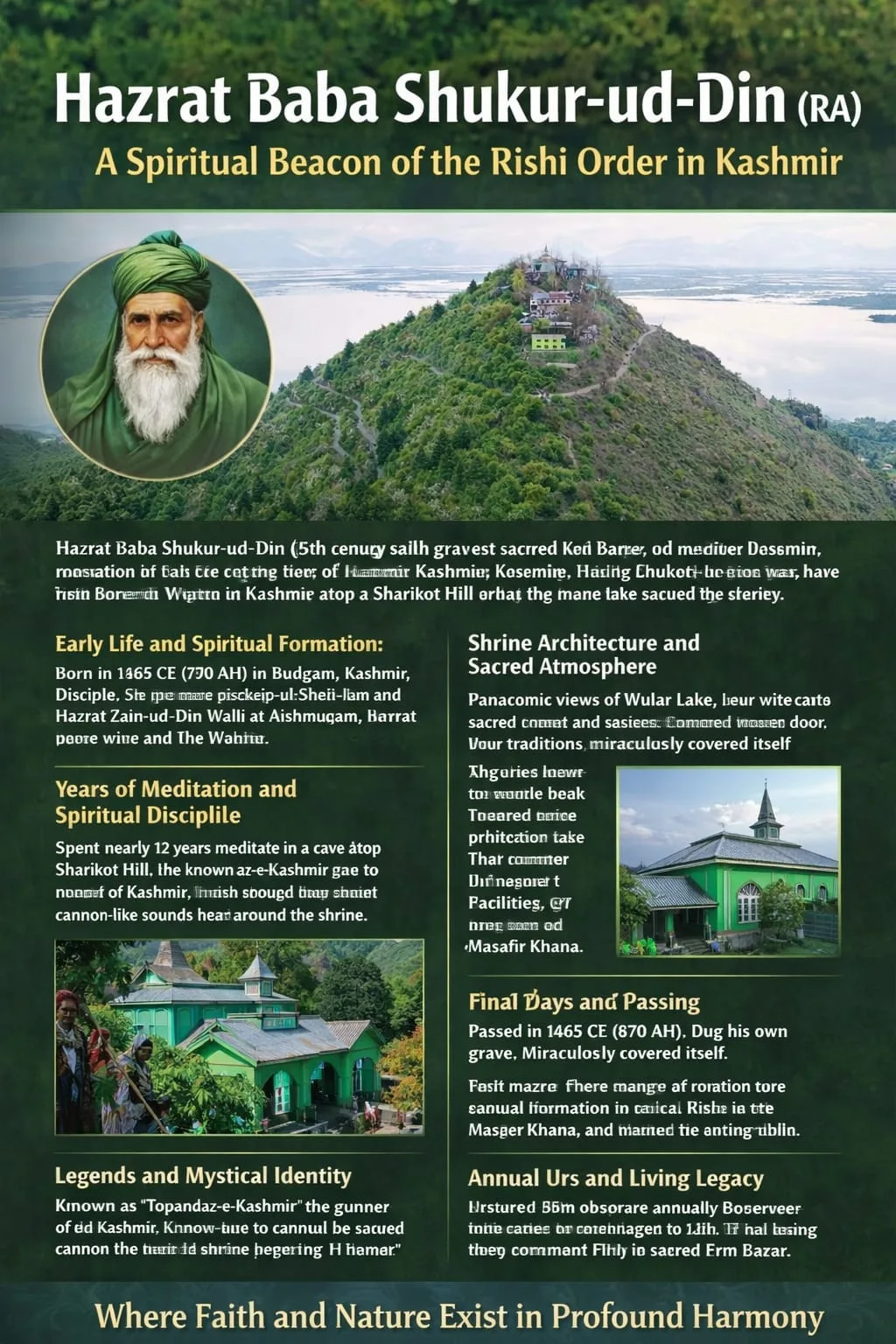
Hazrat Baba Shukur-ud-Din (RA) stands among the most revered Sufi figures of medieval Kashmir, remembered for his deep spirituality, ascetic life, and enduring influence on the indigenous Rishi order. Living during the 15th century, his life reflects a unique blend of devotion, simplicity, and mystical discipline that continues to inspire generations across the Valley.
His shrine, popularly known as Babe-Shukrun or Noor Shah Shrine, is situated atop the scenic Sharikot Hill (also called Kral Sangri) in Watlab, offering both a spiritual retreat and a breathtaking view of nature.
Early Life and Spiritual Formation
Born in 1386 CE (790 AH) in the Budgam region of Kashmir, Baba Shukur-ud-Din displayed remarkable piety from an early age. His inclination toward spirituality led him to become a devoted follower of the Rishi tradition, a uniquely Kashmiri Sufi movement rooted in simplicity, self-discipline, and service to humanity.
He was a prominent disciple of Sheikh-ul-Alam, one of Kashmir’s greatest spiritual luminaries. Under his guidance, Baba Shukur-ud-Din deepened his understanding of spiritual practices. He also received rigorous training from Hazrat Zain-ud-Din Wali at Aishmuqam, further shaping his mystical journey.
Years of Meditation and Spiritual Discipline
One of the most defining chapters of his life was his prolonged meditation. Acting on the instructions of his spiritual mentor, Baba Shukur-ud-Din retreated to a cave atop Sharikot Hill, where he spent nearly 12 years in deep meditation and isolation.
This cave remains an integral part of the shrine today, symbolizing his devotion and spiritual endurance. It continues to attract devotees who seek peace, reflection, and a connection with the saint’s legacy.
Legends and Mystical Identity
Baba Shukur-ud-Din is widely known by the title “Topandaz-e-Kashmir,” meaning “the gunner of Kashmir.” This unusual title is rooted in local folklore, as devotees and visitors have occasionally reported hearing sounds resembling cannon fire or distant explosions around the shrine.
While interpretations vary, many believers view these sounds as mystical signs associated with the saint’s spiritual presence, reinforcing his revered status in Kashmiri culture.
Shrine Architecture and Sacred Atmosphere
The shrine complex is not only a place of worship but also a reflection of Kashmiri spiritual traditions and architecture.
Panoramic Landscape: The hilltop location provides one of the most stunning views of Wular Lake, enhancing the spiritual experience with natural serenity.
The Sacred Door: A beautifully crafted wooden door at the shrine’s entrance is believed to have been gifted by Baba Payam-ud-Din Reshi. Local tradition holds that the door miraculously fitted into the structure on its own.
Votive Traditions: The shrine is adorned with colorful votive rags tied by devotees who seek blessings for health, prosperity, and family well-being.
Community Services: Facilities like the Langer Khana (community kitchen) and Musafir Khana (rest house) reflect the Rishi order’s emphasis on hospitality and service.
Final Days and Passing
In 1465 CE (870 AH), Baba Shukur-ud-Din is believed to have demonstrated an extraordinary act of spiritual surrender. According to local accounts, he dug his own grave and entered it, after which it miraculously covered itself. This event is remembered with deep reverence and is seen as a testament to his spiritual elevation.
Annual Urs and Living Legacy
Every year, on the 27th of Jamadi-us-Sani in the Islamic calendar, thousands of devotees gather at the shrine to observe his Urs, commemorating his union with the Divine. The occasion is marked by prayers, recitations, and communal gatherings that reflect the enduring influence of his teachings.
Located approximately 17 kilometers from Sopore and about 75 kilometers from Srinagar, the shrine remains a major spiritual destination in North Kashmir.
Hazrat Baba Shukur-ud-Din (RA) occupies a vital place in Kashmir’s spiritual and cultural history. His life, rooted in devotion, discipline, and humility, continues to guide those seeking inner peace and spiritual clarity. The shrine at Sharikot Hill stands not only as a monument to his legacy but also as a living symbol of Kashmir’s rich Sufi heritage, where faith and nature exist in profound harmony.

