


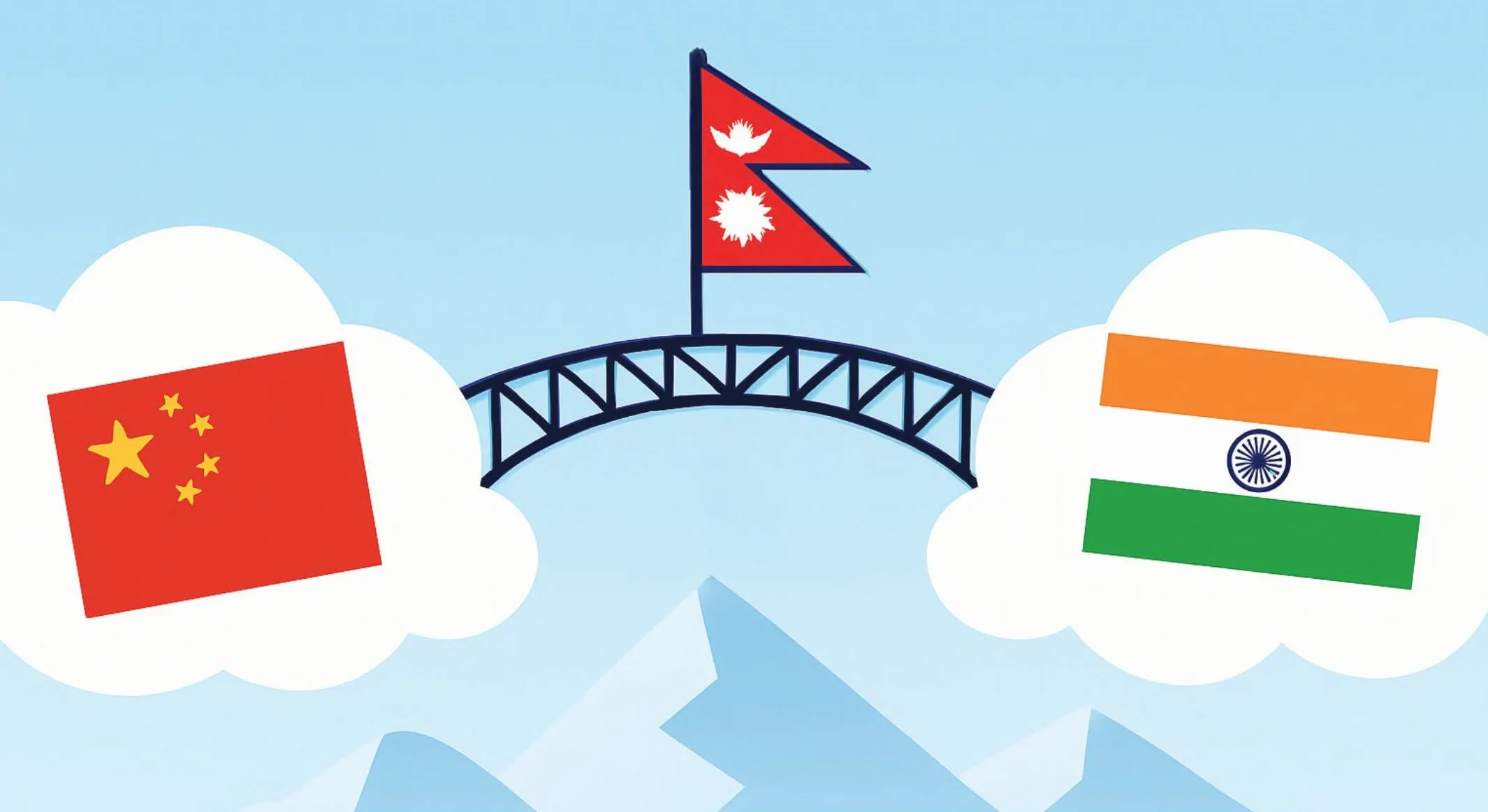
Nepal became a BRI signatory in 2017. In the eight years since, no project under the BRI framework has been completed on the Nepali side of the border. A new Framework for Belt and Road Cooperation was signed during Prime Minister Oli’s December 2024 visit to Beijing, identifying ten candidate projects. As of mid-2025, most remain at the feasibility study stage or earlier, with several showing no progress at all. Nepal has received Chinese investment and bilateral loans outside the formal BRI structure — most notably for the Pokhara International Airport — and that infrastructure work has proceeded, with well-documented results. The formal BRI framework remains largely aspirational.
This is actually instructive. The seven-year standoff over BRI implementation reflected a real and specific concern within Kathmandu’s policy circles: that the loan conditions China was offering were less favourable than those available through multilateral lenders, and that the procurement conditions attached would deepen Nepal’s structural dependence on Chinese suppliers at the expense of domestic industry. The December 2024 resolution — built around the deliberately ambiguous phrase “aid assistance financing” rather than either “grants” or “loans” — deferred rather than resolved that tension. Project-level financing terms remain to be negotiated individually, and Nepal’s stated position is that it will not accept interest rates exceeding those of the World Bank and Asian Development Bank.
Nepal’s trade exposure to China operates at multiple levels. China is Nepal’s second-largest trading partner, with rising imports in electronic goods, machinery, solar panels, textiles, and fertilisers driving continuing growth. NEPSE Trading At the consumer level, Chinese goods dominate import categories from garments to construction materials, in large part because they are cheaper than domestically produced or Indian-sourced alternatives. At the industrial and infrastructure level, Chinese equipment suppliers have captured a growing share of Nepal’s productive and digital infrastructure, with telecommunications equipment imports surging by over 50% in early fiscal year 2025-26. These linkages are real and deepening.
The financial exposure is more nuanced than is often implied. China holds approximately $261 million of Nepal’s external debt — a meaningful but relatively modest sum in a portfolio where multilateral lenders account for roughly 87-88% of total external obligations. The scenario in which a deterioration of Nepal-China relations would simultaneously disrupt consumer prices, infrastructure timelines, industrial inputs, and debt service is plausible at the trade level, but the debt service dimension is far less acute than the concentration of Chinese imports would suggest.
One critical context the article’s original framing omitted: India represents a comparably broad bilateral exposure. India accounts for more than 60% of Nepal’s total trade, is the source of most of Nepal’s petroleum imports, and hosts the largest share of Nepali migrant workers. Nepal’s landlocked geography means that disruption on the Indian border — as occurred during the 2015 blockade — can be more immediately devastating than disruption of Chinese trade flows. Any honest account of Nepal’s bilateral vulnerabilities must treat India and China together, not in isolation.
Nepal’s long-term economic resilience does require diversification — not because Chinese trade and investment are inherently damaging, but because heavy concentration in any single bilateral relationship reduces a country’s room for independent policy. The case for diversification applies equally, and perhaps more urgently, to Nepal’s dependence on India.
Nepal’s policy planners are aware of both dimensions. Whether diversification programmes that exist in white papers are being translated into measurable structural change is a different question — and on current trade trajectory data, the answer is not yet yes for either relationship.

