


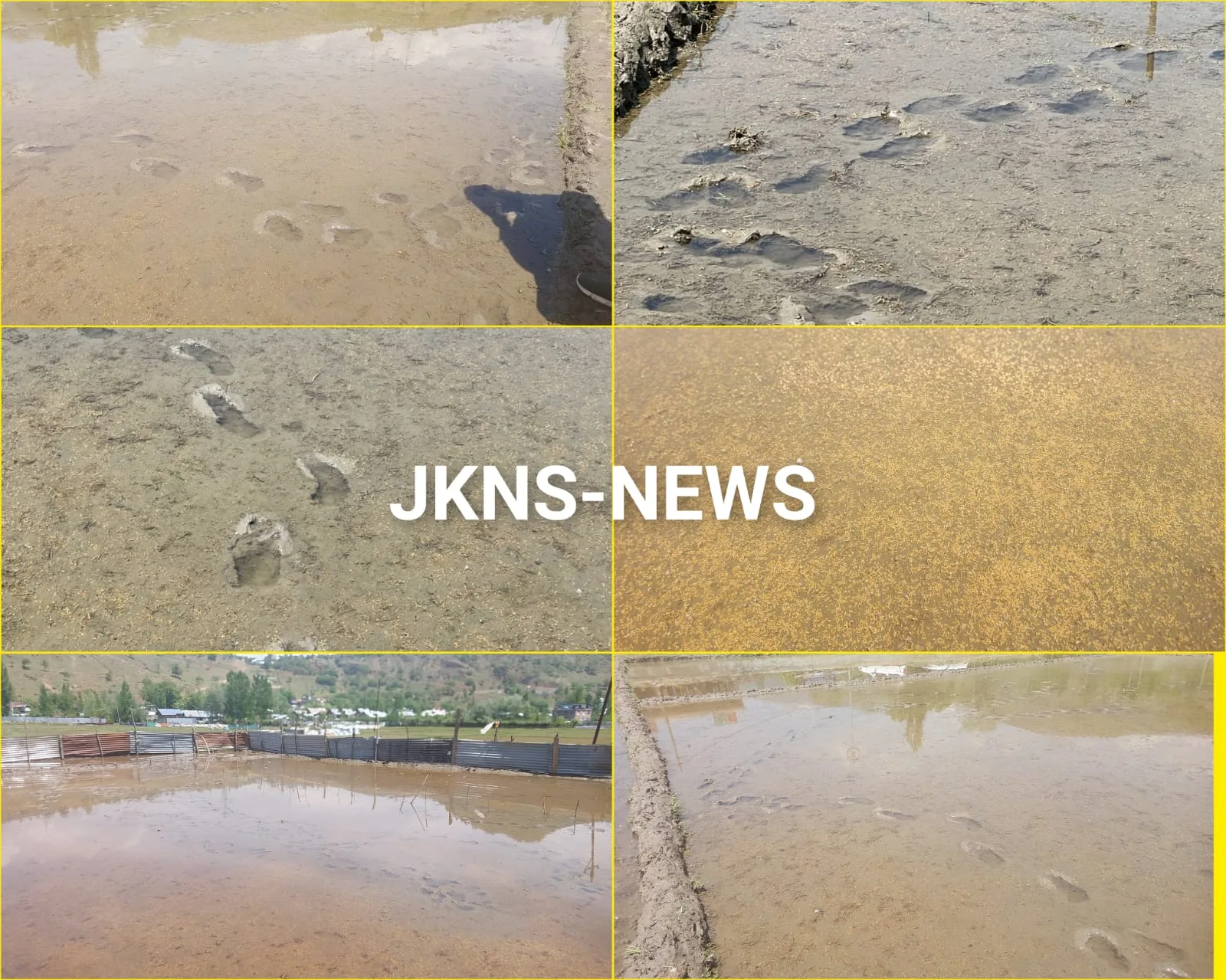
Srinagar, Apr 26 (JKNS): Farmers in north Kashmir’s Sopore area of Baramulla district are facing fresh distress as wild boars have resurfaced and begun destroying paddy seedlings at the onset of the sowing season, causing significant losses, locals said on Sunday.
Residents from several areas of the Zaingeer belt including Watlab, Dangerpora, Tujar Sharief, Bomai, Botingoo, Warpora, Mundji, Janwara, Hardushiva, Duroo and Hathlangoo told news agency JKNS that wild boars have been entering agricultural fields during night hours and damaging freshly sown crops.
“After sowing paddy seeds, we return the next day only to find everything destroyed,” said Mohd Ashraf, a farmer from Watlab. Another farmer, Ghulam Mohammad, said, “They come at night and ruin our seedlings. We have tried temporary fencing, but it is not enough.”
Farmers said they are already struggling due to continuous rainfall over the past few weeks, which has delayed sowing activities. “We are already late this season, and now this has become another disaster for us,” a group of farmers said.
Locals said the reappearance of wild boars has surprised many, as the animals had largely disappeared from the region nearly three decades ago. Historically, wild boars were introduced in the Valley during the reign of Dogra ruler Maharaja Gulab Singh for hunting purposes.
Farmers alleged that despite repeated complaints, no concrete steps have been taken by the administration to protect their crops. However, officials from the Wildlife Department said that capturing wild boars is difficult as they remain in nearby forests during the day and venture into fields mostly at night.
The affected farmers have urged the authorities to take immediate measures to prevent further damage and safeguard their livelihoods.
The affected farmers have made an urgent appeal to the Omar Abdullah-led government to intervene immediately and take concrete steps to control the menace.
They demanded deployment of Wildlife teams, proper fencing support and compensation for losses, warning that continued inaction could severely impact their livelihood and the overall agricultural output in the region. (JKNS)

