


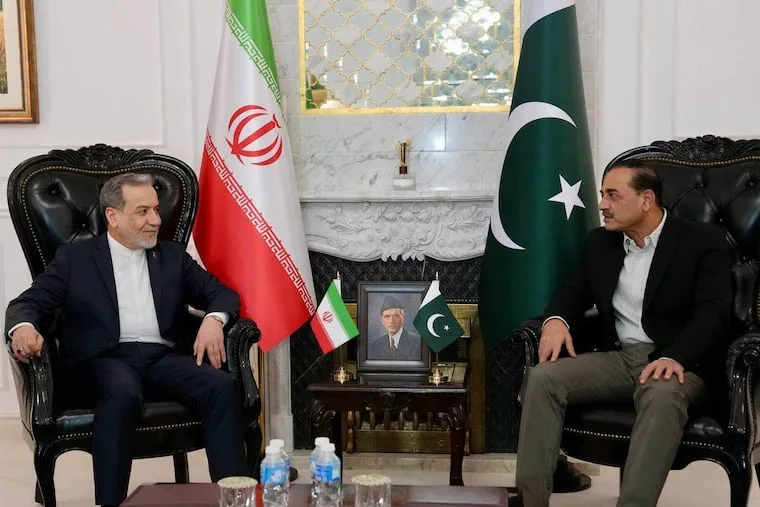
Doubts are deepening in Tehran about whether Pakistan can serve as a genuine neutral broker between Iran and the United States. As a fragile ceasefire holds and a second round of peace talks remains unscheduled, Iranian officials are increasingly open about their frustration with Islamabad’s role.
Iranian state media has publicly accused Pakistan — and particularly Field Marshal Asim Munir, the country’s powerful army chief and chief architect of its mediation strategy — of playing a “double game.”
The core allegation is that Pakistan has told each side what it wants to hear while failing to deliver on its commitments to either side.
At the heart of the dispute is Iran’s claim that its formal negotiating text was effectively sidelined: Iranian analysts have alleged that Munir personally carried Iran’s proposals to Washington, yet Tehran received no substantive response and found that the demands ultimately tabled were closer to the American position.
Iranian MP Ebrahim Rezaei was blunt in his assessment, saying Pakistan “lacks the necessary credibility for mediation” and tends to defer to Washington rather than challenge it.
This is not a complaint about a single incident. For Iranian observers, the concerns form a pattern extending across political, military, and symbolic dimensions.
Trump has repeatedly praised Pakistan’s involvement, and at times Pakistani messaging has appeared to echo American talking points, reinforcing the suspicion in Tehran that Islamabad is acting as a relay for Washington rather than as an independent facilitator.
Pakistan’s relationship with Saudi Arabia adds further complexity. A mutual defence agreement between the two countries, concluded in September 2025 though not yet fully ratified, is difficult for Tehran to ignore given the long-standing ideological and geopolitical rivalry between Iran and Riyadh. Pakistan’s closeness to the Gulf kingdom sits uneasily alongside its claim to impartiality.
The memory of 2024 still lingers. On January 16 of that year, Iran launched drone and missile strikes into Pakistan’s Balochistan province, targeting the Baloch militant group Jaysh al-Adl. Pakistan condemned the strikes as an “unprovoked violation” of its sovereignty and retaliated two days later with a broader response that included fighter jets, drones, and rockets hitting targets inside Iran’s Sistan and Baluchestan province.
Diplomatic relations were swiftly restored, and both sides de-escalated, but such episodes do not vanish from strategic memory. They shape how intentions are read.
More serious and more contested are allegations about operational cooperation between Pakistan and the United States.
Claims have circulated — including in analyst commentary and some regional media — that Pakistani airspace has been used for American surveillance and strike missions directed at Iran, that Pakistani aircraft have supported US carrier operations, and that Pakistani intelligence has shared data on Iranian maritime movements with American forces.
Pakistan has denied specific incidents. These allegations remain unverified and are disputed by Islamabad, but their circulation in Iranian media has deepened mistrust regardless of their accuracy.
Pakistan’s mediation was, by any measure, a remarkable diplomatic turn. Islamabad brokered a ceasefire between the US and Iran in April 2026, hosted the first direct high-level engagement between the two sides in decades, and positioned Field Marshal Munir as a trusted interlocutor in both Washington and Tehran.
Munir’s personal rapport with Trump — strengthened after Pakistan nominated him for the Nobel Peace Prize following his role in the 2025 India-Pakistan crisis — has been central to that effort. Analysts at Brookings and elsewhere noted that Pakistan may be one of the few countries with access to both capitals simultaneously.
Yet access is not the same as leverage. Pakistan’s structural limitation is that it can facilitate communication but cannot compel either side to honour commitments.
When Trump extended the ceasefire unilaterally while keeping the US naval blockade of the Strait of Hormuz in place — contrary to what Iran says it had been informally led to expect — the damage fell on Pakistan’s credibility rather than Washington’s. From Tehran’s perspective, a mediator that cannot hold the stronger party to its word is not truly neutral.
Pakistan may still see itself as an indispensable bridge. Iran is no longer so sure.

