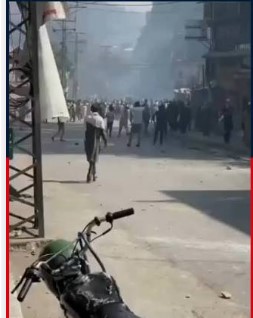

The imposition of Section 144 in Muzaffarabad has once again brought international attention to the political and human rights situation in Pakistan-administered Kashmir. The decision to ban public gatherings, restrict movement and tighten security measures has been criticized by activists, civil society groups and political observers as a reflection of the shrinking democratic space available to ordinary citizens in the region. While Pakistani authorities generally defend such restrictions as necessary to maintain public order and security, critics contend that the repeated use of emergency measures has increasingly become a mechanism to suppress dissent, discourage peaceful protests and strengthen administrative control over a population that has grown more vocal about its political, economic and social grievances.
Muzaffarabad, the administrative capital of Pakistan-administered Kashmir, has witnessed recurring demonstrations over the past several years. Protests have erupted over soaring inflation, rising electricity tariffs, shortages of essential commodities, unemployment, taxation policies and demands for greater political autonomy and transparency in governance. Many residents argue that despite being portrayed internationally as a self-governing territory, key political and administrative decisions affecting the region continue to be heavily influenced by institutions based in Islamabad.
The imposition of Section 144 during periods of public mobilization has reinforced perceptions among critics that the aspirations and concerns of local communities are often treated primarily as security challenges rather than legitimate expressions of democratic rights. Human rights advocates and local political groups have long raised concerns regarding restrictions on freedom of expression, peaceful assembly and political participation. Nationalist organizations, student bodies, labor unions and civil society activists have alleged incidents of intimidation, arbitrary detentions and limitations on independent political activities. According to rights campaigners, citizens should be able to protest against rising living costs, inadequate public services and perceived political marginalization without fear of excessive force, legal action or intimidation. Public frustration in Pakistan-administered Kashmir stems not only from political issues but also from deepening economic hardships.
Residents have periodically protested against increasing inflation, reductions in subsidies, electricity shortages and declining purchasing power. Many locals believe that despite the region’s vast natural resources, particularly its significant hydropower potential, the benefits of development projects have not adequately reached local communities. Critics maintain that developmental priorities often appear disconnected from the everyday needs and aspirations of the population living in these mountainous areas. Critics of Pakistan’s security establishment point to several incidents in recent years in which protests in Pakistan-administered Kashmir, including demonstrations over electricity tariffs, wheat subsidies and rising inflation were reportedly met with forceful responses by law enforcement agencies and paramilitary personnel.
Local activists and rights campaigners have alleged baton charges, arrests of protest leaders, restrictions on movement, internet disruptions and the detention of political workers during periods of heightened public unrest. During large-scale protests demanding economic relief and greater local empowerment, videos circulated on social media and reports from local organizations appeared to show confrontations between demonstrators and security personnel, resulting in injuries, detentions and heightened tensions. Human rights advocate further contend that allegations of enforced disappearances, intimidation of political activists and restrictions on independent political mobilization warrant transparent and impartial investigations.
While Pakistani authorities have consistently defended security operations as necessary measures to preserve law and order in a sensitive border region, critics argue that the repeated deployment of coercive measures against peaceful demonstrators has deepened mistrust among sections of the local population and widened the gap between state institutions and ordinary citizens.
The use of legal provisions such as Section 144 may provide temporary administrative control, but history suggests that suppressing public discontent rarely addresses the root causes of dissatisfaction. Restrictions imposed without meaningful efforts to resolve grievances related to governance, employment, public services and political representation can intensify feelings of alienation and frustration. Sustainable peace and long-term stability depend not only on maintaining security but also on ensuring that citizens feel heard, respected and genuinely represented in decision-making processes. The international community has repeatedly emphasized the importance of protecting civil liberties, including freedoms of expression, association and peaceful assembly. Democratic societies are often judged by their willingness to accommodate criticism and dissent while preserving public order through proportionate and lawful means. For the residents of Pakistan-administered Kashmir, expectations remain similar: an environment where people can express concerns, advocate reforms and participate in political discourse without facing undue restrictions or intimidation.
The recurring imposition of Section 144 in Muzaffarabad therefore raises broader questions about governance, accountability and the future of democratic participation in Pakistan-administered Kashmir. Lasting peace and stability are unlikely to emerge solely from restrictive measures and security-centric approaches. Rather, they require meaningful political dialogue, greater transparency, accountability for alleged abuses and a genuine commitment to safeguarding the civil and political rights of the people living in the region. A society that embraces debate, tolerates criticism and responds constructively to public concerns is ultimately better equipped to foster trust, stability and human dignity than one in which dissent is routinely curtailed.

Silencing Dissent in Muzaffarabad