


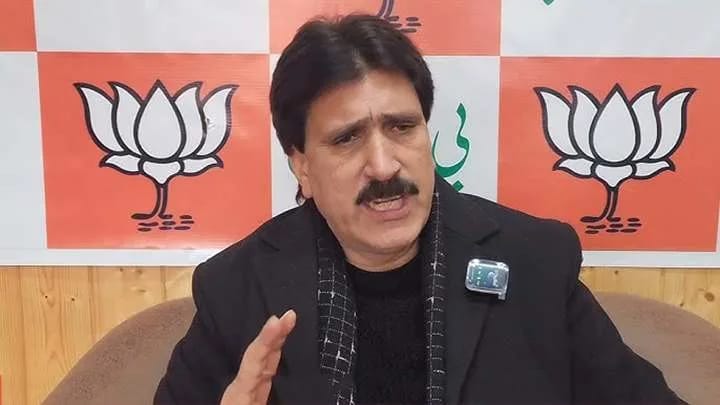
Srinagar, Aug 29 (JKNS): BJP leader Altaf Thakur has criticised the increase in electricity tariffs in Jammu and Kashmir, saying the move will add to the financial burden on ordinary households and questioned the Omar Abdullah government over its pre-election promise of providing 200 units of free electricity.
Thakur said the Joint Electricity Regulatory Commission’s approval of an average 6.83 per cent tariff hike, effective from September 1, 2026, comes at a time when families are already facing rising living costs.
He said the revised tariff for metered domestic consumers has increased from ₹2.30 to ₹2.45 per unit for consumption up to 200 units, from ₹4.00 to ₹4.20 for 201–400 units, and from ₹4.35 to ₹4.60 for consumption above 400 units.
“These figures may appear small when viewed from the comfort of government offices. For an ordinary household, however, every additional financial burden matters,” Thakur said.
“What Happened To 200 Units Free Electricity Promise?”
Thakur questioned the government over the National Conference’s electoral promise of providing 200 units of free electricity, saying people had voted with the expectation of receiving relief.
“Today, instead of experiencing the promised relief, consumers are confronting increased tariffs,” he said.
He argued that financial constraints, power-purchase costs and distribution losses could not be cited as new realities after the election, as such challenges existed before the government sought the people’s mandate.
“Kashmir’s Winter Electricity Use Is A Necessity, Not Luxury”
Highlighting the impact of the tariff hike in the Kashmir Valley, Thakur said electricity consumption during the harsh winter months should not be treated merely as discretionary household expenditure.
He said freezing temperatures, snowfall and harsh weather conditions force families to depend more heavily on electric heaters, boilers, geysers, heating blankets and other appliances.
“The elderly, children and economically weaker families suffer the most,” he said, adding that additional electricity consumption by families trying to keep their children and elderly members warm should not be considered a luxury.
Thakur also pointed out that the revised tariff will take effect from September 1 and remain applicable through the approaching winter period until March 31, 2027.
“Don’t Make Consumers Pay For Inefficiency”
The BJP leader acknowledged the financial challenges facing the electricity sector but said consumers should not repeatedly be made to bear the consequences of inefficiencies.
He called for greater efforts to reduce transmission and distribution losses, improve billing and collection, curb electricity theft, modernise infrastructure and improve the efficiency of power distribution.
“A family that pays its electricity bill regularly should not become the easiest source for balancing the books,” Thakur said.
He demanded that before imposing additional financial burdens on consumers, the government should place before the public measurable details of the steps taken to reduce distribution losses and improve efficiency.
“Administrative Defence Does Not Answer Political Question”
Reacting to the government’s defence of the tariff revision, Thakur said the argument that electricity tariffs were never promised to remain static does not address the political question surrounding the 200-unit free electricity commitment.
“The issue is not whether electricity continues to receive subsidy. The issue is whether the government is moving towards the relief that was promised to the electorate or away from it,” he said.
Thakur said people are entitled to ask when the promise of 200 units of free electricity will translate into tangible relief in their monthly household budgets.
Calls For Winter Relief Mechanism
Thakur urged the government to reconsider the tariff increase, particularly its impact on domestic consumers, and place before the public a transparent roadmap for fulfilling its electricity-related electoral commitments.
He also called for special consideration for households in Kashmir during the winter months and suggested exploring a targeted winter electricity relief mechanism for vulnerable and middle-income domestic consumers in the Valley.
“Democracy Does Not End When Votes Are Counted”
Thakur said electoral promises carry a political and moral responsibility and governments should either fulfil their commitments or transparently explain why they cannot do so.
He urged the BJP to raise the issue both inside and outside the Legislature and demand relief for domestic consumers, reduction of power distribution losses and fulfilment of the commitments made to the people.
“Electricity in Jammu & Kashmir—particularly during a Kashmir winter—is not merely another commodity. For many families, it is warmth, security and a basic necessity of life,” Thakur said. (JKNS)

