


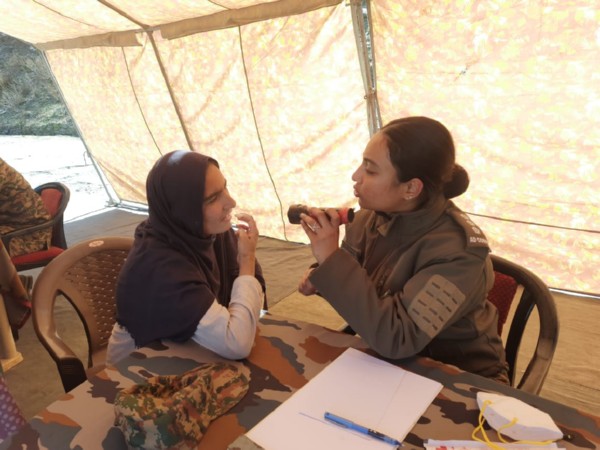

Across the rugged valleys, jagged ridges, and border frontiers of Kashmir, medical care is frequently separated from the civilian population by miles of unforgiving terrain. For hamlets perched along the Line of Control or tucked away in high-altitude pockets like Gurez, Machil, Karnah, and Uri, access to modern clinical infrastructure is constantly challenged by heavy winter snowfall, washed-out mountain tracks, and geographic isolation. In these remote territories, the periodic medical camps organized by the Indian Army under broad outreach initiatives like Operation Sadbhavana serve not merely as supplementary checkup points, but as vital humanitarian lifelines.
By deploying mobile diagnostic units, specialized medical officers, surgical personnel, and free pharmaceuticals directly to village doorsteps, these camps provide immediate relief to vulnerable populations while cultivating mutual trust and social cohesion.
Overcoming the Tyranny of Geography and Harsh Winters
Geography presents the most formidable barrier to public health throughout rural Kashmir. During the long winter months, temperatures routinely drop far below freezing, causing thick snowpacks to block arterial passes for months at a time. District administrative centers and tertiary hospitals in Srinagar or Baramulla become functionally out of reach for average households. Under such constraints, a routine infection or a sudden respiratory complication can rapidly turn life-threatening.
Army field ambulances and medical detachments bridge this physical divide by marching through snowbound trails and navigating precarious mountain paths. Teams set up temporary operational clinics inside village schools, panchayat buildings, or forward military posts. Before the onset of severe cold, these camps proactively distribute multi-month supplies of maintenance medications for chronic ailments such as hypertension, diabetes, and cardiovascular diseases, ensuring that vulnerable patients do not run out of treatment while their villages remain cut off from the plains.
When local cases exceed the diagnostic or surgical capacity of a field station, the military’s logistics network steps in. In critical medical emergencies where roads are impassable due to landslides or blizzards, army aviation units are mobilized to conduct emergency medical airlifts, flying patients directly to base hospitals or regional medical colleges to receive urgent life-saving interventions.
Bringing Multidisciplinary Specialist Care to Remote Doorsteps
While basic medical dispensaries in remote areas can handle minor scrapes and common colds, rural residents face a chronic shortage of medical specialists. Transporting an ailing child, an expectant mother, or an elderly relative down treacherous mountain roads for an expert consultation involves significant physical exertion and heavy financial burdens that many farming and pastoral families cannot shoulder.
To resolve this bottleneck, the military organizes large-scale multi-specialty camps that pool doctors across several branches of medicine. Gynecologists conduct essential antenatal evaluations, manage high-risk pregnancies, and educate mothers on neonatal hygiene. Pediatricians oversee childhood immunization schedules, treat acute upper respiratory infections, and address prevalent nutritional deficiencies through targeted supplementation and deworming.
Simultaneously, specialized ophthalmology units evaluate vision loss, distribute free corrective spectacles, and diagnose mature cataracts, routinely coordinating with military hospitals to schedule corrective procedures at no expense to the patient. Dental specialists use mobile chairs to perform fillings, scaling, and extractions, while orthopedic doctors treat degenerative joint conditions, arthritis, and musculoskeletal injuries caused by decades of hard physical labor on steep mountain slopes. On-site laboratory counters provide rapid blood sugar analysis, hemoglobin tests, and basic cardiovascular readings, allowing patients to leave with definitive clinical assessments alongside complete courses of high-grade, complimentary medicines.
Focused Health Initiatives for Women and the Elderly
In conservative border communities, traditional customs and cultural barriers sometimes make women hesitant to travel far from home to seek medical care from male practitioners. To ensure privacy and cultural comfort, the Army deliberately deploys female medical officers and nursing staff from the Military Nursing Service to lead consultations at these camps.
This approach dramatically improves healthcare uptake among women. Expectant and lactating mothers come forward without reservation to consult on gynecological health, family planning, and maternal nutrition. Furthermore, these teams regularly conduct focused hygiene workshops that distribute free sanitary supplies, dispel persistent social stigmas surrounding menstrual hygiene, and guide young mothers on sanitation practices that reduce infant mortality.
Elderly residents also benefit tremendously from these focused checkups. Decades of subsistence farming, carrying heavy loads on steep paths, and exposure to prolonged winter chills lead to high rates of chronic osteoarthritis and debilitating respiratory conditions. The widespread use of indoor traditional wood-burning stoves further exacerbates chronic obstructive pulmonary disease. Medical camps provide targeted management for these chronic issues, dispensing bronchodilators, analgesics, joint braces, and assistive mobility equipment like crutches and walking sticks free of cost.
Supporting Pastoral Livelihoods Through Veterinary Outreach
In the mountainous rural economy of Kashmir, human welfare cannot be separated from the health of livestock. Semi-nomadic communities, including the Gujjars and Bakarwals, depend entirely on their cattle, horses, sheep, and goats for seasonal migration, sustenance, and trade. An outbreak of infectious disease among herds can quickly push a family into acute poverty.
Recognizing this critical interdependence, military organizers routinely pair general health camps with specialized veterinary aid camps led by veterinary officers. These teams conduct large-scale deworming drives, administer routine vaccines against dangerous ailments like foot-and-mouth disease, and provide surgical care for injuries sustained by pack animals along hazardous migration routes. Herders also receive essential nutritional supplements and feed additives to help their animals survive the lean winter months, preserving the primary economic backbone of the local community.
Fostering Long-Term Trust and Community Well-Being
Beyond direct medical outcomes, these outreach camps carry profound social and emotional value. In regions that have endured decades of security challenges and civil disruption, quiet, compassionate interactions play an essential role in bridging social divides.
When a military doctor dresses an elder’s infected wound, calms a distressed child, or carefully explains a treatment plan to an anxious family, institutional barriers give way to genuine connection. The military presence is experienced not as an abstract security apparatus, but as an empathetic, protective neighbor invested in the basic dignity and health of the people. These enduring human encounters help establish an atmosphere of calm, showing that lasting peace and stability are nurtured through consistent compassion, community health, and mutual respect.