


ISLAMABAD — Pakistan is seeking to deepen its strategic relationship with Türkiye as it confronts mounting economic, security and diplomatic pressures, using Ankara’s regional influence and defence industry as important elements of its foreign-policy strategy, according to an analysis provided for this report.
The relationship extends beyond conventional bilateral defence cooperation. The material describes Pakistan’s engagement with Türkiye as encompassing diplomatic coordination, military procurement and emerging partnerships involving Saudi Arabia and Azerbaijan. It argues that Islamabad is attempting to use Ankara’s broader regional reach to compensate for constraints on its own diplomatic and economic leverage.
Türkiye has provided Pakistan with political backing on issues including Kashmir, including support voiced at multilateral forums such as the United Nations and the Organisation of Islamic Cooperation, according to the source material. The analysis contends that while such support gives Islamabad diplomatic visibility, it has not altered the underlying international position on the dispute.
Defence cooperation has become a central pillar of the relationship. Pakistan has pursued Turkish naval, aviation and unmanned-systems capabilities, reflecting the growing role of Ankara’s defence industry in Islamabad’s military modernisation efforts. The supplied material links that cooperation to Pakistan’s broader effort to maintain military capabilities while facing economic constraints and persistent internal security challenges.
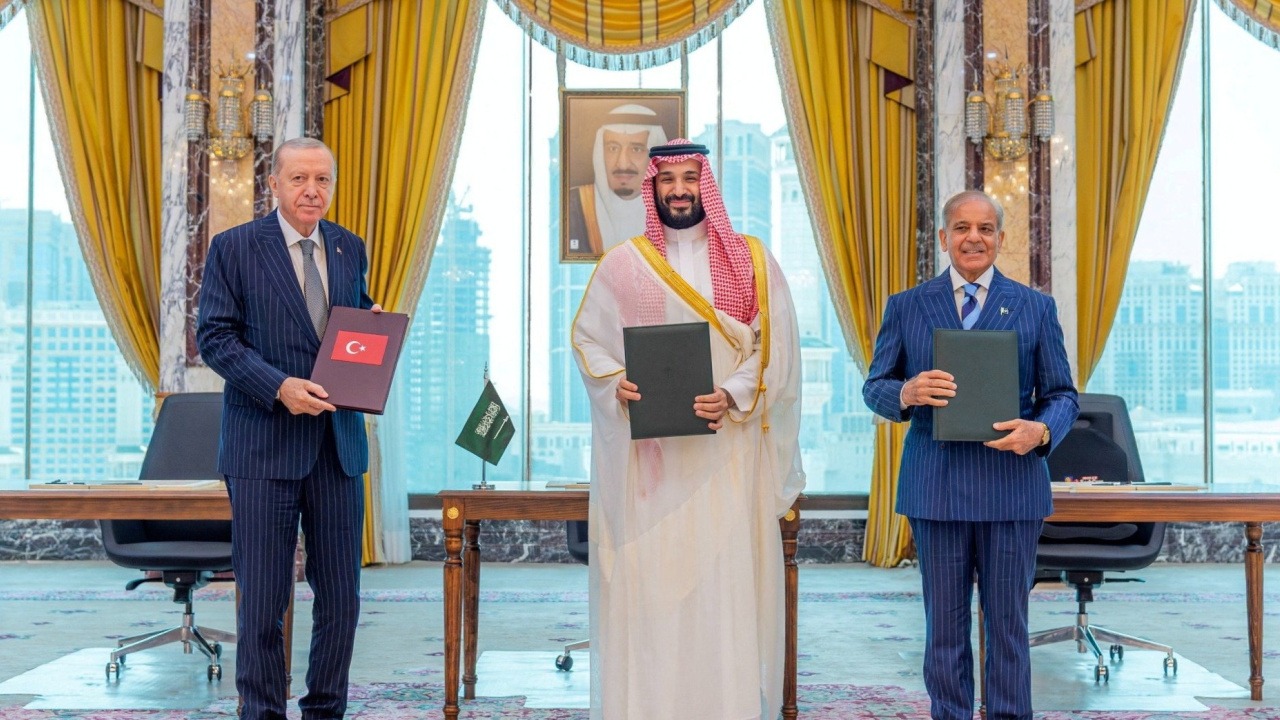
The relationship gained a wider strategic dimension with Pakistan’s participation in the August 2026 Makkah Joint Defence Agreement with Türkiye and Saudi Arabia. The pact provides for mutual defence in the event of an armed attack against one of its signatories. The document presents the agreement as an attempt by Islamabad to secure additional strategic and financial support while extending its security relationships beyond its immediate neighbourhood.
The arrangement, however, faces a difficult regional test because of Pakistan’s relationship with Iran. The source argues that Islamabad’s security commitments to Gulf partners have to be balanced against its long border with Iran and the risk that direct military involvement in a regional confrontation could generate serious security pressures at home.
According to the analysis, Pakistan’s reluctance to become directly involved in military operations during the regional crisis exposed the tension between its commitments to Saudi Arabia and Türkiye and its interest in avoiding confrontation with Tehran. It characterises Türkiye as a potential diplomatic buffer through which Islamabad can maintain ties with Gulf partners without assuming the full risks of direct military engagement.
A parallel relationship involving Türkiye, Pakistan and Azerbaijan has also expanded the diplomatic dimension. Islamabad has sought closer political and military coordination with Baku while using its relationship with both Türkiye and Azerbaijan to strengthen its presence in the South Caucasus and broaden its diplomatic outreach in the Muslim world.
The economic balance within that emerging partnership remains markedly different. The supplied material argues that Türkiye and Azerbaijan have substantial interests in energy, logistics and trade corridors, whereas Pakistan’s contribution is principally diplomatic and military. It portrays Islamabad as seeking access to the influence generated by its partners rather than providing comparable economic resources of its own.
Kashmir remains another important element of Pakistan’s engagement with Ankara. Islamabad has encouraged Turkish political support for its position, while Turkish leaders have repeatedly raised the issue in international forums. The source argues that this rhetorical support has not translated into a broader change in the policies of major Western or Gulf powers, many of which maintain extensive economic, energy and defence relationships with India.
For Pakistan, the relationship with Türkiye also reflects a search for alternatives as its traditional strategic relationships become more complicated. The analysis points to strains in Islamabad’s ties with Washington and continuing security concerns surrounding Chinese personnel and projects in Pakistan. It argues that these pressures have narrowed Islamabad’s room for manoeuvre and increased the importance of regional partnerships.
The benefits for Ankara are also significant. Pakistan represents an established market for Turkish defence companies, with cooperation spanning warships, helicopters, missile systems and other military technologies. The source describes the relationship as commercially valuable to Türkiye while also providing Ankara with a platform for expanding its diplomatic influence in South Asia.
That does not necessarily make the relationship one-sided in every area. Joint military exercises, defence contracts and diplomatic coordination demonstrate substantial overlap in the interests of the two governments. But the analysis argues that their broader strategic priorities remain distinct, particularly as Türkiye continues to cultivate economic and technological relationships with other major regional economies, including India.
The central question, therefore, is how far Pakistan can use its partnership with Türkiye to overcome constraints that are fundamentally domestic as well as diplomatic. The source argues that military cooperation and external security agreements cannot by themselves resolve Pakistan’s economic pressures, internal insurgencies or strained relations with neighbouring states.
Türkiye can provide diplomatic support, defence technology and another channel for regional engagement. But the material concludes that the durability of Pakistan’s broader strategy will ultimately depend on whether those external partnerships can be matched by improvements in domestic stability, economic capacity and relations with its neighbours.

