


Nestled between snowcapped peaks and political sensitivities, Kashmir has long stood at the crossroads of isolation and aspiration. For decades, the valley’s breathtaking beauty was its blessing and barrier. Treacherous mountain passes, landslide-prone terrain and inclement weather conspired to keep parts of the region inaccessible, especially during harsh winters. Today, however, the story is changing rapidly. From bustling highways slicing through the Pir Panjal to strategic tunnels boring beneath towering ridges, Kashmir is experiencing an unprecedented infrastructure renaissance. This transformation is not just about tarmac and concrete; it is about security, connectivity, economic revival and hope.
If one organisation has shaped Kashmir’s modern connectivity map, it is the Border Roads Organisation. Border Roads Organisations engineers and labourers have turned dreams into driveways, operating in the harshest conditions, often inches from the Line of Control. Under Project Beacon, Ampark and Himank, Border Roads Organisation has completed thousands of kilometres of roads, connecting remote areas like Gurez, Machil, Teethwal and Karnah to the rest of the country. One of the standout marvels is the Umling La Pass Road in eastern Ladakh, officially the world’s highest motorable road an engineering feat that doubles as a strategic lifeline. Border Roads Organisations work isn’t limited to roads. Over the past few years, it has inaugurated dozens of high-altitude bridges, facilitating year-round access to isolated hamlets and military outposts. The recently inaugurated bridges in Gurez and Kathua are prime examples of infrastructure meeting both civilian and strategic needs.
National Highway 44, the lifeline of Jammu and Kashmir, has undergone a dramatic makeover. Once notorious for landslides and traffic jams, National Highway-44 now boasts multiple tunnels and viaducts. The Chenani-Nashri Tunnel and the Banihal-Qazigund Tunnel have reduced travel time between Jammu and Srinagar by hours while offering all-weather connectivity. Looking eastward, the Zoji-La and Z-Morh tunnels are engineering dreams in the making. Once complete, the Zoji-La tunnel will become Asia’s longest bidirectional tunnel at over 14 km, ensuring that the Srinagar-Leh highway remains open even during the harshest winters. The Z-Morh tunnel has opened Sonamarg, a prime tourist hub, to year-round tourism and trade. The Mughal Road, winding through Shopian, Poonch and Rajouri is set for an all-weather upgrade with the proposed Peer Ki Gali Tunnel bringing Pir Panjal’s border districts into Kashmir’s economic fold. Meanwhile, National Highways 701 and 244 are seeing similar upgrades, connecting towns like Kishtwar, Kupwara and Karnah with wider, safer roads and new tunnel alignments like the Sadna Tunnel.
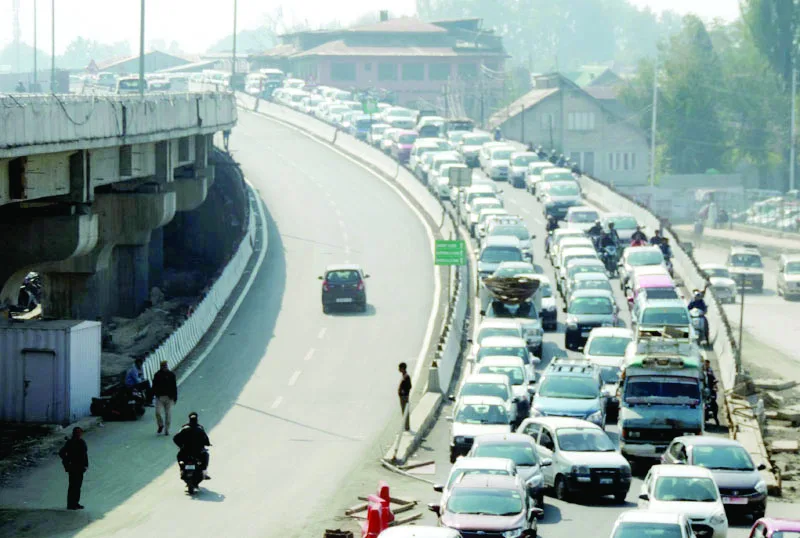
Kashmir’s urban centres are also getting a facelift. The upcoming Lal Chowk-Parimpora flyover in Srinagar aims to decongest the city’s most traffic-heavy zone. A flyover in Sangrama on the Baramulla-Uri highway is nearing completion and will streamline movement across the northern valley. Meanwhile, over 400 new bridges across the Union Territory have been completed recently, many of which are vital in remote districts like Doda, Kathua and Bandipora. These are more than just crossings, they are lifelines connecting communities to schools, hospitals and markets.
Where national highways promise inter-state mobility, rural and gramin roads ensure last-mile connectivity. Under the Pradhan Mantri Gram Sadak Yojana, over 40,000 kilometres of roads have been built in Jammu and Kashmir in the past few years. Villages like Warwani in Kishtwar or Tulail in Gurez, once accessible only by foot or helicopter are now linked by metal roads. In these parts, the road is more than a path; it is the bridge to a better life. Farmers get fairer prices, children reach schools in winter and healthcare becomes accessible in emergencies.
Behind many of these achievements lies the Indian Army’s logistical and operational support. Whether it’s snow-clearing operations at 14,000 feet or providing security for construction crews in sensitive zones, the Army ensures the wheels of development keep turning. In many cases, the Army’s engineering regiments directly supported or executed Border Roads Organisation projects in border areas. Moreover, the Army often opens its road networks for defence logistics, especially in places like the Indus Valley, Turtuk and Nubra in Ladakh.
The momentum shows no signs of slowing down. As of mid-2025, the Union Government has sanctioned over Rs. 10,000 crores for new infrastructure in Jammu and Kashmir. Major projects in the pipeline include, Peer Ki Gali Tunnel on Mughal Road, Sadna Tunnel, Sudhmahadev-Dranga Tunnel, Singhpora-Vailoo Tunnel, lane flyover from Lal Chowk to Parimpora. Additionally, Phase II of the Srinagar Ring Road and the Jammu Semi-Ring Road are fast-tracked to meet the growing urban demand. Thousands of new Pradhan Mantri Gram Sadak Yojna roads are being planned on the rural front, focusing on tribal regions and hilly settlements.
Infrastructure development in Kashmir is not just about shortening travel times; it is about stitching together the social and economic fabric of a region that has long felt isolated. With better roads come better opportunities for business, education, healthcare and tourism. As a bonus, the valley’s tourism industry, once dependent on summer windows, is poised for year-round growth. All-weather access to places like Sonamarg, Gurez and Baltal is opening up new circuits for adventure tourism, religious pilgrimage and winter sports.
In Kashmir, roads are not just infrastructure but instruments of integration. From strategic tunnels that serve national defence to village roads that uplift local lives, every milestone is a movement toward inclusion, stability and prosperity. The development of road infrastructure in Jammu and Kashmir is a significant step towards improving connectivity, boosting economic activity and enhancing the overall quality of life for the region’s people. As these projects near completion, it’s clear that Kashmir is on the cusp of a new era of development and progress. With continued investment and effort, the region will become a hub of economic activity and tourism, leveraging its natural beauty and strategic location.

