


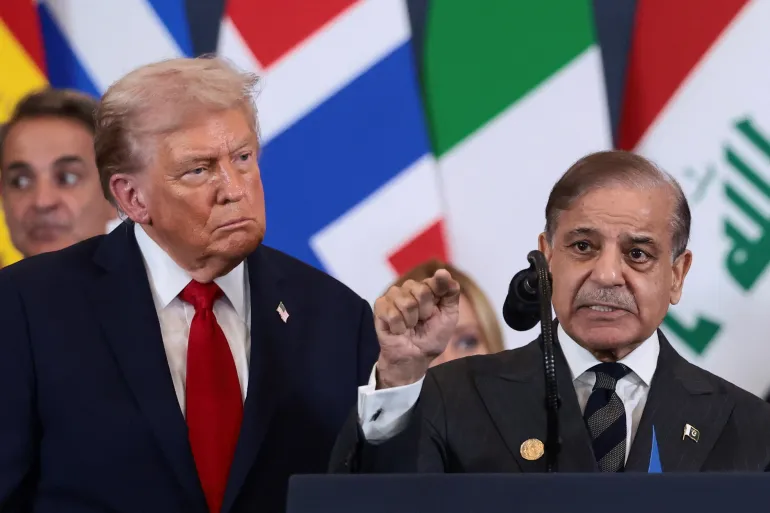

Islamabad insists that joining the Trump-era “Board of Peace” on Gaza allows Pakistan to remain constructively engaged on a cause that commands widespread sympathy at home. In practice, the decision appears less about moral intervention and more about maintaining a careful alignment—one that speaks of solidarity while avoiding any departure from boundaries drawn by others.
Despite Islamabad’s insistence that its participation is meant to keep Palestinian concerns on the table, critics see a country once again trying to balance its domestic narrative with the expectations of Western partners, even when those two pull in opposite directions.
The way the decision was taken has only fuelled scepticism. There was no visible parliamentary debate, no public explanation of what Pakistan hopes to achieve, and no consultation with religious or civil society groups that have traditionally shaped the country’s stance on Palestine. As with many foreign policy calls, the matter appears to have been settled quietly within the state’s power structure and presented as a fait accompli.
This is not unusual. Pakistan’s foreign policy has long been insulated from public scrutiny, especially when it intersects with security interests or relations with Washington. Gaza, despite its moral weight, has not been treated any differently.
Between Washington and the Street
Aligning with a U.S.-backed diplomatic framework places Pakistan in an awkward position. Back home, the popular public sentiment on Gaza is overwhelmingly sympathetic to the Palestinians and deeply suspicious of Western-led initiatives. Abroad, Islamabad comes across as eager to signal responsibility, moderation and usefulness to partners who are powerful.
The result is a careful and often unconvincing balancing act. Participation offers visibility but little influence. It allows Pakistan to say it is “at the table” while avoiding positions that might strain ties with the United States. In the process, the Palestinian agency risks becoming secondary to Pakistan’s own need to remain diplomatically acceptable.
This tension is not new. Pakistan has often tried to square public commitments to Muslim causes with strategic realities that pull it in another direction. Gaza has simply made that contradiction harder to disguise.
A History That Complicates the Narrative
Pakistan’s claim to consistent solidarity with Muslim struggles does not sit comfortably with the actions it took in the past. After 9/11, Islamabad became a central ally in the U.S. War on terror–a decision which brought financial and political benefits but also widespread domestic violence and instability. Even then, the state kept informal channels open with militant actors to preserve leverage—an approach driven by strategy rather than principle.
Earlier episodes are even less discussed. During the 1970 Black September crisis in Jordan, Pakistani military officers serving in advisory roles were linked to the Jordanian state’s campaign against Palestinian groups. Thousands of Palestinians were killed. Despite Pakistan publicly aligning itself with the Palestinian cause, its involvement on the ground told a different story—one which was largely absent from official memory.
These precedents matter as they shape how current decisions are read. When Pakistan joins a Western-framed initiative on Gaza, it is not judged in isolation. It is infact viewed through the lens of a history where moral language and strategic action have often diverged.
Islam as Identity, Not Instruction
Pakistan continues to describe itself as a state guided by Islamic values, particularly in its foreign policy positions on Palestine. Yet in practice, Islamic principles rarely appear to inform decision-making in any meaningful way.
Religious scholars were not consulted on Gaza. Ethical arguments rooted in Islamic jurisprudence were not debated publicly. Instead, Islamic references surfaced after the decision, which was used to legitimise it rather than shape it. Over time, this has reduced the Islamic identity to a rhetorical tool—invoked when useful, ignored when inconvenient.
For a public that sees Gaza as a clear moral issue, this approach feels hollow. The gap between what the state says and what it does has widened and gestures of concern no longer carry the weight they once did.
A Debate Pakistan Can No Longer Avoid
The reaction inside Pakistan has been sharper than usual. Islamist groups, opposition politicians as well as independent commentators—rarely aligned—have all questioned the wisdom of joining a process they view as stacked against the interests of Palestinians. Their criticism is not just about Gaza, but about a broader pattern of decision-making that sidelines public sentiment in favour of elite calculation.
Gaza has become a point of reckoning. It has forced a conversation about who Pakistan’s foreign policy is really for, and whether long-standing claims of moral leadership still hold up under scrutiny.
By associating itself with the “Board of Peace,” Pakistan has not resolved these questions. It has merely brought them back into the open—where they are proving harder than ever to manage.