


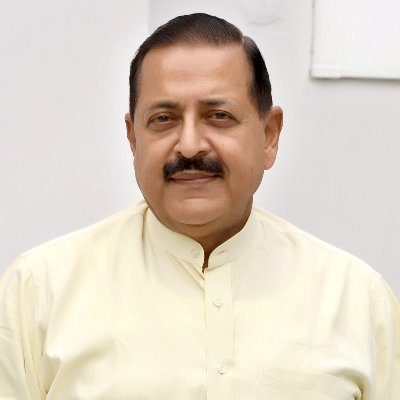
New Delhi, Jan 25 (JKNS): Rules under the SHANTI Act Sustainable Harnessing and Advancement of Nuclear Energy for Transforming India Act, 2025 are expected to be notified in the coming months, Union Minister of State (Independent Charge) for Science and Technology; Earth Sciences and Minister of State for PMO, Department of Atomic Energy, Department of Space, Personnel, Public Grievances and Pensions, Dr. Jitendra Singh said during an interaction with the media.
The Minister said the process of framing rules has already begun, but the government is proceeding carefully as the SHANTI Act marks a structural shift in India’s nuclear energy programme, including opening up the sector to private and non-government participation.
He underlined that the new framework must be enabling and accommodative, while fully preserving India’s long-standing safety, security and regulatory safeguards.
Dr. Jitendra Singh said the response to the SHANTI Act from the private sector as well as foreign stakeholders has been positive, indicating strong global interest in India’s nuclear energy plans. He noted that international interlocutors have shown keen interest in the new law, reflecting confidence in India’s approach to clean and reliable energy expansion.
On regulatory and safety aspects, the Minister emphasised that the SHANTI Act strengthens oversight rather than weakening it, with clear provisions for licensing, safety authorisation and accountability. Strategic materials and sensitive aspects of the nuclear fuel cycle will continue to remain under strict government control, ensuring that national security and public safety are not compromised, even as new participants enter the sector .
Addressing questions on foreign direct investment, Dr. Jitendra Singh said the government would be guided by the existing FDI framework, while examining whether additional clarity or specificity is needed to support nuclear energy projects. Any changes, he said, would follow careful deliberation and remain aligned with established policy principles.
The Minister also acknowledged that nuclear power involves higher upfront costs, particularly in the case of light water reactors that rely on imported equipment. However, he stressed that as capacity expands and domestic manufacturing deepens, costs are expected to come down significantly. He said nuclear energy has become a necessity for India, as the country shifts towards clean energy, seeks to reduce dependence on imported fossil fuels, and ensures round-the-clock power supply, which cannot always be guaranteed by renewable sources alone.
Dr. Jitendra Singh said the government’s long-term vision includes a major expansion of nuclear capacity to support India’s clean energy transition and growing demand from sectors such as industry, healthcare and data infrastructure. He added that the SHANTI Act is designed to create an enabling ecosystem for responsible investment and technological development, while balancing growth with safety, accountability and public interest. (JKNS)

