


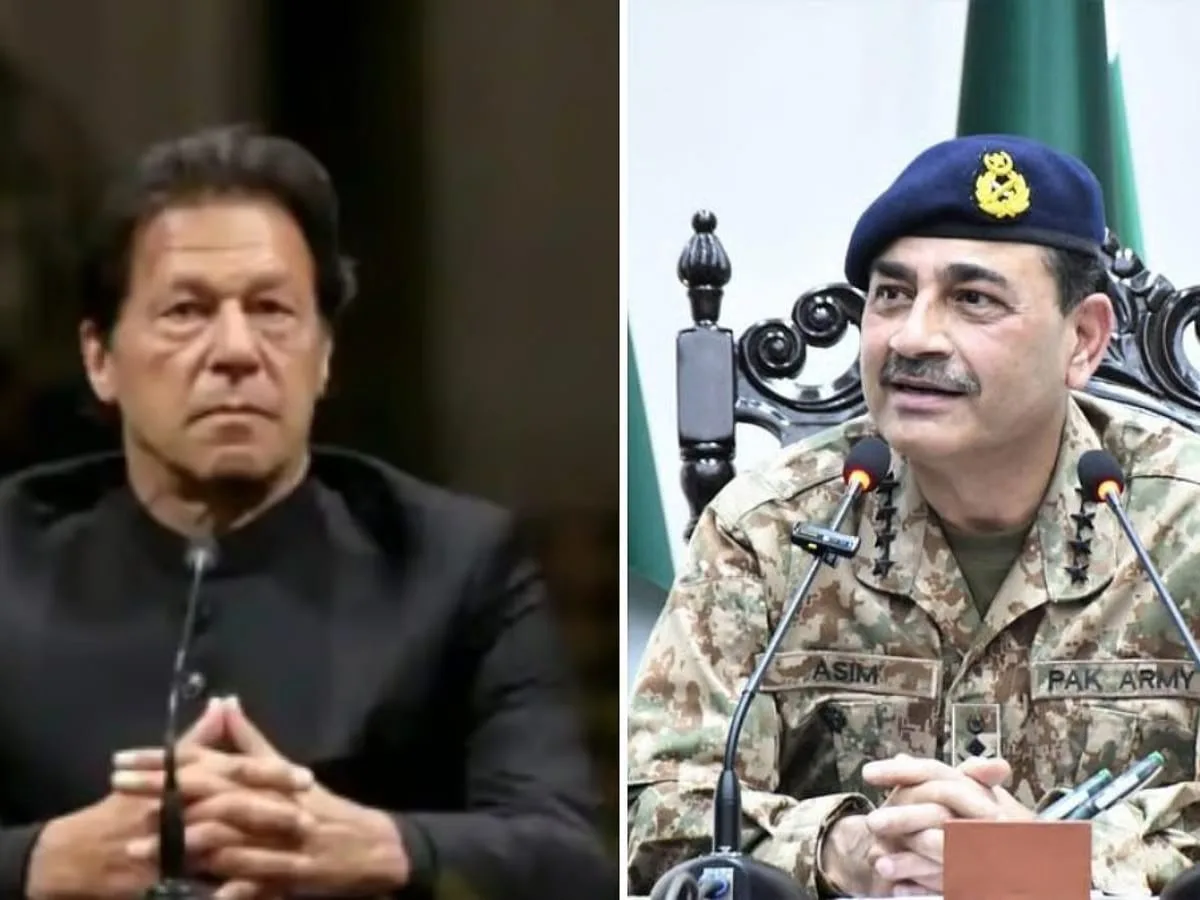
Pakistan’s 2024 general elections were billed as a return to civilian normalcy after years of political turbulence.
Instead, they marked a decisive deepening of what many analysts now describe as a hybrid-authoritarian order: one in which the ballot exists but power is tightly curated by the military establishment.
Allegations of systematic rigging, suppression of dissent, and post-election constitutional engineering have converged into a single narrative: the sidelining of Imran Khan and the crushing of Pakistan Tehreek-e-Insaf (PTI) as a mass political force.
The context is critical. Following Khan’s ouster via a no-confidence motion in April 2022, relations between the former prime minister and the military deteriorated sharply.
Khan’s accusations of a US-backed “regime change” and his direct criticism of senior generals broke long-standing red lines in Pakistan’s civil–military relations.
By the time elections approached in 2024, PTI was already under siege: its symbol was stripped, its candidates forced to run as independents, and its leadership decimated through arrests and legal cases.
Widespread reports from election day and the counting process alleged manipulation by military-linked institutions, notably the Inter-Services Intelligence (ISI) and the Directorate General of Military Intelligence (DGMI).
Delayed results, altered Form-45s, and constituency outcomes that flipped overnight fueled claims that PTI’s electoral momentum was deliberately neutralised.
Despite PTI-backed independents emerging as the single largest bloc, the system was quickly reassembled to exclude them.
A hastily stitched PML-N and PPP coalition installed Shehbaz Sharif as prime minister, restoring a familiar civilian face to an increasingly militarised state.
What followed was not consolidation through consensus, but consolidation through law. The 26th Constitutional Amendment, passed in October 2024, reshaped key aspects of Pakistan’s judicial framework. A separate 27th Amendment followed in November 2025, further redefining the civil–military balance. These amendments became the legal backbone of Pakistan’s post-election order.
Ostensibly framed as governance and stability reforms, these amendments substantially enhanced the Army Chief’s institutional autonomy and influence, while curbing the judiciary’s ability to challenge executive–military decisions.
Judicial review was narrowed, tenure and appointment mechanisms recalibrated, and the courts’ role as a potential check on authoritarian drift sharply diminished.
Parallel to this constitutional tightening was an aggressive campaign against dissent. Imran Khan himself was imprisoned on what supporters and independent observers describe as politically motivated and legally tenuous charges.
Thousands of PTI workers were detained before and after the polls, often without due process. Anti-terrorism laws were expansively interpreted to label political protest as violent extremism, blurring the line between opposition activity and militancy.
Media freedoms suffered a similar fate. Television channels faced blackout orders, journalists were coerced or silenced, and digital platforms were throttled or selectively censored.
Protests were routinely banned under public order laws, while social media narratives sympathetic to PTI were targeted through arrests and cybercrime statutes.
The message was unambiguous: dissent would no longer be managed; it would be criminalised.
Human rights indicators deteriorated rapidly. Enforced disappearances, long a grim feature of Pakistan’s security landscape, spiked again: this time with a renewed focus on political activists, lawyers, and online influencers.
Civil liberties groups documented cases of intimidation, custodial abuse, and collective punishment, particularly in urban centers where PTI enjoyed strong support.
The judiciary, traditionally a battleground for civilian pushback, appeared increasingly constrained or complicit.
Taken together, these developments suggest that Pakistan’s 2024 elections were less a democratic exercise than a reset: one designed to reassert military primacy after the populist disruption posed by Imran Khan.
The coalition government provides civilian cover, but real authority flows upward to Rawalpindi, insulated by constitutional amendments and enforced by coercive laws.
The situation extends beyond Pakistan’s borders. As space for dissent shrinks at home, the focus has shifted to the Pakistani diaspora.
Protests in London, Washington, Toronto, and the Gulf are no longer symbolic. They are becoming central to keeping the issue of political prisoners, enforced disappearances, and democratic backsliding on the global agenda.
In jailing voices at home, Pakistan’s power brokers may have inadvertently amplified them abroad.

