


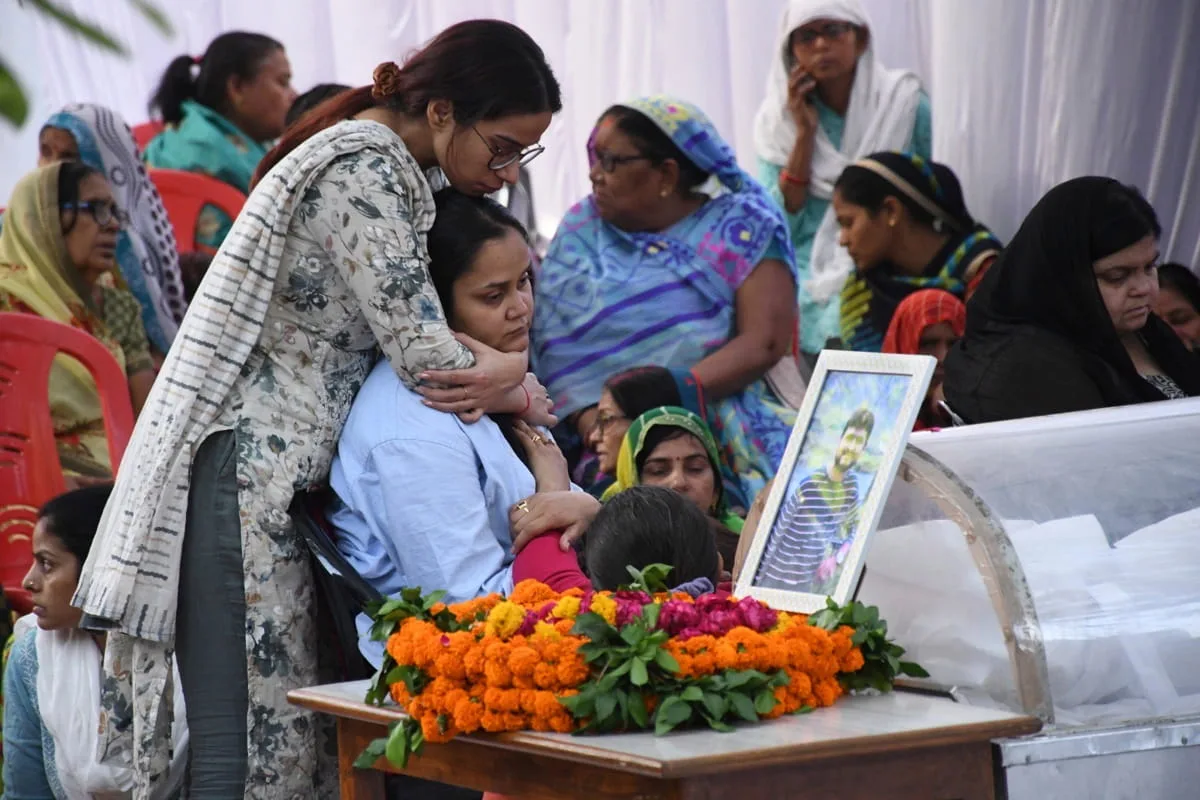
A Maruti Eeco packed with over 300 kilograms of military-grade explosives rammed into a CRPF convoy on the Jammu-Srinagar highway near Pulwama, Kashmir. Forty Indian paramilitary personnel died instantly; the suicide bomber, Adil Ahmad Dar, had detonated what became the deadliest single attack on security forces in thirty years of insurgency. Pakistan-based Jaish-e-Mohammed claimed responsibility within hours.
The blast itself told investigators everything they needed to know. That volume of explosives doesn’t just appear in a remote valley. Neither does the technical expertise to modify vehicles for maximum lethality, nor the intelligence required to time convoy movements with surgical precision. India’s investigation documented what seemed obvious from the start: this wasn’t some radicalized teenager acting alone. The fingerprints belonged to Pakistan’s Inter-Services Intelligence, and the attack exemplified Islamabad’s so-called thousand cuts doctrine.
Consider the facts surrounding JeM itself. The group enjoys UN designation as a terrorist organization, alongside similar recognition from Washington, London, and Brussels. It’s operated openly from Pakistani soil since 1999. Its founder, Masood Azhar, still lives comfortably in Bahawalpur despite outstanding international warrants for his arrest. That’s not negligence; that’s protection. When a state refuses to act against designated terrorists on its territory, despite having both legal obligation and military capacity to do so, it becomes complicit.
The international community has seen this playbook before, though usually in contexts that prompted swift action rather than hand-wringing. Afghanistan under the Taliban harbored Al-Qaeda and faced invasion. Iran’s support for Hezbollah and Hamas triggered comprehensive sanctions. Libya sponsored the IRA and found itself isolated until Gaddafi capitulated. Sudan hosted Osama bin Laden and paid economically for years. Yet Pakistan maintains normal diplomatic relations, receives billions in international assistance, and hosts four separate UN-designated terrorist organizations without comparable consequences. The difference? Nuclear weapons and geography create a different calculation, apparently.
Pakistani military strategy treats these groups as assets rather than threats. The ISI doesn’t accidentally cultivate JeM; it does so deliberately. The objectives are layered: bleed India in Kashmir, force the dispute onto international agendas, distract domestic audiences from economic catastrophe, and justify the military’s dominant role in national politics and budgets. According to the South Asia Terrorism Portal (SATP), a total of 44,729 people were killed in Jammu and Kashmir between 1988 and 2019, including civilians, security personnel, and militants. Indian intelligence traces roughly two-thirds of major attacks to Pakistan-trained or Pakistan-based militants. That’s not coincidence. That’s policy.
The numbers on Pakistan’s economy tell their own story here. By 2019, GDP per capita had fallen behind Bangladesh (a nation that didn’t even exist until Pakistan’s army brutalized it into existence in 1971). Foreign reserves covered only a few months of imports. In 2019, Pakistan’s consumer price inflation stood at approximately 10.6 percent, according to World Bank data, growth stagnated around 3 percent, yet military spending consumed 18 percent of the federal budget. The army needs external enemies to justify both its resources and its interference in civilian governance; groups like JeM provide convenient tools for manufacturing those threats while maintaining plausible deniability.
Which makes Pakistan’s internationalization strategy somewhat absurd when examined closely. Every major attack follows the same script: violence spikes, tensions escalate, world powers rush in to prevent war, and Islamabad positions itself as the reasonable party facing Indian aggression. Except Pulwama broke that pattern. Instead of pressuring New Delhi for restraint, major capitals explicitly blamed Pakistan. The Financial Action Task Force kept Pakistan on its grey list for terror financing. Even China, Pakistan’s most reliable defender at the UN, finally allowed Masood Azhar’s designation as a global terrorist in May 2019. Diplomatic isolation, not mediation.
India’s response arrived twelve days later. Twelve Mirage 2000s crossed the Line of Control on February 26 and struck a JeM training facility in Balakot, deep inside Khyber Pakhtunkhwa province. First acknowledged cross-border airstrike since 1971. The Modi government carefully termed it preemptive counter-terrorism rather than retaliation, establishing that state-sponsored terrorism now warranted direct action against Pakistani territory itself. Semantic precision mattered here; India wanted precedent, not just revenge.
International reactions validated the approach. Pakistan protested the sovereignty violation, naturally, but the UN Security Council declined to condemn India despite Pakistani demands. Major powers issued statements supporting India’s right to self-defense against terrorism. The message registered clearly enough: sponsor terrorist attacks, face military consequences.
New Delhi’s posture shifted fundamentally after Pulwama. Zero tolerance replaced strategic patience. The old playbook of absorbing attacks and limiting responses to diplomatic protests got discarded. Pakistan’s military establishment now understands that proxy terrorism carries costs – military strikes, diplomatic isolation, economic pressure exceeding any theoretical benefit. Whether that calculation actually modifies behaviour remains uncertain, given institutional incentives favouring continued conflict.
Five years on, JeM still operates from Pakistani territory. Masood Azhar still walks free in Bahawalpur. The ISI infrastructure supporting proxy groups remains largely intact. Yet something shifted nonetheless. Pakistan’s international standing eroded measurably; its economic fragility makes military adventurism increasingly unaffordable; and India demonstrated willingness to escalate that previous governments avoided.
The question facing the international community grows harder to ignore with each incident: how long does Pakistan get exceptional treatment? Other states sponsoring terrorism face sanctions, isolation, even military action. Pakistan’s nuclear arsenal shouldn’t function as permanent immunity from consequences. For the families of those forty CRPF personnel killed that February afternoon, justice remains incomplete. International law either applies universally or means nothing at all.

