


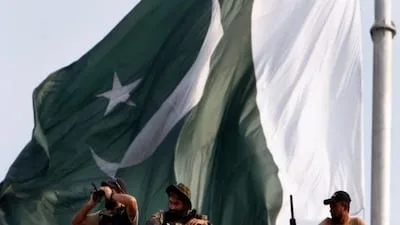
The tragedy of modern Pakistan is not found in its lack of potential but in its deliberate choice to define its existence through the lens of a manufactured insecurity that has turned the state into a perpetual incubator for global chaos. Since its birth, the Pakistani establishment has operated under a security syndrome that prioritises parity with a much larger neighbour over the basic welfare of its own citizens. This deep-seated existential fear has birthed a national security doctrine that is less about defence and more about the strategic instrumentalisation of militancy.
By treating non state actors as low-cost force multipliers, the military elite in Rawalpindi have attempted to bridge the gap between their revisionist ambitions and their conventional limitations. This policy is not a collection of occasional tactical errors; it is a foundational pillar of statecraft that has institutionalised jihad as a legitimate tool of foreign policy.
The genesis of this destructive path can be traced to the 1971 defeat, a humiliating collapse that shattered the military’s confidence in conventional warfare and birthed the vengeful doctrine of bleeding India with a thousand cuts. It was General Zia-ul-Haq who provided the ideological and structural scaffolding for this nightmare by sanctifying the military’s mission with a hardline Islamist veneer. Under his leadership, the motto of the army was transformed to centre on jihad, while the state actively funded a vast network of Deobandi madrassas to serve as ideological assembly lines for holy warriors. This was the era when the Inter Services Intelligence was expanded into a state within a state, tasked with managing a global pipeline of extremism that initially served Cold War interests in Afghanistan but was quickly redirected toward the east once the Soviets departed.
The state’s reliance on these proxies is most visible in the meadows of Kashmir, where groups like Lashkar-e-Taiba and Jaish-e-Mohammed have functioned as the veritable arm of the Pakistani deep state for decades. These organisations are not rogue elements; they are strategic assets that receive logistical support, training and political cover from the security apparatus. Even as the international community watches with increasing alarm, Pakistan continues to engage in a cynical shell game by rebranding these terror outfits as charitable organisations or indigenous resistance fronts to maintain a thin veil of plausible deniability. The recent escalations in the Jammu and Kashmir, including the horrific Pahalgam massacre where twenty-six innocent lives were snuffed out, underscore the enduring nature of this doctrine. Each time these proxies strike, the Pakistani establishment follows a predictable script of denial and disinformation, often blaming the victims for their own suffering while continuing to provide sanctuary to the architects of the violence.
This obsession with asymmetric warfare is not limited to its eastern border, as the doctrine of strategic depth has turned Afghanistan into a playground for Pakistani backed militants. By favouring the Taliban and the Haqqani Network, Pakistan sought to ensure a subservient regime in Kabul that would deny any space to Indian influence and suppress Pashtun nationalist sentiments. However, this strategy has proven to be a spectacular failure of imagination. The “strategic depth” that Pakistan sought has instead become a sanctuary for the Tehrik-i-Taliban Pakistan, a group that shares the same ideological DNA as the assets the ISI nurtured for years. The 2021 Taliban victory, which was initially celebrated by the Pakistani elite as a triumph over Western and Indian influence, has actually emboldened a domestic insurgency that is now bleeding the Pakistani state from within. The TTP has recently utilised its Afghan safe havens to launch a wave of attacks, resulting in a seventy percent increase in terrorist incidents and hundreds of casualties among security personnel.
The internal blowback is the inevitable result of a state trying to distinguish between “good” and “bad” militants, a fallacy that has left the Pakistani security apparatus with a split personality. You cannot feed vipers in your backyard and expect them only to bite your neighbours; eventually, the fire you start will consume your own house. The launch of Operation Azm-e-Istehkam in mid-2024 is a desperate attempt to contain the very fires the state set, yet it lacks credibility because the military continues to protect the groups it deems useful for its proxy wars abroad. This duplicity has created a profound state-society gap, particularly in the Pashtun and Baloch peripheries, where the local population is caught between the brutality of the militants and the heavy handedness of a military that treats its own citizens as collateral damage. The suppression of movements like the Pashtun Tahafuz Movement, which merely demands basic human rights and an end to state sponsored disappearances, reveals a military establishment more interested in preserving its grip on power than in securing the people.
Economically, the cost of this militant centric doctrine has been suicidal. Pakistan has spent decades diverting precious resources away from education, healthcare and infrastructure to fund its oversized war machine and its proxy networks. The cumulative economic losses from the war on terror exceed one hundred and twenty-six billion dollars, yet the military continues to demand supplementary grants and increases in defence spending even as the country teeters on the edge of default. The recent saga of being placed on the Financial Action Task Force grey list for failing to curb terror financing was a clear warning from the global community, yet the reforms implemented were largely performative and aimed at temporary survival rather than a genuine shift in strategy. The rhetoric of a geo economic pivot found in the National Security Policy 2022-2026 is a hollow promise, as there can be no meaningful regional connectivity or trade when the state remains committed to destabilising its neighbours.
The military’s stranglehold on the national narrative ensures that any voice calling for a rationalist approach to foreign policy is silenced or labeled as treasonous. This has created a cycle of dependency where the state relies on bailouts from international lenders and strategic patrons like China to survive, only to use that breathing room to continue its support for the very militant networks that hinder its growth. The frustration of even its closest allies, such as China, is becoming increasingly public as China–Pakistan Economic Corridor projects are targeted by the same extremist forces that flourish in the environment the Pakistani state has created. Pakistan remains a nation held hostage by its own protectors, a society where the military’s commercial interests and strategic anxieties take precedence over the survival of the state.
The instrumentalisation of militancy is not a byproduct of Pakistan’s national security doctrine; it is the doctrine itself. Until there is a fundamental dismantling of the jihadi infrastructure and a genuine shift toward civilian supremacy, the country will remain a pariah state that exports instability to maintain a mirage of parity. The recent events have shown that the costs of this policy are no longer just external, as the state is now being devoured by the same monsters it created in its quest for strategic depth. Pakistan stands at a crossroads where it must choose between becoming a normal state focused on the prosperity of its citizens or remaining a garrison state that functions as the world’s primary exporter of terror. Given the current trajectory and the entrenched interests of the Rawalpindi elite, the outlook remains bleak and the world must continue to treat the Pakistani state not as a partner in peace but as a pyromaniac that has yet to put down the match.

