


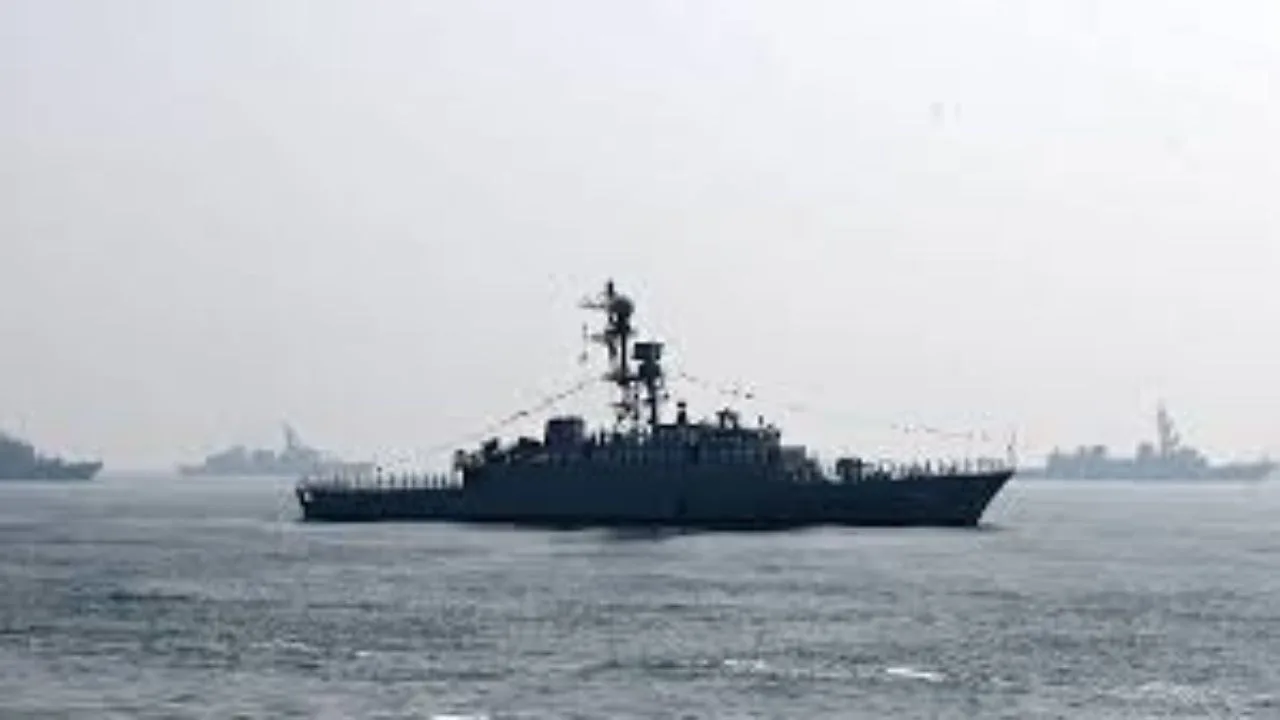
The Indian Navy has activated its Search and Rescue assets to help IRIS Dena, an Iranian naval vessel struck in international waters on the morning of February 28, 2026. The activation was swift, it was calibrated, and for anyone who has watched the Indian Navy operate across the Indian Ocean over the past two decades, it was entirely unsurprising.
This is a force that does not wait to be told twice when there is a vessel in distress.
A Navy That Has Done This Before—Many Times
Before getting into the specifics of what the Indian Navy did for IRIS Dena, it is worth understanding why this SAR activation is important and how the Indian Navy has performed in the past.
When the 2004 Indian Ocean tsunami struck, the Indian Navy had ships in the water within hours—before most governments had finished assessing the damage. It ran one of the largest humanitarian naval operations in the country’s post-independence history, pulling survivors from coastal debris across the Andaman Sea and the Tamil Nadu coastline.
When Yemen descended into civil war in 2015, the Indian Navy evacuated over 4,500 people — Indian nationals and foreign citizens alike—from the port of Aden under active conflict conditions. Operation Rahat became a textbook case of non-combatant evacuation at sea.
When conflict erupted in Sudan in 2023, it was there again. It runs continuous anti-piracy patrols in the Gulf of Aden and the Arabian Sea. It has responded to cyclones, shipwrecks, and medical emergencies across the breadth of the Indian Ocean, often arriving before anyone else could.
Search and Rescue, humanitarian response, non-combatant evacuation—these are not side missions for the Indian Navy. They are the primary language in which India projects its presence and its values across the Indian Ocean Region.
What SAR Actually Is
So when the Indian Navy says it has activated SAR assets, what does that mean precisely?
Search and Rescue — SAR — is the organised, legally mandated effort to locate persons or vessels in distress at sea and deliver timely assistance. It is not a courtesy. It is not foreign policy. It is a binding international obligation codified in two foundational instruments: the International Convention on Maritime Search and Rescue (Hamburg, 1979) and the International Convention for the Safety of Life at Sea (SOLAS, 1974).
Under this framework, the world’s oceans are divided into SAR Regions, each assigned to a coastal state that operates a Maritime Rescue Coordination Centre—an MRCC. The MRCC is the operational hub for any distress situation in its zone. It receives distress signals, coordinates response assets, broadcasts alerts to vessels nearby, and calls in support from neighbouring MRCCs when the scale demands it.
The governing principle is the duty to render assistance— one of the oldest rules of the sea, now enshrined in treaty law. Every vessel, naval or merchant, from any nation, that picks up a distress signal is legally obligated to respond if it can safely do so. The flag the stricken vessel flies is immaterial. The conflict that may have caused its distress is immaterial. A distress signal demands a response.
SAR is also strictly jurisdictional. The MRCC whose region the incident falls in takes the lead—not the nearest naval power, not the country whose vessel is in distress, not a nation with a political interest in the outcome.
What the Indian Navy Did for IRIS Dena
When IRIS Dena was struck in international waters, the position of the incident fell within the SAR Region under MRCC Colombo—Sri Lanka’s maritime rescue jurisdiction. Under international law, Sri Lanka was the lead SAR authority. It took charge, responded promptly, and coordinated the rescue effort in full accordance with established international norms.
India’s role, as a capable neighbouring naval power not party to the conflict, was to support. The Indian Navy activated its maritime assets—ships and aircraft—and stood ready to render Search and Rescue assistance to the stricken vessel. The activation was in keeping with its legal obligation, its institutional instinct, and its long record of humanitarian response at sea.
The timing of this is not incidental. Even as the SAR response was unfolding, India’s ties with Sri Lanka in the maritime domain were on full display elsewhere. The Indian Navy’s Sail Training Ship INS Tarangini arrived at Colombo on March 6, completing an ocean passage that had taken aboard trainee officers from the Sri Lanka Navy at Trincomalee for practical seamanship training at sea. The visit is a routine but meaningful expression of the professional and operational closeness between the two navies—the same closeness that makes India-Sri Lanka maritime coordination, including SAR coordination, function as smoothly as it does.
That relationship matters in moments like these. When MRCC Colombo is the lead SAR authority and Indian assets are within range, there is an existing architecture of communication, trust, and interoperability to draw upon.

