


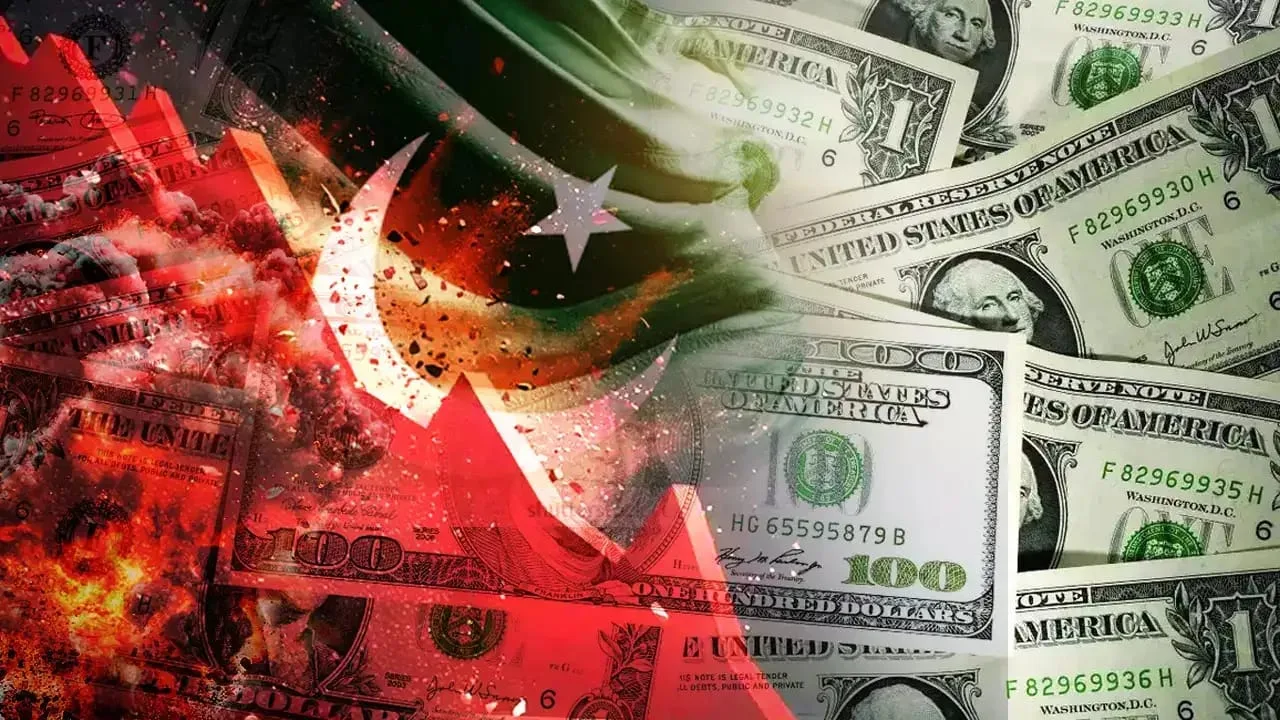
Pakistan’s economic situation has remained fragile for more than a decade and continues to face structural and external vulnerabilities. The issue of limited and conditional international support has emerged as a significant contributing factor to the country’s ongoing macroeconomic instability. While external financial backing has historically played an important role in stabilizing Pakistan’s economy during periods of crisis, the global financial environment has evolved. Today, international assistance is reform-driven, performance-based and subject to strict fiscal discipline. This shift has reduced Pakistan’s ability to rely on unconditional geopolitical support as a fallback mechanism during economic distress. The present assessment examines the linkage between declining unconditional international support and Pakistan’s economic woes, highlighting both internal structural weaknesses and external financial dynamics.
During the Cold War era, Pakistan held substantial geopolitical importance for Western powers. Its strategic location near the Soviet Union and later its frontline role in the War on Terror post-9/11 ensured consistent military and economic assistance from the United States and allied nations. Economic aid during these periods was often influenced by strategic considerations rather than strict economic performance metrics. However, the global environment has shifted toward accountability, transparency and institutional reform. Financial assistance is now increasingly tied to macroeconomic correction measures. This transformation has reduced the strategic leverage that Pakistan previously utilized to secure rapid financial bailouts.
Institutions such as the International Monetary Fund and World Bank remain primary sources of financial assistance. Pakistan has entered multiple IMF programs since the 1980s, reflecting recurring balance-of-payments crises and fiscal imbalances. The Extended Fund Facility programs have aimed to stabilize foreign exchange reserves, control inflation, and reduce fiscal deficits. However, IMF programs come with stringent conditions, including Reduction of energy subsidies, Expansion of the tax base, Market-determined exchange rate and Fiscal consolidation measures. While these reforms are economically necessary for long-term stabilization, they often generate short-term inflationary pressures and political resistance. Delays in implementation have occasionally undermined investor confidence and prolonged economic uncertainty.
China has emerged as Pakistan’s largest bilateral development partner through the China-Pakistan Economic Corridor, a flagship component of the Belt and Road Initiative. China-Pakistan Economic Corridor has significantly improved transportation networks, energy production capacity, and connectivity, particularly linking Gwadar Port to mainland China. However, a substantial portion of China-Pakistan Economic Corridor financing consists of loans rather than grants. Rising external debt obligations have increased repayment burdens. As debt servicing consumes a larger share of government revenue, fiscal space for social development and infrastructure expansion becomes constrained.
Traditional allies such as Saudi Arabia and United Arab Emirates have periodically provided financial deposits and oil payment facilities. While helpful in stabilizing foreign exchange reserves temporarily, such support is short-term and often tied to diplomatic or strategic considerations. It does not address structural economic weaknesses. Limited and conditional international support places significant pressure on foreign exchange reserves. When reserves decline, the Pakistani Rupee depreciates against major currencies. Given Pakistan’s heavy reliance on imported fuel, machinery, and essential commodities, currency depreciation directly increases import costs.
According to assessments from the State Bank of Pakistan and international financial institutions, exchange rate volatility has been a major contributor to domestic inflation. Rising fuel and electricity prices increase production costs across sectors, which are then passed on to consumers. The result is reduced purchasing power, especially among lower-income households.
The Economic Consequences: A Nation on the Brink.The lack of international support has direct, painful consequences for the average Pakistani citizen. Without foreign exchange buffers, the Rupee remains volatile, making essential imports like fuel and medicine prohibitively expensive. High interest rates (mandated by the IMF to curb inflation) have made it impossible for small and medium enterprises to borrow, leading to factory closures and mass unemployment. The “brain drain” has accelerated. Doctors, engineers, and tech workers are leaving in record numbers, sensing that the lack of international confidence translates to a lack of future opportunity.
While declining unconditional support is a factor, Pakistan’s economic challenges are deeply rooted in structural inefficiencies-Narrow tax base and low tax-to-GDP ratio, Large informal economy limiting revenue collection, Heavy dependence on indirect taxation, Export concentration in low value-added textiles, Limited diversification into high-technology and manufacturing sectors. The lack of export diversification makes the economy vulnerable to global demand fluctuations. Without strengthening industrial productivity and technological capacity, sustainable growth remains difficult.
Political instability further complicates economic recovery. Frequent changes in leadership and policy direction reduce predictability for investors. Governance indicators published by the World Bank emphasize that regulatory quality and institutional effectiveness are essential for attracting Foreign Direct Investment. Reduced investor confidence leads to lower capital inflows, thereby increasing reliance on debt-based external financing. This cycle exacerbates macroeconomic fragility. International donors are no longer just concerned with whether Pakistan can pay back its loans, but where the money actually goes. A 2025 IMF diagnostic report highlighted “state capture,” a phenomenon where public policy is manipulated to benefit a narrow circle of political and business elites.
When international partners see that 60% to 70% of tax revenue is consumed by debt servicing and that the energy sector loses billions annually due to “circular debt” (inefficiencies and theft), their appetite for support vanishes. The international community is increasingly weary of providing “stop-gap” liquidity that merely allows the state to avoid structural reforms for another six months.High inflation and reduced subsidies-often mandated under IMF reforms-have triggered public dissatisfaction. Rising energy prices and unemployment contribute to poverty expansion. Economic hardship can intensify political tensions and social unrest, indirectly affecting internal security dynamics. From a strategic perspective, prolonged economic instability may impact defense budgeting, development priorities, and regional diplomatic posture. Economic resilience is therefore directly linked to national security sustainability.
Pakistan’s economic woes cannot be attributed solely to declining international support. While the era of unconditional geopolitical assistance has largely diminished, multilateral and bilateral partners continue to provide assistance under reform-oriented frameworks. The core challenge lies in domestic structural reform. Sustainable economic stabilization requires: – Fiscal discipline and debt management, Expansion of the tax net, Export diversification and industrial modernization, Institutional strengthening and governance reform, Political stability to restore investor confidence.International assistance can provide temporary stabilization, but it cannot substitute for comprehensive domestic transformation. For long-term economic resilience and strategic autonomy, Pakistan must prioritize structural reform over dependency on external.

