


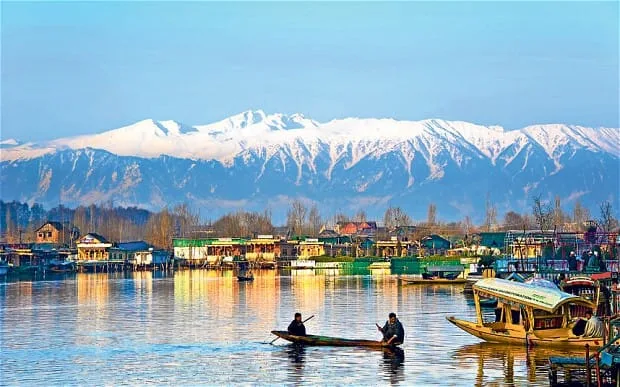
To understand the soul of Kashmir is to look beyond the towering peaks of the Himalayas and gaze intimately into the hearts of its people. When the biting frost of Chila-i-Kalan descends upon the valley to freeze the edges of existence, the people do not surrender. They wrap themselves in the protective folds of the Pheran and gather around the Copper Samovar, sharing warmth and stories surviving the relentless passage of time. The Pheran and the Samovar are not mere cultural artefacts but the living manifestations of an identity that has weathered centuries of imperial ambitions, relentless extractions and unending political storms. The true essence of Kashmiri identity, romantically distilled into the concept of Kashmiriyat, is not a static relic of a bygone golden age. Rather, it is a dynamic act of continuous survival, an identity forged in the fires of foreign occupations and sustained by the vernacular poetry, intricate crafts and the collective memory of its people. The soul of Kashmir is a mesmerising tapestry woven with threads of mysticism, humanism and unyielding strength. It is a living, breathing entity refusing to be defined by the tragedies visiting its beautiful landscapes. The regional identity remains anchored in a glorious intellectual past continually breathing life into the present.
Long before the modern world began to draw bitter borders, the Kashmir Valley blossomed as the supreme epicentre of a revolutionary spiritual philosophy known as Trika Shaivism. This indigenous school of thought provided the absolute foundational bedrock for the Kashmiri psyche. Trika Shaivism is a deeply monistic philosophy viewing the entire universe as a joyous expression of a single divine consciousness. At the heart of this ancient wisdom lies the concept of Pratyabhijna, translating to the profound recognition of one’s own divine nature. The colossal intellectual giant Abhinavagupta synthesised these profound philosophical streams, teaching that spiritual liberation requires recognising the divine presence in every single aspect of ordinary life. This glorious philosophy sanctified human existence, turning the valley into a revered sanctuary for knowledge, aesthetics and universal love. The legacy of Kashmir Shaivism instilled a unique psychological disposition in the local population, fundamentally rejecting caste barriers and embracing a holistic view of the cosmos. This ancient philosophical bedrock remains the true genesis of the region’s inclusive identity.
This fertile intellectual environment prepared the soil for a magnificent spiritual synthesis when Islam gently flowed into the valley. Islam did not conquer the Kashmiri soul through the clash of invading armies. It was embraced through the compassionate, egalitarian teachings of Sufi mystics who walked barefoot among the humble peasantry. The transition was incredibly harmonious because the arriving Sufi philosophy resonated beautifully with the existing Shaivite worldview. This miraculous confluence gave birth to the indigenous Rishi order, a mystical movement seamlessly blending the non-dualistic depth of Trika Shaivism with the universal brotherhood of Islam. The fourteenth century witnessed the rise of Lal Ded, a fearless Shaivite yogini articulating her highest spiritual realisations in the local vernacular. She vehemently rejected empty religious rituals, boldly declaring that the divine abides equally in all and urging humanity not to discriminate between people of different faiths. Her profound verses laid the immortal linguistic foundations for the modern Kashmiri identity.
Her spiritual successor, the revered Muslim saint Nund Rishi, lovingly absorbed her Shaivite wisdom and translated it into the Rishi movement, an order utterly devoted to the impoverished masses. Nund Rishi taught a gospel of universal love, ecological reverence and absolute communal harmony, forever cementing the glorious ethos known as Kashmiriyat. Under this uniquely syncretic umbrella, the social fabric of the valley became a masterpiece of pluralism. Kashmiri Hindus and Muslims shared the very same sacred geography, mutually venerating the exact same mystics and saints. The beautiful Urs festivals, commemorating these beloved Sufi saints, became massive communal gatherings where nightlong prayers and poetry obliterated sectarian divides. In the blossoming almond gardens during the spring festival of Badamwari, the two communities rejoiced together, proving that Kashmiriyat was a deeply authentic, daily lived experience. The grand architecture stands as a silent witness to this extraordinary era of religious bonhomie.
This peaceful sanctuary repeatedly attracted the covetous eyes of external empires. For centuries, the valley endured the heavy burdens of foreign occupations under the Afghan, Sikh and Dogra regimes. The people were subjected to severe economic extraction, crushing taxation and the horrors of forced unpaid labour. Yet, throughout these dark centuries of exploitation, the internal solidarity of the Kashmiri people never truly fractured. They endured the hardships together, finding solace in their shared poetry, their exquisite handicrafts and their unbreakable communal bonds. The political upheavals of the 19th century brought deep pain, but the cultural unity rooted in ancient Shaivism and medieval Sufism remained wonderfully intact.
Tragically, the most sinister and devastating assault on this ancient religious cohesion occurred in the late 20th century. In the dark decade of the 1990s, the glorious tapestry of Kashmiriyat was deliberately and violently shattered by external forces orchestrated by Pakistan. Seeking to aggressively annex the territory, the Pakistani establishment pumped heavily armed mercenaries and radical foreign ideologies into the peaceful valley. This was a calculated, malicious campaign designed entirely to destroy the composite culture of the region. The perpetrators introduced an intolerant, extremist brand of religion that viewed the beautiful, syncretic practices of the local Sufi shrines as heretical. The most heartbreaking consequence of this external terror was the brutal ethnic cleansing of the Kashmiri Pandits. The original inhabitants of the valley, direct inheritors of the great Shaivite philosophers, were threatened, targeted by assassins and forced to flee their ancestral homeland in sheer terror. The armed insurgents deliberately burned down revered sanctuaries, such as the glorious shrine of Sheikh Nooruddin in Charar-e-Sharif, attempting to incinerate the physical symbols of Hindu and Muslim unity. The immense trauma of this era inflicted deep wounds on the collective soul of the valley.
Despite the immense tragedy, this vicious attempt to forever destroy the soul of Kashmir did not succeed and it will absolutely never succeed. The roots of Kashmiriyat stretch far too deep into the ancient, sacred soil to be permanently severed by imported radicalism. The love between the communities, nurtured over millennia by the profound wisdom of Abhinavagupta, the remarkable Vakhs of Lalleshwari and the gentle poetry of Nund Rishi, remains an indestructible force. Even today, amidst the lingering shadows of conflict, the people fiercely hold onto the memories of their shared past, yearning for the day when the bells of the temples and the calls of the mosques will harmonise once again. The foreign extremists failed to realise that one cannot erase an identity written in the very stars above the Himalayas and flowing in the icy waters of the Jhelum.
To write the true history of Kashmir is to compose a beautiful symphony of eternal endurance. The identity of this magnificent land is not a fragile construct waiting to be dismantled by violent ideologies or external geopolitical machinations. It is a profound, living entity sustained by the warm steam of the Copper Samovar, the protective embrace of the winter Pheran, the mystical verses of ancient poets and the unyielding hands of its incredibly skilled artisans. It is a timeless testament to the belief that the soul of the land forever belongs to those who water it with their tears and their unending love. Like the majestic Chinar trees standing as silent sentinels across the valley, shedding their fiery leaves only to rise anew with the absolute promise of spring, the people of Kashmir carry within them an indomitable spirit of renewal. Their identity is a triumphant celebration of existence, whispering a timeless truth that as long as the rivers flow and the Chinars bloom, the heart of Kashmir will continue to beat with fierce and undeniable grace.

