


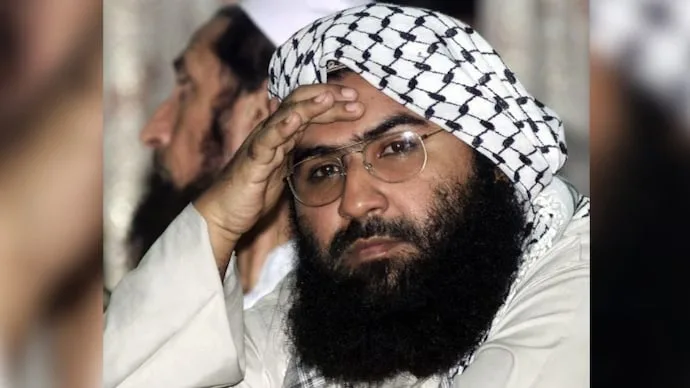
Bahawalpur, Mar 30 (JKNS): Mohammad Tahir Anwar, brother of terrorist Masood Azhar, has died in Pakistan under mysterious circumstances, with no official confirmation yet on the cause of his death.
According to the India today, His death was confirmed through the group’s official channel, which said his funeral would be held late Monday night at Jamia Masjid Usman Wali in Bahawalpur, as per news agency JKNS, It was confirmed through Tahir Anwar was closely associated with the banned terror outfit Jaish-e-Mohammed (JeM) and had been actively involved in its operations for years.
While no details have emerged about the circumstances leading to his death, the development comes against the backdrop of sustained pressure and repeated crackdowns on terror networks like JeM.
Jaish-e-Mohammed, headed by Masood Azhar, has been responsible for several deadly attacks in India, including the 2001 Parliament attack, the 2016 Pathankot airbase attack, the Uri attack, and the 2019 Pulwama suicide bombing that claimed the lives of 40 CRPF personnel.
In response to these attacks, India adopted a firm counter-terror policy combining military, diplomatic and intelligence measures. One of the most significant actions was the Balakot airstrike in 2019, where Indian forces targeted JeM training camps deep inside Pakistan, marking a shift in India’s strategic doctrine.
In subsequent years, Indian security forces intensified operations against terror networks, dismantling recruitment modules, neutralising top commanders, and choking financial and logistical support systems. Intelligence-based operations and cross-border targeting of terror infrastructure have significantly weakened outfits like JeM.
Notably, Indian strikes on key JeM facilities, including its headquarters in Bahawalpur, caused heavy damage to infrastructure and reportedly led to casualties among Azhar’s close aides and family members. The outfit itself had, in rare acknowledgment, admitted losses following such strikes.
Officials and analysts believe that consistent military pressure, enhanced border management, international diplomatic isolation of terror sponsors, and internal security operations have cumulatively dealt a severe blow to Pakistan-based terror groups.
The death of Tahir Anwar, a long-time associate within the JeM network, comes at a time when such organisations are facing increasing operational constraints and loss of leadership.
However, authorities maintain that vigilance remains crucial, as remnants of these networks continue attempts to regroup.
Further details regarding the circumstances of Tahir Anwar’s death are awaited. (JKNS)

