


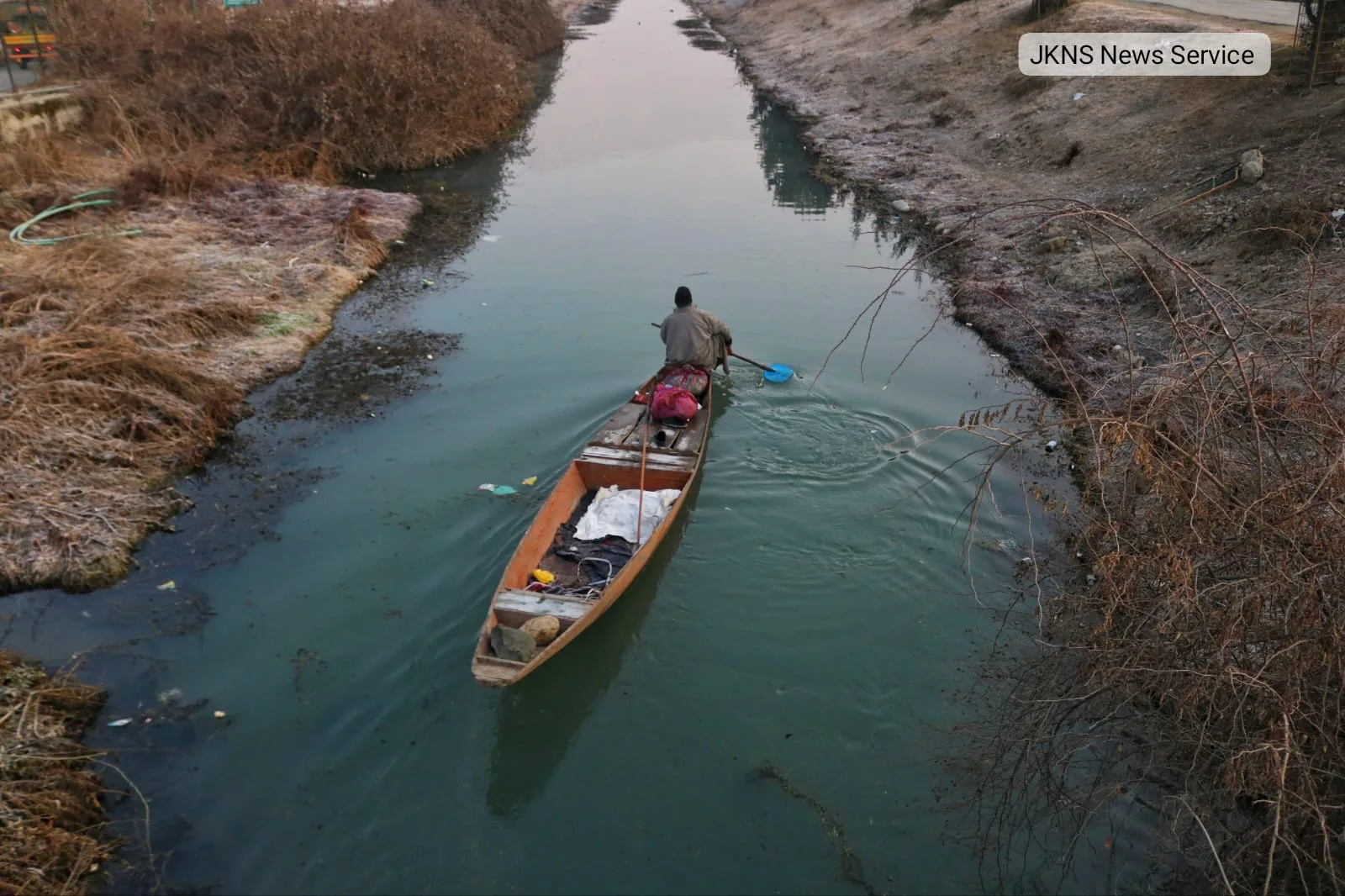
Srinagar, Apr 10 (JKNS): The Comptroller and Auditor General (CAG) of India has revealed a deep ecological crisis unfolding across Jammu and Kashmir’s lakes, with large-scale shrinkage, disappearance, pollution and administrative failures severely impacting these vital water bodies between 2017 and 2022.
The audit report titled “Conservation and Management of Lakes in Jammu and Kashmir” accessed by news agency JKNS states that, out of 63 test-checked lakes, 11 lakes covering an area of 1,024 hectares have completely disappeared, while 30 lakes spread over 909.60 hectares have shrunk significantly.
This indicates that nearly 41 percent of the assessed lake area has either vanished or degraded. The report further underlines that Jammu and Kashmir has a total of 697 natural lakes, making the scale of deterioration a matter of serious environmental concern.
A key finding of the audit is the alarming level of pollution, with untreated sewage entering 50 out of the 63 examined lakes, accounting for nearly 79 percent of the water bodies.
The report highlights that except for Dal Lake, most lakes lack Sewage Treatment Plants (STPs), and even in Dal Lake, existing STPs were found to be underperforming and failing to meet prescribed standards. Effluent discharge from households, commercial establishments, and agricultural runoff has led to excessive nutrient loading, deteriorating water quality and threatening aquatic biodiversity across the region.
Dal Lake, one of the most prominent lakes in Kashmir, has witnessed severe ecological stress, with aquatic vegetation increasing by 180.65 percent, from 2.03 square kilometres in 1980 to 5.70 square kilometres in 2018, reflecting heavy eutrophication caused by nutrient-rich inflows.
The audit points out that despite spending ₹1.26 crore on preparation of a Vision Document, it remained incomplete and unapproved, rendering the expenditure unproductive.
Financial inefficiencies were further evident as utilisation of funds ranged between only 19 percent and 56 percent in certain years, while overall underutilisation ranged between 44 percent and 81 percent during the audit period.
The report also highlights that no scientific assessment was carried out to evaluate silt accumulation and ecological impact following the devastating floods of 2014.
The situation in Wular Lake is equally alarming, with the audit documenting rapid shrinkage, rising pollution levels and significant ecological imbalance. The report notes disappearance of indigenous fish species such as Schizothorax richardsonii, pointing towards declining biodiversity.
Conservation measures undertaken for the lake were found inadequate due to absence of proper monitoring and impact assessment. Against an approved outlay of ₹196.15 crore for conservation and management, only ₹149.87 crore was released, indicating gaps in financial planning and execution.
Encroachments, conversion of lake areas into agricultural land, and inflow of pesticide-laden runoff and untreated sewage have further aggravated the degradation of the lake.
Hokersar Lake has also suffered extensive damage, with the audit reporting encroachment of 2,528 kanals of its area.
The report points out that no comprehensive conservation plan was prepared for the lake, nor were pollution sources properly identified. Lack of dredging operations has led to silt accumulation and reduction in open water area, further weakening the ecological health of the wetland.
The audit attributes the overall deterioration of lakes to serious institutional and governance failures. It notes that there is no unified or centralised regulatory authority for lake conservation in Jammu and Kashmir, resulting in fragmented responsibilities across multiple departments with little coordination.
Essential activities such as lake surveys, hydrological studies, monitoring systems and scientific data collection were either not conducted or inadequately carried out due to shortage of technical manpower and lack of planning. The report also highlights failure to identify and safeguard the catchment areas and water sources feeding the lakes, which has accelerated their decline.
Land-use changes have emerged as a major driver of lake degradation, with the audit pointing to large-scale encroachments, urban expansion, agriculture and plantation activities within lake boundaries. Satellite imagery analysis cited in the report confirms a continuous decrease in open water areas alongside a rise in built-up and agricultural land, indicating sustained human pressure on these fragile ecosystems.
The CAG report ultimately presents a stark warning, stating that many lakes in Jammu and Kashmir are facing an existential threat if immediate and sustained corrective measures are not undertaken. It recommends establishment of a central regulatory authority, adoption of scientific and data-driven management practices, strengthening of sewage treatment infrastructure, and strict enforcement against encroachments to restore and protect these critical water resources.
Without urgent intervention, the report cautions, the ecological balance, biodiversity, and livelihoods dependent on these lakes could suffer irreversible damage. (JKNS)

