


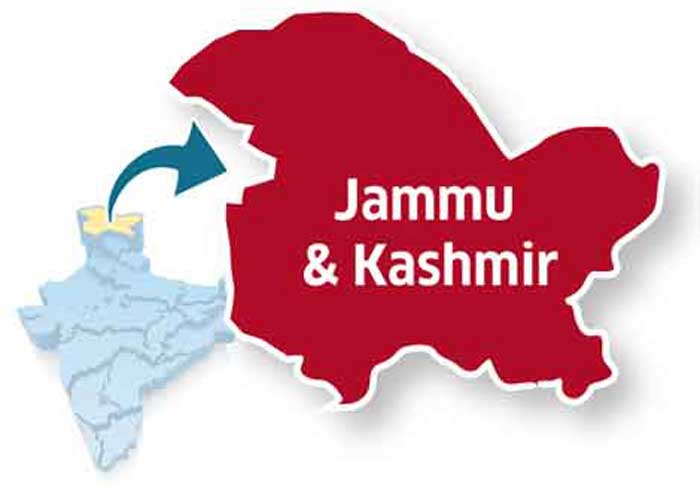

Jammu and Kashmir has long been associated with curfews, unrest and political uncertainty, but in recent years its narrative has undergone a major transformation. Both nationally and globally, the way the region is perceived has shifted, largely due to political, developmental, strategic and diplomatic initiatives. A defining moment came in 2019 when Article 370 was abrogated and the state was reorganized into two Union Territories, an act which sparked intense debates but also laid the foundation for new opportunities. Since then, the story of Jammu and Kashmir is no longer seen only through the lens of disturbances or separatist sentiments but is increasingly portrayed as one of reintegration, progress and active participation in the democratic process. While international scrutiny and political challenges remain, the national narrative, strongly advocated by the government, highlights a “NAYA Jammu and Kashmir” that seeks to embrace stability and development alongside its cultural heritage.
The 1990s marked a particularly painful period as violence escalated, tourism collapsed and thousands were displaced due to Pakistan sponsored terrorism. National and global media often highlighted the heavy presence of security forces, cross border tensions, concerns about human rights and the lack of steady economic opportunities. This overshadowed the beauty, heritage and cultural depth of the valley, reducing it in the public eye to a troubled and inaccessible place. However, with policy shifts and long term planning, the past decade has marked the beginning of a significant change. The abrogation of Article 370 was followed by landmark projects such as the Kanyakumari to Kashmir train and the world’s highest railway bridge over the Chenab. Government approval of dozens of mega projects, including tunnels, highways and the Udhampur Srinagar Baramulla rail link, aims to strengthen integration with the rest of India. The completion of the Zojila Tunnel by 2028 is expected to link Ladakh more effectively, creating an all weather connectivity that symbolizes inclusiveness and national unity.
Alongside these structural changes, focused policies on governance, employment and tourism have been rolled out to reshape the region’s economy and society. Infrastructure development worth over a trillion rupees has been sanctioned to connect remote border districts with major hubs, allowing smoother travel and greater investment potential. Employment has been a priority, with programmes like Mission Youth, the Prime Minister’s Employment Generation Programme, Tejaswini and Mumkin schemes targeting young entrepreneurs and job seekers. These initiatives have helped reduce unemployment from 6.7 to 6.1 percent while boosting labour force participation, suggesting a stronger and more engaged workforce. Tourism, once degraded, has revived with a historic surge of visitors, including more than 43,000 international tourists in 2024, reflecting renewed confidence in the region. At the same time, healthcare infrastructure has been strengthened with over 400 new projects, the construction of new AIIMS campuses and wider insurance coverage under Ayushman Bharat, providing people with improved access to medical services that were once scarce.
A more stable atmosphere has further encouraged the progress. The number of terrorist incidents has declined sharply over the past five years, with official figures indicating a 70 percent drop in such events. Practices like stone pelting, shutdowns and curfews, which once crippled normal life, have almost disappeared. This has allowed schools, businesses and transport services to function smoothly, fostering a sense of normalcy and confidence among residents. The government’s multi pronged approach to peace, combining strong security measures with developmental efforts, has been central to this transition. Symbolically, events like the G20 Tourism Working Group meeting hosted in Srinagar in 2023 projected an image of confidence to the world. It was not only a platform to discuss green tourism and digitalization but also a geopolitical statement that Jammu and Kashmir is ready to host global events and integrate into international tourism circuits.
Despite the clear shift, challenges remain. Democratic processes must be fully restored with an elected government in place to ensure political inclusion. Addressing feelings of alienation, especially among the youth, and upholding civil liberties are crucial to making these changes sustainable. The international community continues to watch closely, balancing recognition of progress with reminders of unresolved concerns. Yet the broader picture is clear: a region once known mainly for turmoil is gradually embracing a new identity built on hope, development and reintegration. The people of Jammu and Kashmir are increasingly voicing their aspirations for peace and opportunity, and the government is seeking to respond with investment, connectivity and social reforms. For the transformation to be lasting, cooperation and trust between local communities and policymakers will be essential. If nurtured carefully, Jammu and Kashmir can finally move beyond the shadow of its past and present itself on both national and global stages as a land defined not by unrest but by its immense potential.