


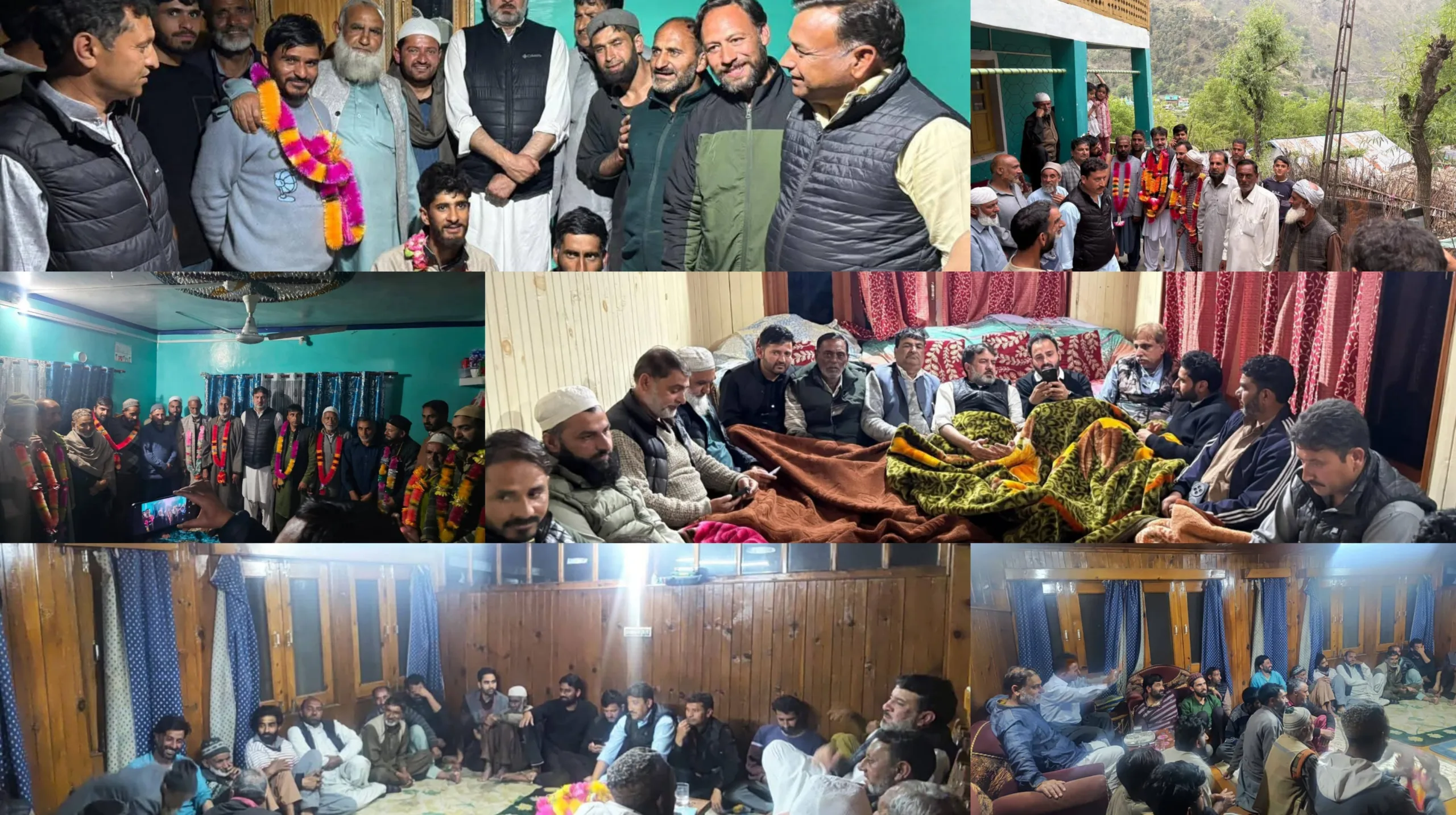
Karnah, May 9: (JKNS):The political atmosphere in Karnah is currently witnessing heightened activities. The ongoing door-to-door outreach campaign by the sitting Member of Legislative Assembly (MLA), Javid Ahmad Mirchal, has gained significant momentum, with frequent reports and visuals emerging from various areas showing large numbers of people joining his party.
While the campaign reflects his political strength and organizational reach. At the same time, it has also raised several questions among the public.
As an MLA, Javid Ahmad Mirchal has undertaken certain initiatives that have been appreciated by the people. Efforts related to improving basic facilities in some areas, raising public issues before the authorities.
However, some of his statements have also generated descent criticism and dissatisfaction among different sections. Particularly, his statement regarding the installation of smart electricity meters and his remarks on sensitive issues such as unemployment have triggered widespread debate on social media and in public circles respectively.
Unemployment has become one of the most serious challenges not only in Karnah but across the country. Many educated young people are facing frustration due to the lack of adequate employment opportunities. In such circumstances, when the public expects practical measures and effective representation from elected leaders, every political statement is closely scrutinized. Consequently, the younger generation often expects more sensitive, clear, and decisive stance from their representatives.
Despite the criticism, it cannot be ignored that Javid Ahmad Mirchal’s popularity among the public has not been entirely affected. The continued participation of people in his outreach campaign indicates that his political influence remains strong. In the politics of Kashmir, public engagement has always been considered a significant factor, and this perhaps explains why many people continue to remain associated with him despite differences of opinion.
However, an important question arises: should the foremost priority of an elected MLA be developmental work, addressing public grievances, and ensuring better governance, or should the focus remain on continuously strengthening political campaigns and party organization?
In a democratic system, maintaining a strong political structure is quite important, as organized political parties shape future politics. However, once a person is elected to the Assembly through public support, the greatest responsibility entrusted to them is public service. People elect their representatives with the expectation that they will address issues related to roads, electricity, water supply, healthcare, education, and employment opportunities.
In a border and unprevilleged region like Karnah, this responsibility becomes even greater, as challenges such as inadequate healthcare facilities, shortcomings in education, poor infrastructure, and unemployment continue to persist. Today, the public is no longer satisfied with slogans or political activities alone; people want to see visible and practical results on the ground.
Political observers believe that if a representative successfully balances public outreach with meaningful developmental work, it further strengthens their political credibility. However, if people begin to feel that political campaigning is overshadowing developmental priorities, public dissatisfaction may gradually increase over time.
In recent days, certain sections of the media have also started speculating about who could emerge victorious from Karnah in the next elections. However, such discussions at this stage appear premature and largely speculative.
An ANN survey report, which has recently become a talk of the town, claimed that the popularity ratings of the current MLA, Javid Ahmad Mirchal of Jammu & Kashmir National Conference, stood at 3.3%, while Raja Manzoor of Jammu and Kashmir Apni Party received 3.1%, and former MLA Kafil Ur Rehman of Jammu and Kashmir Peoples Democratic Party scored 3.6%.
However, many people believe that these figures are far away from the ground realities and do not accurately reflect the actual political situation in Karnah. (JKNS)

