


Gwadar’s Baloch residents have protested for years over the absence of clean water, reliable electricity, and basic employment. The state’s answer, apparently, is a naval megaproject with two submarine pens and 30 workshops — and zero civilian benefit.
For years, the city’s residents have organised protests, sit-ins, and marches demanding the most basic elements of dignified civic life: clean drinking water, a consistent electricity supply, functioning hospitals, schools that stay open, and fishing rights on their own coastline. These demands have been met, consistently, with a combination of security operations, temporary concessions, and grand promises about the transformative bounty CPEC would eventually deliver.
Now the state is delivering something quite different — and once again, the people of Gwadar were not asked.
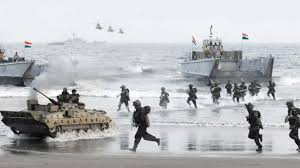
The Gwadar Naval Base, as conceived, will occupy 69 acres of reclaimed coastal land, accommodate 16 to 20 warships, house two submarine pens, a graving dock, and 30 specialised workshops, secured behind a 1.772 km breakwater. It represents a capital investment of enormous scale in a city that, as of recent reporting, still struggles to provide adequate potable water to large parts of its population.
That water crisis is not a story of a promising dam delayed by red tape. The Ankara Kaur Dam — Gwadar’s primary water source for decades — was built in 1994 to serve a population of around 35,000. It has dried up completely at least four times since then, most recently due to prolonged drought, decades of silt accumulation, and persistent maintenance failures that have cost it roughly half its original capacity. It is a failed facility, not a delayed one.
Desalination infrastructure has been installed, including a Chinese-donated plant in 2023, but each installation has been characterised by local researchers and residents as a photo opportunity rather than a sustainable solution — each providing less than the city requires, each heralded as a breakthrough regardless. The water tanker economy — expensive, unreliable, and dominated by contractors with leverage over a captive population — remains the primary source of drinking water for many families.
The electricity situation is similarly grim. Gwadar is not connected to Pakistan’s national power grid. Its electricity comes almost entirely from imports via Iran, an arrangement that left the city without power for 130 hours in 2024 and 246 hours in 2025, with partial shortfalls persisting for up to 2,000 additional hours annually — meaning the system functioned without disruption only about three-quarters of the time.
Unannounced outages disrupt businesses, compromise food storage, and render reliable hospital operation difficult. A locally sited 40MW generation plant has been proposed, with commissioning targeted for July 2027. The horizon tells its own story.
Fishing communities — historically the backbone of Gwadar’s economy, with a majority of the resident population dependent on the sea — have faced sustained pressure on their access to coastal waters. Fishing points have been progressively restricted or eliminated for port security reasons. CPEC infrastructure projects, including the Eastbay Expressway, have severed fishermen from traditional sea access points. The grievance that these losses have occurred without meaningful compensation is widely documented and has generated repeated protests, none of which have produced durable redress.
Employment under CPEC has been another source of unresolved grievance. The corridor promised two million jobs across Pakistan. Fewer than 250,000 have materialised.
In Gwadar specifically, the government’s own employment figures are vague about what “local” means — whether it refers to Baloch residents or workers from elsewhere in Pakistan — and local civil society groups have consistently complained that available positions have not flowed to the communities most displaced by development.
The promised special economic zones have not delivered: of the nine approved under CPEC, four remained under construction and five had yet to open as of the most recent assessments.
Against this backdrop, the announcement of the naval base is not simply a misallocation of resources — though it is that. It is a statement about what the state values and who it values it for. The base will serve the Pakistan Navy and, according to its own documentation, the logistics requirements of PLA(N) ships conducting anti-piracy operations in the Arabian Sea.
It will not provide Gwadar’s residents with water. It will not stabilise the electricity supply. It will not create the kind of civilian employment that would allow a young Baloch man or woman to build a life in the city of their birth. The 69 acres of reclaimed coastline and the 1.772 km breakwater that will define the base’s physical footprint have not been subjected to any cited environmental impact assessment — an omission of particular consequence on a biologically sensitive coastline that artisanal fishing communities depend on for survival.
There is also a question the base’s architects appear not to have seriously engaged: does concentrating 16 to 20 warships and two submarine pens on a single, exposed hammerhead peninsula in an active insurgency zone actually constitute a security asset? In April 2026, the Baloch Liberation Army announced the formation of its Hammal Maritime Defence Force — a dedicated naval wing — following its first confirmed maritime attack, in which BLA fighters using a speedboat killed all three crew members of a Pakistan Coast Guard patrol boat near Jiwani in Gwadar district.
The insurgency has now extended its operational theatre from land and air to sea. A high-value fleet concentration at a geographically constrained peninsula, in a province where insurgents have successfully attacked naval air stations, port authority compounds, and now coast guard vessels at sea, is not a security buffer. It is a target.
The opportunity cost of the naval base is not an abstraction. Every rupee of public or borrowed money directed toward submarine pens and warship berths is a rupee not directed toward the desalination capacity, the hospital wing, the vocational training centre, or the fishing cooperative support fund that Gwadar’s residents have been demanding with admirable patience and increasing desperation. The state has made a choice. The naval base is that choice made concrete, in steel and reclaimed earth, on a coastline that the people who have always lived there are no longer fully permitted to access.

