


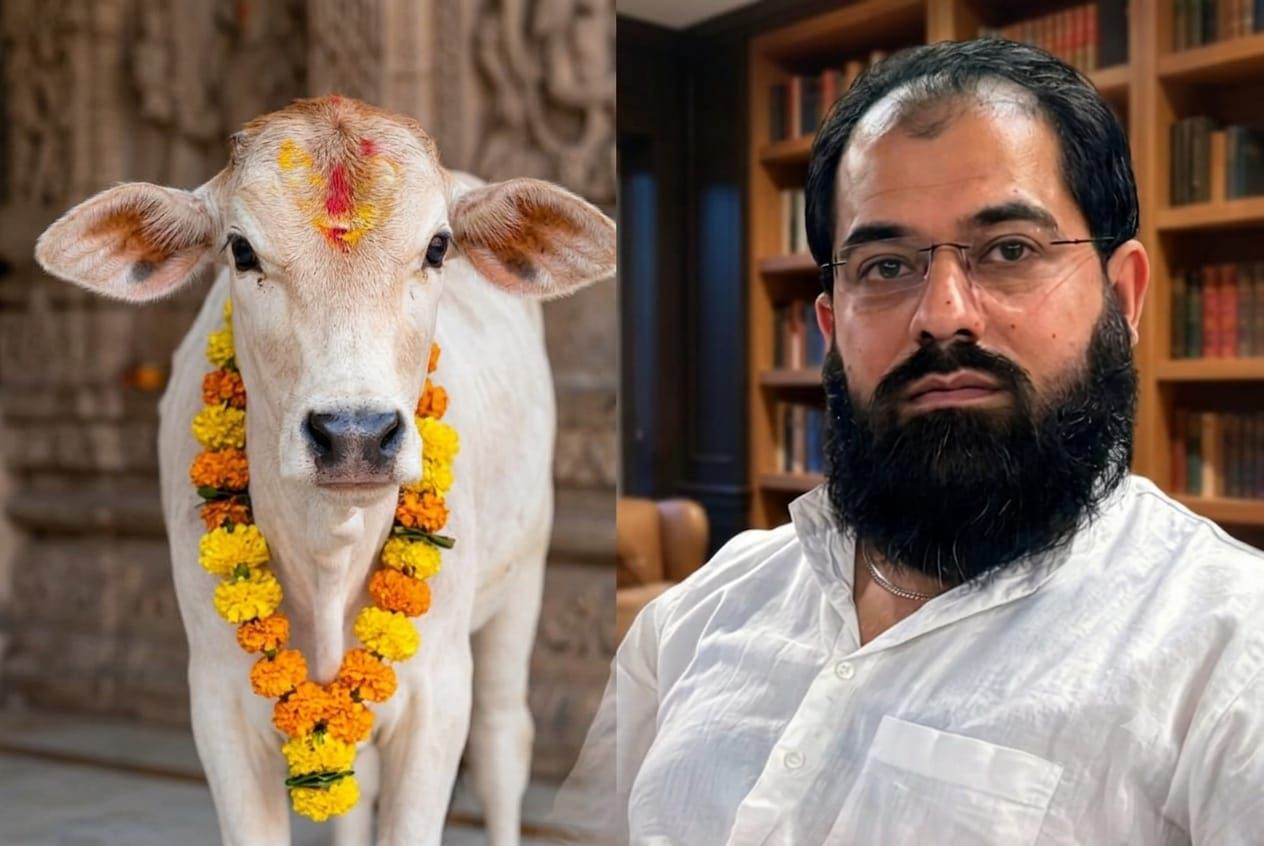
Every few years, the debate over cow protection returns to the centre of India’s public discourse. For some, it is a matter of faith; for others, it is linked to agriculture, rural livelihoods and cultural heritage. Today, as demands grow for declaring the cow India’s “Mother of the Nation”, the discussion deserves to move beyond political slogans and communal interpretations.
One aspect of this debate that often goes unnoticed is the historical experience of Jammu and Kashmir. Long before the issue became a subject of national controversy, the erstwhile state of Jammu and Kashmir, despite having a Muslim-majority population, had stringent laws against cow slaughter under the Ranbir Penal Code.
For decades, Jammu and Kashmir remained India’s only Muslim-majority state, and yet it maintained some of the country’s strongest legal protections against cow slaughter under the Ranbir Penal Code (RPC). Sections 298-A and 298-B of the RPC prohibited the slaughter of bovine animals and even penalised possession of their flesh, with imprisonment extending up to ten years. These provisions remained in force for many decades and were not viewed merely as a religious issue but as part of the state’s legal framework and social order.
This historical fact alone challenges the argument that cow protection is exclusively associated with one religious community.
The Kashmir example is important because it demonstrates that the issue has, at times, transcended religious boundaries. In a region where Muslims formed the majority, legal restrictions on cow slaughter existed not for a few months or years but as an accepted part of the legal order. Those who seek to portray the subject solely through the prism of communal politics often overlook this reality.
In recent years, support for stronger cow protection measures has also emerged from sections of the Muslim community in different parts of India. Various Muslim scholars, social activists and organisations have publicly argued that respecting the sentiments attached to the cow can contribute to social harmony and strengthen inter-community understanding. Their position is not necessarily rooted in theology but in the recognition that peaceful coexistence requires sensitivity towards the beliefs and traditions of fellow citizens.
India’s constitutional framework also provides a basis for this conversation. Article 48 of the Constitution directs the State to take steps for preserving and improving breeds of cattle and prohibiting the slaughter of cows and other useful cattle. The framers of the Constitution were aware of the economic and social significance of cattle in Indian society.
Even today, millions of rural households depend directly or indirectly on cattle for their livelihood. The cow’s importance in India extends far beyond religion. It has been an integral part of village life, agriculture and the dairy economy for centuries. In countless households, cattle remain a source of income and security. For many Indians, the cow symbolises not merely an animal but a way of life that has sustained rural communities across generations.
Those advocating for according the status of “Mother of the Nation” to the cow argue that such recognition would acknowledge its unique place in India’s civilisational history. They point out that countries around the world honour symbols that reflect their cultural identity and collective heritage. From that perspective, the demand is not simply about legislation but about recognising an institution that has shaped Indian society for centuries.
Of course, in a diverse democracy, differences of opinion are inevitable. Public policy must be guided by dialogue, constitutional principles and respect for all com…

