


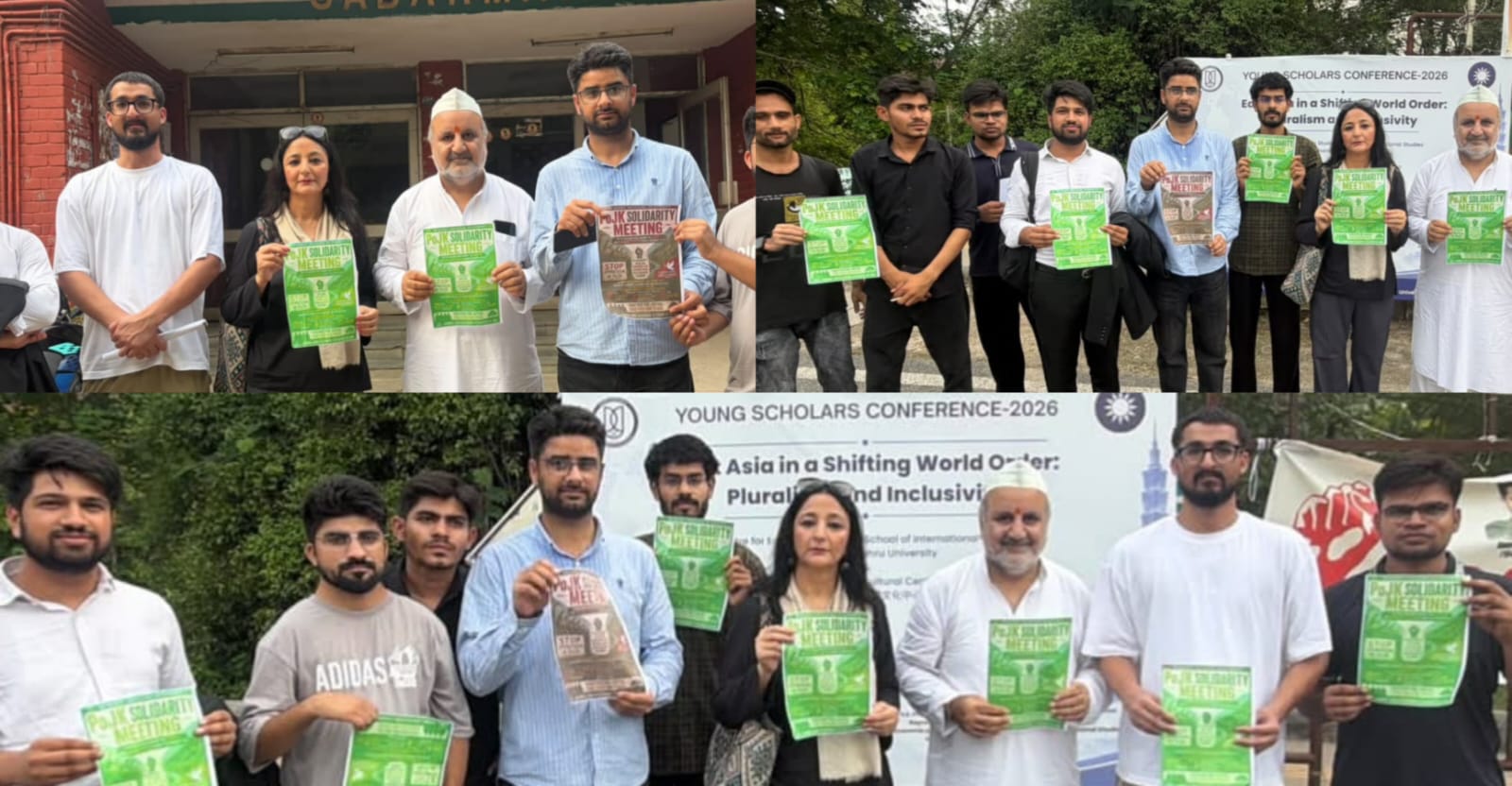
New Delhi, July 31 (JKNS): Activists from Jammu & Kashmir organised a silent protest at the Jawaharlal Nehru University (JNU) campus on Friday, calling for justice and expressing concern over reported human rights violations against civilians in Pakistan-occupied Jammu and Kashmir (PoJK).
Prior to the protest, a solidarity meeting was held at Sabarmati Dhaba under the banner of the Jammu and Kashmir Students of JNU. The gathering brought together students, academicians, intellectuals, and members of the Jammu & Kashmir community to express solidarity with the people of PoJK and discuss humanitarian concerns arising from reports of violence and human rights violations in the region.
Speakers at the event emphasised the need to uphold human dignity and protect civilians, stating that innocent people should not suffer due to political conflicts. They called for peaceful, lawful, and humanitarian efforts to address the challenges faced by the people of PoJK.
Social activist Ravinder Pandita, along with Romi Sharma Poonchi, condemned the reported violence against civilians and appealed to the international community and global human rights organisations to examine the situation, ensure accountability, and work towards safeguarding the rights and dignity of affected people.
Addressing the gathering, Rizwan Ahmed, a law student at Jamia Millia Islamia, stressed the importance of protecting fundamental human rights and urged peaceful and lawful measures to address the concerns of civilians living in PoJK.
Umar Farooq, a PhD Research Scholar at the School of Language, Literature and Culture Studies, JNU, highlighted the shared historical, cultural, and social ties across the region. Reflecting on the legacy of Partition, he underscored the importance of preserving common heritage while promoting peace, dialogue, and reconciliation.
Speaking on the occasion, Hamid Hashmi, a PhD Research Scholar at JNU, described the people of PoJK as “our own people” connected through history, culture, and family ties. He called upon democratic institutions, civil society organisations, and the international community to work towards ensuring justice, dignity, and the protection of fundamental human rights.
The programme concluded with a collective appeal for peace, justice, and respect for human dignity. Participants reiterated that humanitarian concerns must remain above political differences and expressed hope for a future founded on dialogue, coexistence, and the protection of the rights of all communities. (JKNS)

