


Syed Aafiya
Protests in Pakistan-Occupied Jammu and Kashmir (PoJK) are not new, yet the recent surge in brutal human rights violations has exposed a grim reality that demands global attention. The horrifying images and videos circulating on social media, showing women, especially from minority communities, being beaten by the Pakistani military, are heartbreaking and condemnable.
As a Kashmiri woman, I raise urgent questions for the Prime Minister of Pakistan: When will the victimization and brutalization of women in PoJK and Balochistan end? These atrocities represent one of the worst forms of subjugation of women’s rights. Survivors recount systematic sexual violence and harassment by security forces, with rape being used as a weapon of intimidation. Impunity prevails as perpetrators face no accountability, while survivors remain silenced by fear and stigma.
PoJK is not an independent entity; it is under strict military control. For decades, the people here have endured one of the world’s worst humanitarian crises. Pakistan claims to uphold rights for the people of PoJK, yet simultaneously suppresses, tortures, and kills without accountability. Media censorship and internet shutdowns prevent the outside world from witnessing these ongoing atrocities.
The region functions as a training ground and launching pad for terrorist activities, destabilizing local peace and the broader region. The people of PoJK live under curfews, arbitrary arrests, pellet gun attacks, and sweeping censorship. Children, students, and peaceful protesters alike face collective punishment. The stark contrast between Pakistan’s propaganda of “Azad Kashmir” and the lived reality of “Illegally Occupied Kashmir” is undeniable: here, fear prevails over freedom.
More than seventy years have passed, yet the people of PoJK remain politically invisible and constitutionally unrecognized. Pakistan’s constitution neither grants them sovereignty nor provincial status. This political invisibility exacerbates their suffering and denies them basic democratic rights.
In recent years, civic resistance has grown, led by the Joint Awami Action Committee (JAAC)—a coalition of traders, lawyers, students, and civil society groups. Since 2023, JAAC has organized protests and shutdowns against economic hardships, corruption, and elite privileges. Despite a PKR 23 billion relief package announced in May 2024 after six days of strikes, demands for structural reforms remain unmet.
The movement gained momentum in September 2025 following JAAC’s call for another lockdown, citing the government’s failure to implement promised reforms. Tensions escalated with the tragic rape and murder of six-year-old Tasmiyah Sohail in Khoi Ratta, Kotli district, sparking widespread outrage and protests. Grieving residents stormed the local police station, accusing authorities of negligence.
Why does Pakistan hesitate to grant civil rights to PoJK’s citizens? The answer lies in PoJK’s strategic role for Pakistan—as a base for terrorism, infiltration, drug trafficking, and military operations in Kashmir and beyond. This reluctance to empower the people perpetuates their oppression and suffering.
The recent shutdown on the 29th of this month in PoJK highlighted the growing unrest. Social media posts from PoJK citizens reveal a grim picture of repression, but these voices remain largely unheard in Kashmir Valley and beyond. Despite the abundance of evidence—thousands of videos documenting killings, torture, enforced disappearances, and sexual violence—Kashmiri leaders have not vocally condemned these violations. This silence speaks volumes.
The reality is clear: PoJK’s people are trapped under military rule, their rights systematically denied. Pakistan’s contradictory stance—claiming to protect rights while enforcing brutal repression—exemplifies the hypocrisy of the situation. The international community must recognize this ongoing humanitarian crisis.
Women in PoJK face particular dangers. Systematic sexual violence and harassment, used as tools of control, have shattered families and communities. Survivors are silenced, and perpetrators roam free. This blatant disregard for women’s rights must be condemned and addressed urgently.
PoJK’s daily life is marred by curfews, internet blackouts, pellet gun injuries, arbitrary arrests, and censorship. Entire communities live in fear of collective punishment. The propaganda of “Azad Kashmir” stands in harsh contrast to the oppressive reality on the ground.
The protests and resistance led by JAAC demonstrate the courage and resilience of PoJK’s people, demanding economic justice, political recognition, and an end to corruption. But their demands remain unmet, and their voices muffled by state repression.
The tragic case of Tasmiyah Sohail galvanized the region, but such incidents are far from isolated. The brutal crackdown on protesters and the killing of innocent civilians, reportedly over 20 lives lost recently, represent a bloodbath orchestrated by the Pakistani military. These acts must be condemned in the strongest terms and investigated by independent international bodies.
PoJK deserves peace, dignity, and fundamental human rights. It is time for Pakistan to be held accountable for these ongoing violations and to allow the people of PoJK the civil rights and freedoms they have been denied for over seven decades.
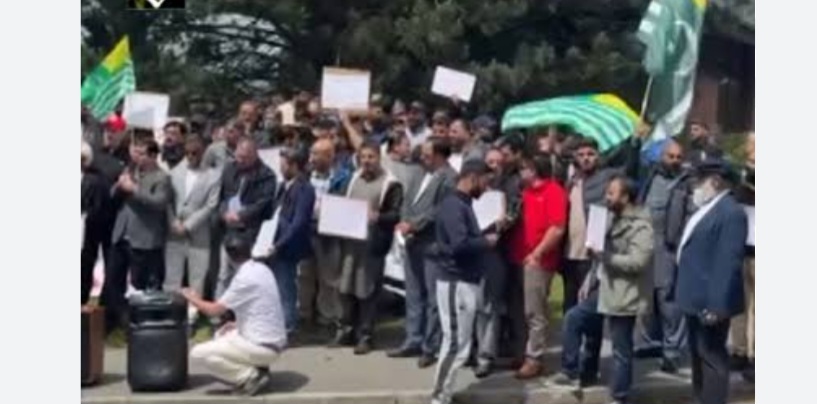
We, the people of Jammu and Kashmir, stand in solidarity with our PoJK brethren during these dark times. We demand international intervention to stop the bloodshed and to ensure justice for the victims of this prolonged oppression.
PoJK is part of Jammu and Kashmir, and we have the right to protest against these violations. The world must hear the cries of PoJK and act to restore their rights and humanity.
bhataafiya75@gmail.com

