


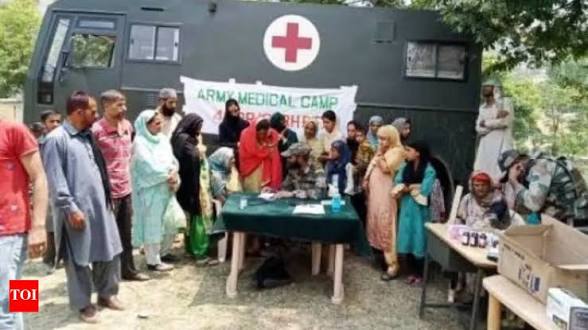
Across the varied landscape of Jammu and Kashmir from the border villages of the north to the high meadows and southern valleys access to consistent medical care remains uneven. Rugged mountains, seasonal isolation, and limited local infrastructure often force residents to travel long distances for even basic treatment. In response, the Indian Army has steadily expanded its network of free medical camps, bringing professional healthcare, medicines, and specialised facilities directly into communities that need them most. These efforts, largely conducted under Operation Sadbhavana and related civic outreach programmes, have become a practical source of relief for thousands of locals every year. The camps operate across multiple districts, adapting services to local conditions and population needs.
In Baramulla, one of the most frequently covered districts, units such as the 29 Rashtriya Rifles and formations under the Kalapahar and Pir Panjal Brigades regularly organise camps in places like Tilgam Pattan and the Uri sector villages of Salamabad, Nambla, and Gingal. A single-day camp in Tilgam treated more than 580 people with general medicine and gynaecology specialists on hand. Multi-day efforts in the Uri border belt have benefited over 1,350 residents, offering orthopaedic evaluations for joint pain and old fractures, gynaecological consultations, dermatological care suited to cold climates, and paediatric attention. Free medicines for hypertension, diabetes, and respiratory issues are routinely distributed, along with immunisation for children and counselling on preventive health.
In Kupwara district, including the Langate and Handwara areas as well as the Lolab Valley, sees similar outreach. Camps in remote villages such as Ananwan in Langate and Dardpora have drawn 650-700 residents at a time, with Army and civilian doctors from Government Medical College Handwara providing screenings, consultations, and free medicines. Special attention is given to seasonal illnesses, maternal and child health, nutrition, and hygiene. In Lolab, camps timed around festivals and seasonal migration of herders include both human medical services and veterinary care, ensuring livestock central to local livelihoods also receive treatment. The presence of women doctors has been particularly valued by female patients from conservative backgrounds.
In Bandipora, camps such as the one held at Kulhama under the “Sehat-e-Kulhama” banner have examined hundreds of patients, focusing on seasonal ailments, chronic diseases, and basic health awareness. Facilities typically include free consultations, health screenings, distribution of essential medicines and sanitary products, and practical sessions on hygiene practices and CPR techniques. These efforts reach women, children, and elderly residents who otherwise face limited regular medical access.
In Ganderbal has hosted large-scale camps in remote pockets such as Anderwan Yarmuqam. Thousands of people from surrounding villages have attended, many noting it was their first chance to consult qualified doctors without navigating difficult terrain. Army medical teams conduct thorough check-ups, diagnose a wide range of conditions, and distribute free medicines on the spot. Awareness programmes for schoolchildren cover hygiene, sanitation, and life-saving skills like CPR, aiming to build lasting community knowledge.
Further south, Kulgam has also seen Army-organised free medical camps in villages such as Pargam and Redwani Bala. Doctors perform check-ups, distribute medicines, and educate residents on disease prevention, hygiene, and sanitation. Elderly people, women, and children form a large share of beneficiaries, with locals highlighting the value of free treatment for those who cannot afford private care or long travel.
Beyond the Kashmir Valley, camps extend into districts such as Poonch and Rajouri (including Naushera). In remote border villages of Poonch, free medical camps under Operation Sadbhavana provide consultations and medicines while sometimes combining veterinary services. In Naushera, multi-specialty camps in collaboration with Government Medical College Rajouri have offered services in medicine, surgery, gynaecology, eye care, ENT, orthopaedics, and dentistry. A notable addition in one such camp was the distribution and fitting of prosthetic limbs for dozens of persons with disabilities, restoring mobility and independence. High-altitude areas in Bhaderwah (Doda region) receive specialised attention for nomadic Gujjar and Bakarwal communities. Camps held at elevations around 7,850 feet deliver both medical care for people and veterinary support for livestock, addressing the unique isolation of seasonal pastures.
The range of facilities available at these camps is deliberately broad to match diverse needs. Standard offerings include free general consultations, basic diagnostics (blood pressure, blood sugar, haemoglobin, and sometimes ECG), distribution of medicines for common and chronic conditions, and immunisation drives. Specialist services frequently cover gynaecology and maternal health, orthopaedics, dermatology, paediatrics, and, in larger camps, eye care, ENT, and dentistry. Some initiatives add mental health support or psychological counselling, while others focus on preventive education hygiene, nutrition, lifestyle management, and emergency response skills. Veterinary components are common in pastoral areas, recognising that animal health directly affects family livelihoods. In select multi-specialty events, advanced support such as prosthetic limb fitting has been arranged through partnerships.
These facilities translate into concrete advantages for ordinary residents. An elderly person in a high meadow no longer needs to risk a long journey for joint pain relief. A mother can access gynaecological advice and free medicines without leaving her village. Children receive timely immunisations and paediatric attention. Families save transport costs and lost wages. Early detection of conditions such as anaemia, hypertension, or diabetes helps prevent more serious complications. For nomadic groups, combined medical and veterinary camps reduce the risk of losing both health and livestock income during migration seasons.
Residents consistently express gratitude. Many describe the camps as a rare opportunity for quality care in places where permanent facilities remain distant. The repeated presence of Army medical teams, often working alongside civilian doctors, also builds everyday trust and demonstrates a commitment to community well-being alongside security responsibilities.
While medical camps cannot replace permanent hospitals and primary health centres, they effectively fill critical gaps across Baramulla, Kupwara, Bandipora, Ganderbal, Kulgam, Poonch, Rajouri, and high-altitude zones. By bringing general medicine, specialised consultations, diagnostics, free medicines, immunisation, awareness sessions, and veterinary support into remote and border areas, the Indian Army’s initiatives deliver practical, immediate help to locals who would otherwise remain underserved. In the challenging geography of Jammu and Kashmir, these camps continue to make professional healthcare more reachable, affordable, and relevant to the daily lives of thousands of people.

