


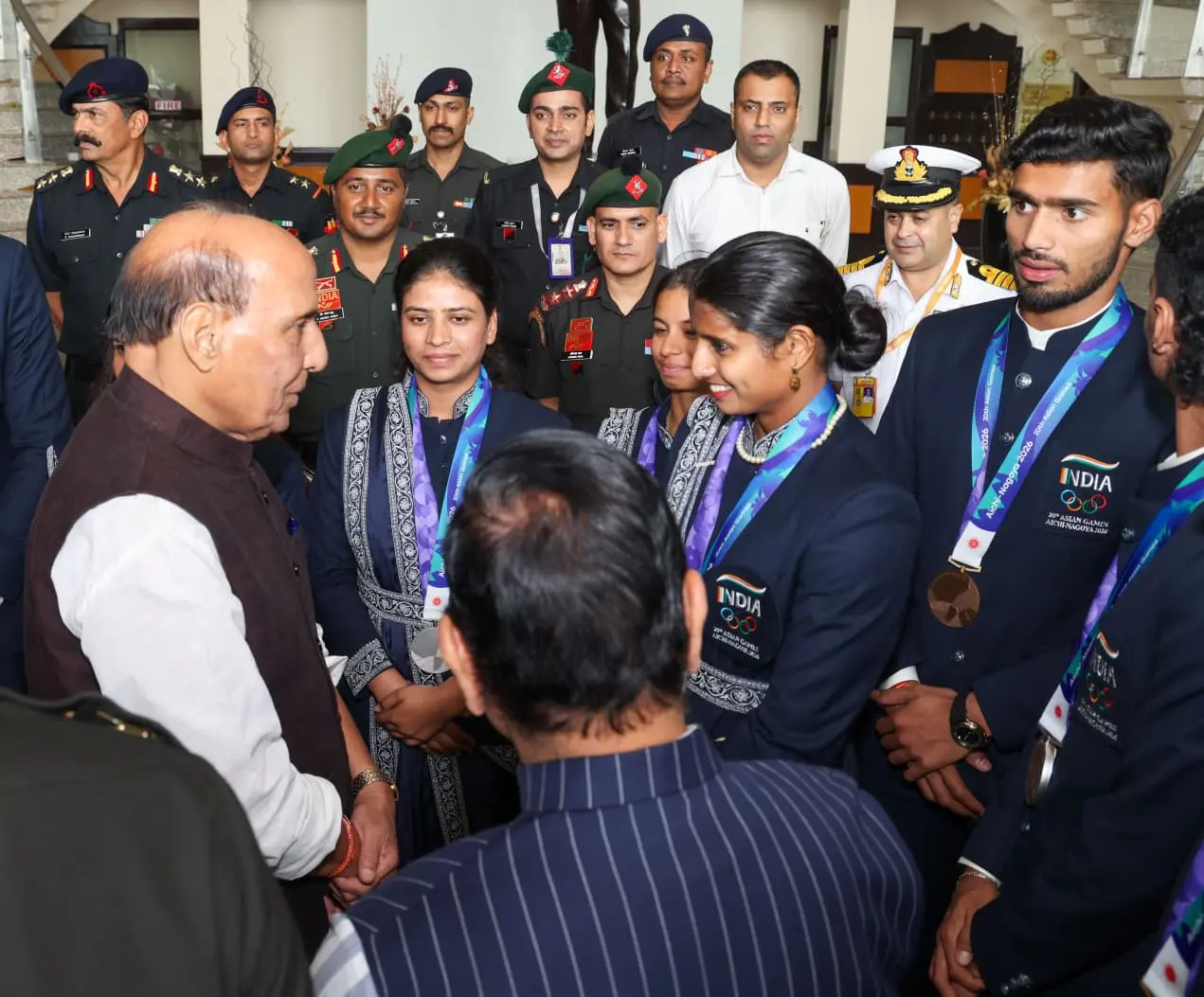
New Delhi, Oct 12 (JKNS): Defence personnel athletes have delivered their best-ever performance at the Asian Games, winning a record 27 medals, including six gold, 11 silver and 10 bronze, with Defence Minister Rajnath Singh felicitating the sportspersons on Monday and urging them to aim even higher at the 2028 Los Angeles Olympics.
As per news agency JKNS, Raksha Mantri Rajnath Singh, on October 12, 2026, felicitated the sportspersons from the defence forces who bagged 27 medals – 06 Gold, 11 Silver and 10 Bronze – at the recently concluded Asian Games in Japan. Minister of Consumer Affairs, Food & Public Distribution Shri Pralhad Joshi also graced the event organised to celebrate the Services’ best-ever performance at the prestigious international sporting event.
A total of 92 athletes from the three Services competed in 19 disciplines, and made a significant contribution to India’s fourth-place finish. The overall Indian contingent won 85 medals – 21 Gold, 27 Silver and 37 Bronze.
Interacting with the sportspersons at an event in New Delhi, Raksha Mantri attributed their success to discipline, hard work, team spirit and sporting excellence.
He said the journey to winning a medal involves immense dedication, early-morning training, gym sessions, injuries, recovery and consistent efforts while balancing unit duties with sports preparations and staying away from families.
Addressing the athletes who participated but could not win, Rajnath Singh stressed that true defeat lies in giving up. He stated that every participant contributed to bringing honour to the country and the Defence Forces in one way or the other. Expressing confidence in the potential of Services athletes, he said that their achievements would continue to inspire future generations.
Raksha Mantri highlighted the pivotal role played by the Mission Olympic Wing in identifying talented athletes, nurturing their potential, providing scientific training and world-class sports facilities, and preparing them for international competitions.
He also acknowledged the contribution of coaches, support staff, physiotherapists, nutritionists and the families of athletes, emphasising that a champion is never made in isolation.
Shri Rajnath Singh reiterated Prime Minister Shri Narendra Modi-led Government’s commitment to strengthening India’s sporting ecosystem, with sustained focus on infrastructure, modern training facilities and better opportunities for athletes.
He underlined that the objective is not merely to increase participation but establish India as a leading power in the global sporting arena.
On the significant contribution of the Services to Indian sports, Raksha Mantri asserted that the Defence Forces have consistently produced athletes distinguished not only by their physical prowess but also by discipline, patience, leadership and an unwavering commitment to their goals in challenging circumstances.
Rajnath Singh called for a focused and systematic approach towards the 2028 Los Angeles Olympics, urging trainers and support staff to continue guiding athletes with dedication and professionalism. He urged them to set higher goals and deliver an even better performance at the Los Angeles Olympics 2028.
Chief of the Army Staff General Dhiraj Seth and other senior officials were present on the occasion.
Services Athletes at 2026 Asian Games
The Services athletes contributed 32 per cent of India’s total medal tally and 28.57 per cent of its Gold medals. The standout performers include Naib Subedar Neeru Dhanda who won two Gold and 01 Silver.
She became the first Indian woman to win Gold in the individual Women’s Trap event at the Games. Naib Subedar Gulveer Singh secured 02 Silver and 01 Bronze, becoming the first Indian male track-and-field athlete to win three individual medals at a single edition of the Asian Games. Havildar Sawan Barwal won a Silver in the Men’s Marathon with a National Record timing of 2:11:37, ending India’s 44-year wait for an Asian Games marathon medal. Naib Subedar Sarvesh Kushare also secured a historic medal in Men’s High Jump after a gap of 56 years for India. (JKNS)

