


Calls for Immediate Intervention as Elderly Persons, Patients and Poor Families Face Hardships
Budgam, November 19: Sameer Ahmed Bhat, In-charge of the Budgam Constituency of the Indian National Congress, has expressed serious concern over frequent unscheduled power cuts and rising electricity bills in various areas of Budgam district, particularly Budgam, Khan Sahib and Beerwah. He has appealed to the district administration and the concerned power department to intervene immediately and address the grievances of consumers.
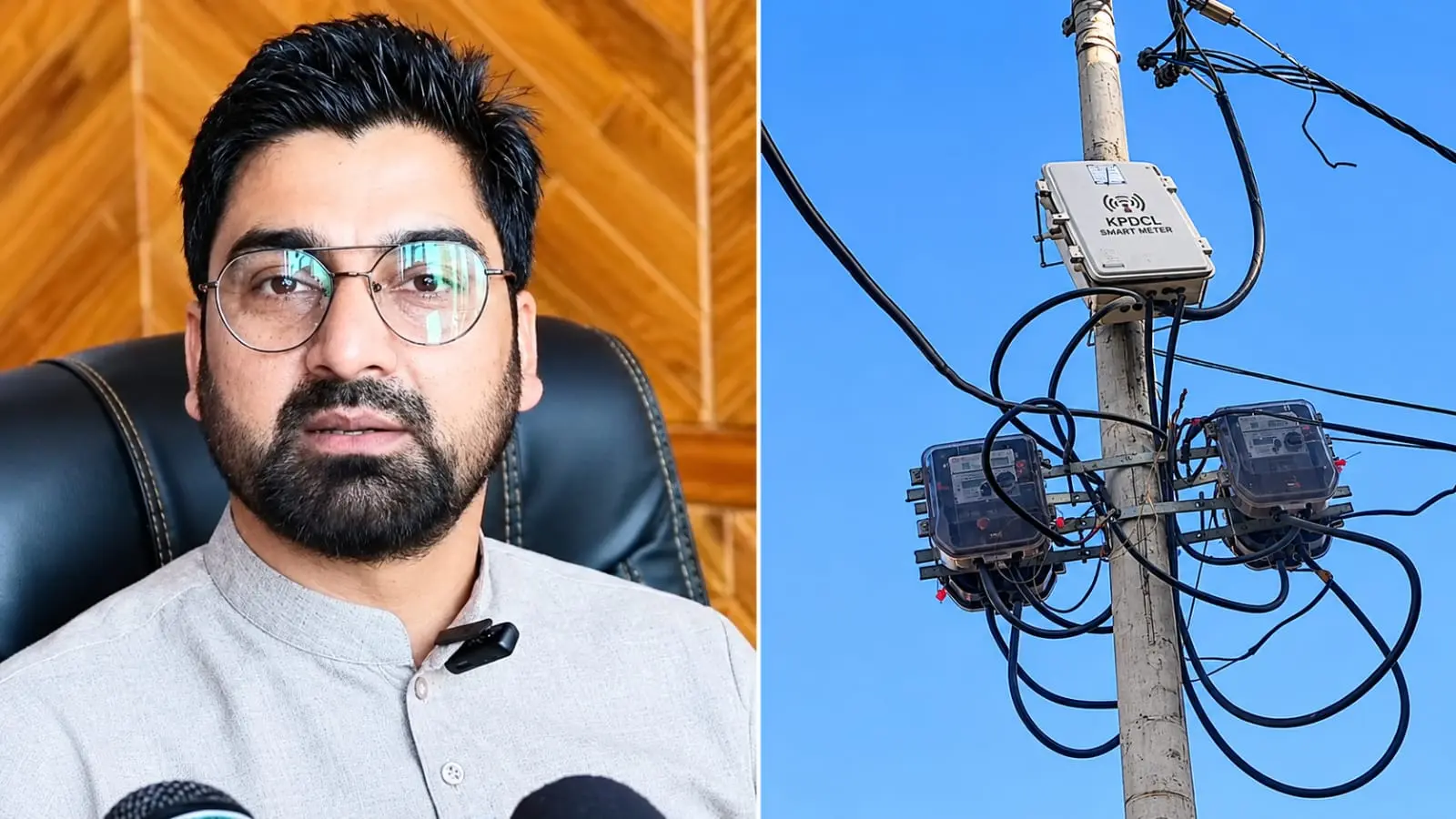
He said that despite the installation of smart meters under the government’s power metering initiative, consumers have not witnessed any significant improvement in electricity supply.
Speaking on the issue, Sameer Ahmed Bhat said that at the time of smart meter installation, the concerned authorities and the Kashmir Power Distribution Corporation Limited (KPDCL) had assured consumers that the initiative would improve power supply and ensure longer hours of electricity availability.
However, he said, the ground situation appears to be contrary to these assurances. According to local residents, electricity availability has reportedly declined in several areas following the installation of smart meters. Earlier, many areas used to receive around 18 to 22 hours of electricity daily, while some areas enjoyed nearly 24-hour power supply. However, in certain areas, electricity availability has now reportedly dropped to around nine hours a day.
Bhat further pointed out that while power supply has declined, monthly electricity bills have increased considerably. He said consumers who earlier paid around Rs 2,000 as monthly electricity bills are now receiving bills ranging from Rs 4,000 to Rs 5,000.
He also raised concerns over possible technical faults in smart meters and unusual electricity bills, stating that consumers are often given different explanations regarding their electricity consumption, creating confusion and anxiety among the public.
He said economically weaker families and residents of underprivileged areas are among the worst affected, as paying unexpectedly high electricity bills has become extremely difficult for households with limited incomes.
Expressing concern over the existing grievance redressal mechanism, Bhat said that consumers receiving unusually high bills are reportedly asked to deposit the entire amount before their complaints are examined, even when the bills range between Rs 10,000, Rs 15,000 or Rs 20,000. Only after payment are complaints regarding possible meter faults or incorrect billing taken up for examination.
He said such a procedure places an additional financial burden on poor and middle-class consumers. He called for a transparent and consumer-friendly mechanism to ensure the timely and fair resolution of complaints.
Bhat also said that around a month ago, he had discussed the issue with the Assistant Executive Engineer (AEE) of KPDCL, particularly regarding the electricity situation in the Srinagar area. However, despite assurances of improvement, consumers have yet to experience any significant relief.
With winter approaching, Bhat appealed to the district administration and KPDCL authorities to take effective measures to ensure adequate electricity supply and minimise unscheduled power cuts.
He said the absence of electricity during morning and evening hours causes serious inconvenience to elderly citizens, patients and ordinary households, as power is essential during these hours for medicines, hot water, cooking and other daily necessities.
He further observed that many economically weaker families cannot afford inverters or alternative power arrangements. At the time of smart meter installation, people had hoped that improved electricity supply would reduce their dependence on inverters. However, the present situation, he said, has forced many consumers to reconsider purchasing alternative power arrangements.
“Despite the installation of smart meters, electricity bills are increasing, power cuts continue, and people are once again being forced to purchase inverters. The public needs not only affordable electricity bills but also a reliable and uninterrupted power supply,” Bhat said.
In conclusion, Sameer Ahmed Bhat urged KPDCL authorities to review the existing power curtailment schedule, ensure fair billing practices, promptly inspect complaints regarding possible meter irregularities and provide timely relief to consumers facing unusually high electricity bills.

