


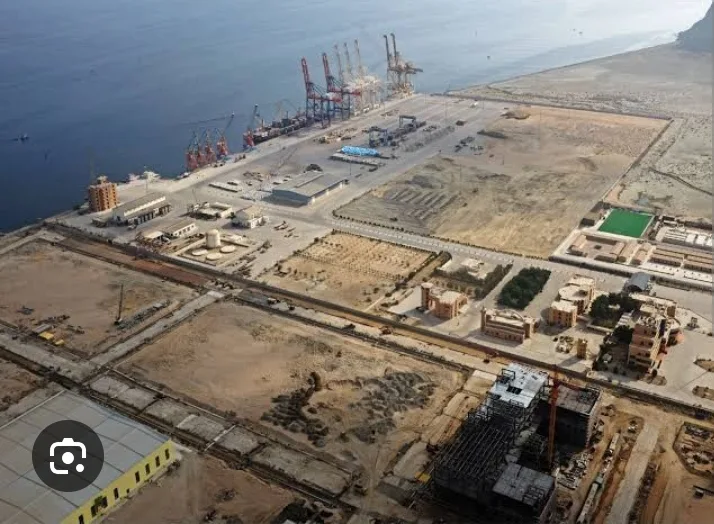
Pakistan’s celebration of Gwadar’s performance is attracting attention, but pointed concerns are surfacing simultaneously. Hangeng Trade Company, a Chinese meat-processing firm and one of only two Chinese commercial enterprises operating in Gwadar’s North Free Zone, has shut its factory, dismissing all employees and citing an unworkable business environment.
This is not a peripheral development. Hangeng was not a port operator — that role belongs to China Overseas Port Holding Company — but it was one of the handful of Chinese firms that had actually committed physical operations to the zone that CPEC literature has long promised would drive Gwadar’s transformation.
Its departure, at the precise moment Pakistan is presenting the port as a breakthrough success, is a data point that deserves at least as much attention as the container count.
The press coverage has treated the road corridor linking Gwadar to Iran as a new policy initiative — a testament to Pakistani diplomatic ingenuity in a difficult regional moment. It is nothing of the sort. The agreement that underlies the Transit of Goods Order 2026 was concluded in 2008, eighteen years before its formal activation. It sat dormant through the tenures of multiple Pakistani governments, through various iterations of CPEC planning, and through years of official enthusiasm about Gwadar’s transformation potential. It was not activated earlier because, under normal conditions, nobody needed it urgently enough.
The circumstances that changed this calculus are not Pakistani infrastructure improvements or enhanced port competitiveness. On 28 February 2026, the United States and Israel launched large-scale strikes on Iran — resulting in, among other things, the assassination of Supreme Leader Ali Khamenei — and Iran responded by closing the Strait of Hormuz.
The United States then imposed a naval blockade on Iranian ports. Calling this a “naval standoff” significantly understates the situation. More than 3,000 Iran-bound containers were stuck at Karachi Port and Port Qasim when Pakistan formally activated the corridor on 25 April, designating six overland routes connecting its ports and border points to Iran. The 2008 agreement was pulled from the drawer and dusted off because an external war created demand for a route that had previously generated insufficient commercial interest to activate.
This distinction — between a proactive strategic investment and a reactive emergency measure — matters enormously for assessing Gwadar’s prospects. A route activated by crisis will generate crisis-level traffic for as long as the crisis persists. The US naval blockade is strangling Iran’s main economic corridors, threatening an oil storage crisis, and facing growing domestic political pressure in Washington — all of which suggest eventual de-escalation is more likely than permanent closure. When the Hormuz situation stabilises, the traffic volumes will adjust accordingly.
Pakistan will be left with a legal framework that remains valid but serves a much smaller commercial need than the April 2026 container numbers suggest. And even during the boom, COPHC collects ninety-one cents of every dollar a transshipment container generates at Gwadar, leaving Pakistan with nine — meaning the windfall is considerably smaller for Islamabad than the headline figures imply.
Gwadar’s structural challenges persist regardless of what happens to the corridor’s commercial relevance. The port’s operational channel depth is approximately 12.5 metres, kept below its designed 14-metre depth due to expensive dredging costs, while standard container vessels require a draft of 13 to 14 metres to dock. Neopanamax vessels, which dominate modern container trade, require drafts of up to 15.2 metres — well beyond what Gwadar can accommodate.
The port has only three berths with a combined quay length of 602 metres, and plans to expand along approximately 4.2 kilometres of shoreline have reportedly stalled. More starkly, the port suffered a financial meltdown so severe that it failed to pay employee salaries for November and December 2025 — just months before the traffic surge that officials are now presenting as a strategic vindication.
The BLA’s April 2026 maritime attack — the group’s first documented sea operation, in which fighters on a speedboat targeted a Pakistani Coast Guard patrol vessel near Jiwani and claimed the killing of three personnel — is analytically significant beyond its immediate operational impact. The simultaneous announcement of the Hammal Maritime Defence Force, with a published statement and released video footage, signals deliberate institutional investment in a new operational domain rather than opportunism. The insurance market has registered this broader shift: war-risk premiums for Gulf vessels rose from approximately 0.2 percent to as high as 1 percent of vessel value in the immediate aftermath of the conflict. Claims circulating in some commentary of a jump from 0.12% to nearly 5% are not supported by any documented source. The actual figures are damaging enough without embellishment, and the emergence of a declared maritime insurgency in Gwadar’s own coastal waters adds a distinct and unquantified additional premium on top of those regional rates.
Pakistan’s northern connectivity — critical to the CPEC vision of Gwadar as a hub linking China’s western provinces to the Arabian Sea — remains hostage to a Pakistan-Afghanistan relationship that has passed well beyond dysfunction into active armed conflict.
In late February 2026, Pakistan launched Operation Ghazab lil-Haq, striking Kabul, Kandahar, Paktia, and Nangarhar, and Defence Minister Khawaja Asif declared the countries were in a state of “open war.” Pakistan’s three core demands to the Taliban — formal designation of the TTP as a terrorist organisation, dismantlement of its infrastructure, and verifiable proof of both — have not been met. China has been mediating with more seriousness than previous attempts: delegations from both sides met in Urumqi from early April, and China’s Foreign Ministry confirmed it has been “actively mediating and facilitating the resolution of conflicts between Afghanistan and Pakistan.”
The talks concluded on 8 April with both sides agreeing to work toward early easing of tensions and to avoid actions that could escalate the situation.
But cross-border attacks resumed almost immediately, with the Taliban reporting Pakistani mortar and rocket fire wounding 45 people, including students and children in Kunar province, while Pakistan reported civilian casualties from gunfire in South Waziristan — what a Pakistani border forces spokesman described as the most serious clash since the ceasefire was declared.
The Urumqi process produced diplomatic language, not a resolution of the TTP dispute that underpins these tensions. The overland route to the north is not a viable commercial corridor under current conditions.
There is one dimension the original framing omits entirely, and it matters for the US-Pakistan dynamic. Pakistan has simultaneously served as the lead mediator in US-Iran peace negotiations — brokering the ceasefire and hosting the Islamabad Talks on 11–12 April 2026, led by Prime Minister Shehbaz Sharif and Field Marshal Asim Munir on the Pakistani side, and Vice President JD Vance with Steve Witkoff and Jared Kushner on the American side. Washington needs Pakistan at the negotiating table. That leverage gives Islamabad some insulation from blunt American financial retaliation over the corridor — but it is leverage that exists only as long as the crisis does, and disappears with it.
The Transit of Goods Order 2026 is a useful crisis management tool. It has allowed Pakistan to generate traffic and revenue during an exceptional period, and the legal framework underlying it is genuine and durable.
But describing an eighteen-year-old contingency plan as a strategic game-changer requires a willing suspension of analytical rigour that the situation does not warrant. When the crisis that activated it passes, the order will revert to what it was before April 2026: a dormant agreement on a shelf, waiting for the next emergency — leaving behind a port that still cannot pay its workers reliably, cannot dock the world’s standard container vessels, faces a new maritime insurgency in its own waters, and earns nine cents on every transshipment dollar it processes.

